How to Fix a Hole in a Tonneau Cover in 5 Easy Steps
Dealing with a hole in your tonneau cover can be really frustrating, especially since you rely on it to protect your truck bed. If you’ve noticed tears or damage, you’re not alone—many people struggle with keeping their covers in top shape.
Luckily, fixing a hole is simpler than you might think, and it can save you time and money.
To fix a hole in your tonneau cover, start by inspecting for tears or damage and identify the size of the hole. Gather repair supplies like patches and adhesive, then clean and prep the area to guarantee a good bond.
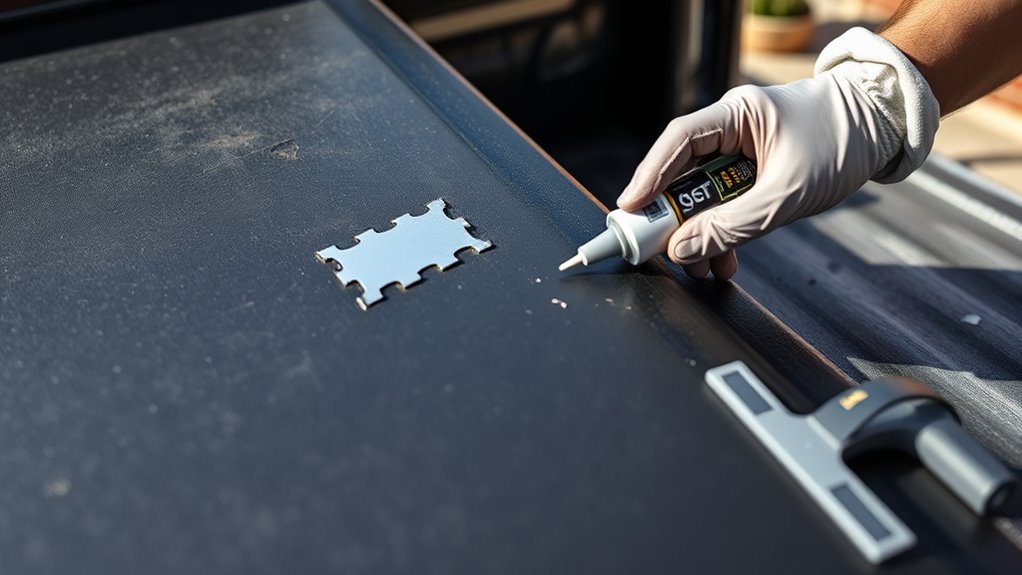
Cut a patch slightly larger than the hole, apply adhesive to both, and press it firmly onto the damaged spot, smoothing out air bubbles.
If you want to learn more about protecting and extending your cover’s lifespan, keep exploring the steps ahead.
Key Takeaways
- Check out the damage to see if it’s just a small tear or a bigger hole that needs a patch. It’ll help you decide what to do next.
- Give the area a good clean and dry it completely so the adhesive sticks well.
- Cut a sturdy patch that’s at least 1 inch bigger on all sides than the hole. This way, it’ll cover the spot entirely.
- Spread weatherproof adhesive on both the patch and the cover surface. Make sure you cover the whole area for a strong hold.
- Press the patch down firmly, smoothing out any air bubbles. Let it sit and cure fully before using your cover again.
What Causes Holes in Tonneau Covers and How to Prevent Them
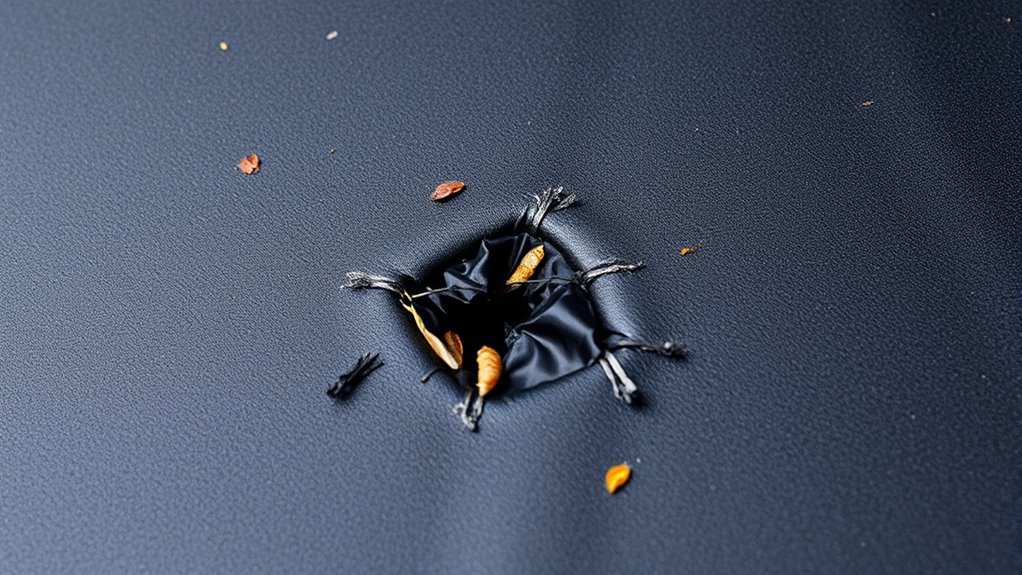
Holes in tonneau covers often happen because of sharp objects, harsh weather, or simple wear and tear over time. Your cover’s lifespan really depends on how well you manage these risks.
Holes develop from sharp objects, weather, and daily wear, impacting your tonneau cover’s longevity.
Common fabrics like vinyl and canvas each have different vulnerabilities. Vinyl can crack when exposed to extreme cold and UV rays, which can lead to holes. Canvas, while tough, can weaken if it gets too wet or sits in the sun for too long.
To prevent damage, avoid sharp tools near your cover, and try to park in shaded areas during storms. Regular cleaning and conditioning help keep your cover flexible and strong.
You might also want to consider investing in a high-quality, weather-resistant cover. Proper care and choosing the right material will help extend your cover’s life and reduce the chances of holes. Protecting it from rough handling and the elements keeps it in good shape longer.
How to Diagnose Damage on Your Tonneau Cover
To effectively assess whether your tonneau cover has incurred damage, start by inspecting it carefully for visible signs of wear or tears. Look for cracks, holes, or frayed edges that could indicate weakening material.
Check for areas where the fabric may be stretched or abraded, especially around seams and attachment points. Examine the condition of the material to verify it’s still compatible with repair options. Incompatible materials may reduce repair longevity.
Also, assess whether the damage is localized or spread across a larger area. This helps determine if a simple patch can suffice or if replacement is necessary. Pay attention to any signs of UV damage or fading, which could compromise repair effectiveness over time.
Thorough inspection allows you to understand the extent of damage and select the right repair method. This way, your fix will be durable and maintain the cover’s overall integrity.
Gather Tools and Supplies for Patching Your Cover
Before you start patching your tonneau cover, it’s important to gather all the tools and supplies you’ll need for a smooth repair. Basic items like a clean cloth, scissors, and a designated work surface are essential.
For patching materials, think about options like vinyl patches, repair tapes, or adhesive patches. Each has its benefits depending on your cover’s fabric and the kind of damage.
Material comparisons matter here. Some patches are flexible and waterproof, while others are more durable and resistant to UV rays. Choose the right one based on your cover’s material, climate, and how you use it.
You might also want a weatherproof sealant or adhesive that’s suitable for outdoor conditions. Having these supplies organized before you start can help avoid delays and keep your focus on the repair.
Keep in mind, different patches have different application methods. Review each to pick the most compatible option for your tonneau cover and its specific damage.
Inspect and Prepare Your Cover for Repair
Inspecting your tonneau cover thoroughly is essential to figure out how bad the damage is and spot any hidden issues that could affect your repair. Take a close look at the hole and the surrounding area, checking for tears, fraying, or weaker spots in the material.
Make sure the material matches what your cover is made of so that your repair will hold properly. Think about UV resistance too, since sunlight can break down certain materials over time.
Key points to keep in mind:
- Look for cracks or splits near the hole
- Check for UV damage or fading
- Confirm the material works with patches or sealants
- Remove loose or flaking material for a clean surface
- Test the cover’s flexibility and strength after cleaning
Doing a proper inspection and prep creates a solid base for a good repair. Fix any underlying issues to prevent future damage and make sure your repair will last longer.
Apply a Patch to Repair Your Tonneau Cover
Once your cover is clean and prepared, it’s time to apply the patch. Start by choosing the right material, like heavy-duty vinyl or a patch made specifically for your tonneau cover. Picking the right material ensures your repair will be durable and seamless.
Before applying, think about how you’ll store your patch. Keep it flat and protected from dust or moisture so it stays adhesive. Carefully cut the patch to cover the hole, adding at least an inch of overlap all around.
Use a strong adhesive made for outdoor gear or vinyl, and spread it evenly on both the patch and the cover surface. Firmly press the patch over the hole, smoothing out any air bubbles for a secure seal.
Proper storage after applying the patch will help it last longer. Keep any leftover materials in a cool, dry place. This method restores your cover’s integrity while making sure your repair is efficient and durable.
Frequently Asked Questions
Can I Repair a Hole in a Canvas Tonneau Cover?
Yes, you can fix a hole in a canvas tonneau cover. Canvas is tough, so it can usually handle patching if you use the right techniques.
Start by cleaning the area around the hole really well. Cut a patch slightly bigger than the hole and sew or glue it in place securely. Waterproof glue can give you extra protection.
This way, you’ll help restore the cover’s strength and make it last much longer.
How Long Does a Temporary Patch Last on a Tonneau Cover?
Imagine a patch like a tiny rescue boat, floating over a relentless river of exposure. With proper patching techniques, a temporary fix can last from several days to a few weeks, depending on material durability and weather conditions.
You’ll want to make sure the patch sticks well and is sealed tightly. Keep in mind, durability varies, so it’s best to see it as a short-term fix before doing a more permanent repair.
Are Certain Patching Materials Better for Specific Cover Fabrics?
Yes, certain patching materials work better with specific cover fabrics. You should consider patching techniques that focus on fabric compatibility to guarantee durability.
For example, vinyl patches suit vinyl covers, while heavy-duty fabric patches are better for cloth covers. Choosing the right patching material improves adhesion and longevity, preventing future tears.
Always match your patch to your cover’s fabric type for the best results and a seamless repair.
Will Patching a Cover Affect Its Waterproof Capabilities?
Patching your cover can affect its waterproof capabilities if you don’t use the right materials, similar to how upgrading your gigabit speed improves your internet.
If you apply a high-quality, waterproof patch, your cover’ll stay protected, like a solar panel efficiently harnesses sunlight. However, poorly applied patches may leak, akin to poor energy conversion.
Make certain to use a tight seal and waterproof patch to maintain your cover’s original waterproof integrity.
How Do I Prevent Further Tears After Patching My Tonneau Cover?
To prevent further tears after patching your tonneau cover, make sure you apply the patch smoothly without stretching the material. This helps avoid creating new weak spots.
Reinforce the edges with a strong adhesive to keep the patch secured. Also, try to avoid heavy loads or sharp objects on the cover that could cause damage.
Check if your warranty offers any repair assistance. It might save you time and money if you’re covered.
Consider following tips from others who’ve successfully maintained their covers. Their experiences can be really helpful.
Regular inspections and gentle handling will help keep your cover durable. This way, your backup coverage stays intact longer.
Conclusion
With a little patience and the right approach, you can restore your tonneau cover’s appearance and function. Think of this repair as giving your cover a gentle nudge back to its best self—like a quick pep talk for your truck.
By following these simple steps, you’ll keep your cover looking sharp and working smoothly, ensuring it continues to serve you well. Don’t let a small issue spoil your journey; a quick fix can keep everything on track.
Fixing a hole in your tonneau cover doesn’t have to be complicated. With some basic supplies and a bit of effort, you can get your cover back in shape in no time.