How to Clean Spark Plugs in Ten Simple Steps
If you’re into DIY car care or just want to keep your engine running smoothly, you’ve probably wondered how to clean spark plugs effectively. Many owners find this task tricky or worry about damaging their engine, but don’t worry—you’re not alone.
Cleaning spark plugs can seem intimidating, but it’s easier than you think with the right steps. To clean your spark plugs in ten simple steps, start by letting your engine cool down and then carefully remove the spark plugs using the right tools.
Inspect them for signs of wear or fouling, and gently brush off deposits with a wire brush or cleaning tool. Use a soft cloth for ceramic insulators and avoid damage.
Re-gap the plugs if needed, then tighten them properly and reconnect the wires. For detailed tips and precautions, keep exploring—there’s more to learn for best engine care.
Key Takeaways
- Carefully remove the spark plug using a spark plug socket, making sure to note the correct order for reinstallation.
- Look at it closely to check for fouling, damage, or electrode wear, to see if it needs cleaning or replacing.
- Use a wire brush along with a suitable cleaning solvent to gently scrub off carbon buildup and grime.
- Carefully clean the ceramic insulator with a soft brush or cloth, being careful not to cause any cracks or chips.
- Re-gap the spark plug and then reinstall it, tightening to the manufacturer’s recommended torque for the best performance.
Why Regular Spark Plug Maintenance Matters
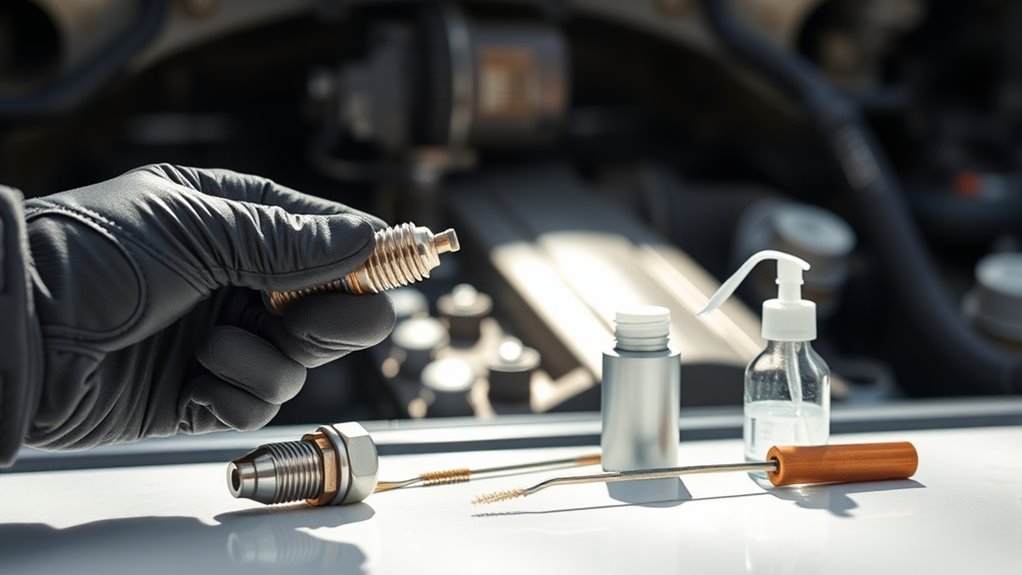
Regular spark plug maintenance is crucial because it directly impacts your engine’s performance and longevity. Understanding spark plug history shows how they’ve evolved from basic devices to precise components that are essential for modern ignition systems.
The ignition system relies on spark plugs to ignite the fuel-air mixture efficiently. Over time, deposits can build up on the electrodes, causing misfiring or poor fuel efficiency. If you neglect maintenance, your engine may run rough, lose power, or use more fuel.
Maintaining spark plugs ensures reliable ignition and smooth engine operation. It also helps prevent unnecessary stress on other engine parts, which can lead to costly repairs. Spark plug upkeep is a simple way to extend your engine’s lifespan and keep it running at its best.
Signs Your Spark Plugs Need Cleaning
If your car’s been having a tough time starting up or suddenly stalls, that could be a sign your spark plugs need a good cleaning. Sometimes, you might also notice your engine misfiring here and there, which isn’t just annoying but can also indicate a problem.
And don’t forget about fuel economy — if you’re suddenly filling up more often than usual, it might be because your spark plugs aren’t firing properly. Catching these signs early can save you a lot of trouble down the line and help keep your engine running smoothly.
Difficult Starting Issues
Have you noticed your vehicle having trouble starting, even when the battery and fuel seem fine? This could be a sign your spark plugs need cleaning. Over time, spark plug coatings can become dirty or worn, which hinders the spark’s effectiveness.
When coatings are compromised, your engine struggles to ignite the fuel-air mixture efficiently. This can lead to difficult starts and prolonged cranking. Spark plug manufacturers say that fouled or damaged plugs often cause these issues.
If your vehicle needs multiple tries to start or stalls right after ignition, it’s probably time to check and clean your spark plugs. Proper maintenance keeps the coatings clean, promoting reliable ignition and smoother starts.
Ignoring these signs might make engine performance and fuel economy worse over time. Regularly inspecting and caring for your spark plugs can save you from bigger problems down the road.
Engine Misfires Occur
Do your engine misfire suddenly or feel rough during acceleration? These signs usually point to worn or dirty spark plugs that are affecting their lifespan. When spark plugs misfire, it’s a clear sign they might need cleaning or replacement.
You might notice hesitation or jerking when you accelerate, a rough idle, or stalling. Poor acceleration response and increased emissions are also common. These issues often come from fouled or worn spark plugs, which you can check for deposits or erosion.
Comparing different brands can help, as some last longer or resist fouling better. Regular cleaning can extend spark plug life and boost engine performance. This leads to fewer misfires and smoother rides. Ignoring these signs can cause more damage and lead to costly repairs later on.
Reduced Fuel Efficiency
A noticeable decrease in your vehicle’s fuel economy often points to issues with your spark plugs. When spark plugs are dirty or worn, they can disrupt the ignition system and fuel injection process. This causes inefficient combustion, and you might notice your car consumes more fuel than usual or struggles to accelerate smoothly.
These symptoms suggest your spark plugs aren’t firing properly, leading to incomplete burning of fuel. Regular cleaning and inspection help maintain optimal performance and fuel efficiency.
| Symptom | Cause |
|---|---|
| Higher fuel costs | Fouled or worn spark plugs |
| Rough idling | Ignition system misfire |
| Sluggish acceleration | Dirty spark plugs |
| Decreased power | Inconsistent fuel injection |
| Increased emissions | Poor combustion efficiency |
Tools and Supplies Needed for Spark Plug Cleaning
To clean your spark plugs properly, you’ll want to gather a few simple tools and supplies. Things like a spark plug socket, a wire brush, and some cleaning solvent are definitely must-haves. Having the right equipment makes the whole process a lot easier and ensures you get a thorough clean.
Essential Cleaning Tools
Before you start cleaning your spark plugs, gather the essential tools and supplies you’ll need. Using the right tools helps prevent damage and ensures a thorough clean.
Proper cleaning requires specific tools that won’t harm the spark plug or your ignition system. Here are the essentials:
- Wire brush or spark plug cleaner brush
- Compressed air or an air blower
- Cleaning solvent or a spark plug cleaner solution
- Protective gloves and safety goggles
A wire brush is great for removing carbon deposits, while compressed air clears debris from the threads. The cleaning solvent breaks down dirt without damaging the spark plug materials.
Having these tools on hand makes the process safer and more effective. It also helps protect your ignition system and keeps your engine running smoothly.
Necessary Cleaning Supplies
Having the right cleaning supplies is essential for effectively and safely cleaning your spark plugs. You’ll need specific tools and supplies to remove deposits, check coatings, and maintain proper ignition timing.
Essential items include a wire brush, socket wrench, and nickel-based spark plug cleaner. A degreaser or compressed air helps clear grime without damaging coatings.
Keep a gasket scraper handy if you need to remove stubborn carbon buildup. Here’s a quick list:
| Tool/Supply | Purpose | Tip |
|---|---|---|
| Wire brush | Remove carbon deposits | Avoid damaging coatings |
| Socket wrench | Remove and install spark plugs | Ensure proper torque |
| Degreaser | Thoroughly clean plugs | Prevent contamination of ignition timing |
| Compressed air | Clear debris from small crevices | Keep spark plug coatings intact |
These supplies help you clean your spark plugs safely and efficiently without compromising ignition timing.
How to Remove Spark Plugs Safely
Removing spark plugs safely is really important to avoid damaging your engine parts or risking injury. First, make sure the engine is cool before you start, since hot spark plugs can be tricky and may cause burns or damage.
Next, carefully disconnect the ignition system, being gentle with wires and connectors so you don’t accidentally damage anything. Use the right tools: a spark plug socket and ratchet make things easier and help prevent stripping the plug’s hex. When you’re loosening the plug, turn it counterclockwise slowly and steadily to avoid breaking the ceramic insulator.
Wear gloves and safety glasses to protect yourself from debris. Keep track of the order you remove the plugs so you remember how to put everything back together. If the plug resists coming out, don’t force it—check for corrosion first. Be extra careful around the ignition system to avoid electrical shorts or other issues.
How to Inspect Spark Plugs for Wear and Fouling
Once you’ve removed the spark plugs, it’s time to look at them closely for signs of wear and fouling. Check the electrode for wear, which looks like rounded edges or a worn-down tip, meaning it might not produce a strong spark anymore.
Excessive electrode wear can cause misfires, so you might need to replace the plug. Look for fouling buildup, like carbon deposits, oil, or fuel residue, on the insulator and electrode. Fouling usually appears as a dark, oily, or soot-like coating.
This can indicate issues like oil leaks or incomplete combustion. If you see heavy fouling, your engine could be running too rich or not burning fuel properly. Also, check the ceramic insulator for cracks or damage, which could lead to misfiring or engine problems.
Doing a thorough visual check helps you decide if the spark plug needs cleaning, reconditioning, or replacing to keep your engine running smoothly.
Step-by-Step Guide to Cleaning Your Spark Plugs
Sure! Here’s the revised version with a more conversational tone:
—
If you want to clean your spark plugs the right way, you’ll need a few simple tools like a wire brush, a socket wrench, and some cleaning solution. Once you’ve got everything ready, just follow a straightforward process: start by inspecting each plug for any damage, then give them a thorough clean. While you’re at it, check for signs of wear to see if they might need replacing.
Once you get the hang of it, you’ll be able to restore your spark plugs easily and help your engine run smoother. Trust me, it’s a pretty simple task that can make a noticeable difference in how your vehicle performs!
Tools and Materials Needed
Before you start cleaning your spark plugs, gather the essential tools and materials to make sure everything goes smoothly. Using the right tools helps maintain the spark plug’s performance, which impacts your engine’s efficiency.
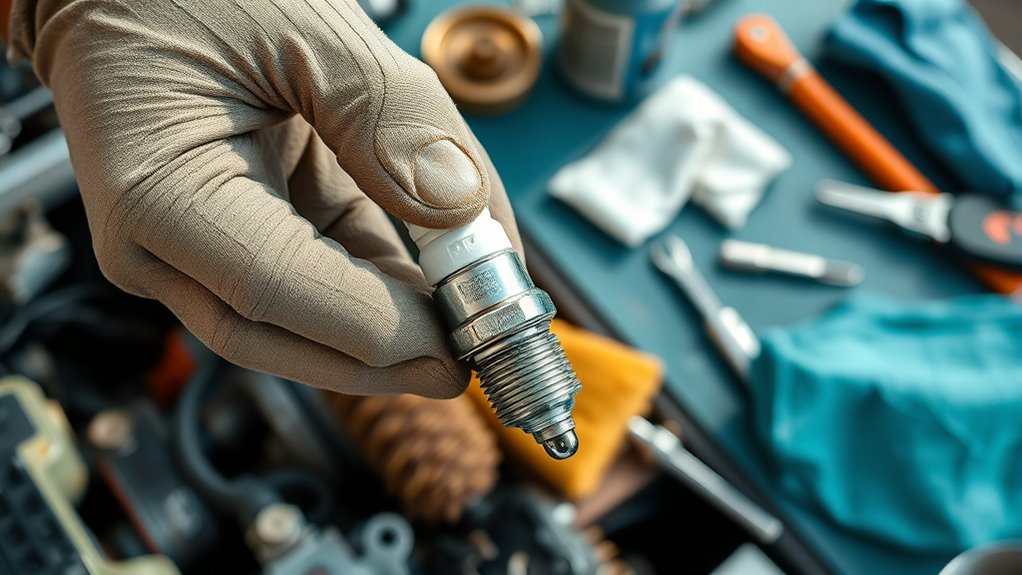
First, you’ll need a spark plug socket and a ratchet to safely remove and handle the plugs. A wire brush or a dedicated spark plug cleaning brush is great for removing carbon deposits.
You should also have either carburetor cleaner or a degreaser to loosen grime. Finally, grab a clean cloth to wipe down the components and check for any damage.
Having everything ready makes the cleaning process quick and effective, helping your vehicle run smoothly and keeping your engine in top shape.
Cleaning and Inspection Process
Begin the cleaning process by thoroughly inspecting each spark plug for damage or excessive wear. Check the electrode, insulator, and shell for cracks, corrosion, or erosion, as these can affect performance.
Identify the condition of the spark plug materials—metal, ceramic, and insulator—to decide if they need replacing. Also, look at the combustion chamber and cooling systems for residue buildup, which can impact heat dissipation.
Use this table to guide your inspection:
| Aspect | What to Look For | Action |
|---|---|---|
| Electrode | Wear, erosion | Clean or replace if severely worn |
| Insulator | Cracks, deposits | Clean gently or replace |
| Cooling System | Carbon buildup, corrosion | Clean cooling passages to prevent overheating |
Tips to Clean Spark Plugs Without Damage
Cleaning spark plugs without causing damage requires careful attention and the right techniques. Understanding the spark plug design and how manufacturing processes influence their construction is key. You want to avoid damaging the electrodes or insulators, which can affect performance.
To do this effectively, use gentle, non-abrasive cleaning solutions to prevent chipping or scratching. Stick to manual cleaning methods like a soft wire brush or cloth instead of harsh abrasives. Pay close attention to the ceramic insulator, as any chips can cause misfiring.
Be cautious with the spark plug’s threading and electrode angles. These are shaped by specific manufacturing processes and can be easily damaged if mishandled. Being mindful of the spark plug design ensures you don’t compromise its function. Taking your time and using proper tools will help protect the delicate parts, keeping your spark plugs in fine shape without risk.
How to Reinstall and Recheck Your Spark Plugs
Once you’ve cleaned your spark plugs, the next step is to reinstall them properly to keep your engine running smoothly. Before installing, check that the spark plug coating is intact and free of any damage.
Use a spark plug gap tool to verify the gap as specified by the manufacturer. This helps ensure efficient ignition and optimal engine performance. When installing, start by threading the spark plug by hand to avoid cross-threading.
Once hand-tight, tighten the spark plug to the manufacturer’s recommended torque specs. Using a torque wrench can help prevent over-tightening, which could damage the plug or cylinder head.
Remember to check the firing order and make sure each spark plug sits securely in its position. Double-check the gap and connections after installation to make sure everything functions properly.
Simple Tips to Extend Spark Plug Life
To extend the life of your spark plugs, simple maintenance habits can make a big difference. Proper care ensures maximum performance and longevity by focusing on spark plug design and the ignition system.
Regularly inspecting your spark plugs for wear and deposits helps prevent early failure. Keep the ignition system in good condition, because a weak or faulty system can increase spark plug wear.
Regular inspections and a healthy ignition system prevent premature spark plug failure.
Using the right type of spark plug for your vehicle guarantees compatibility with the spark plug design and engine requirements. Avoid aggressive driving to reduce stress on the ignition system and spark plugs.
Properly gapping your spark plugs and checking engine oil levels are also key. Additionally, clean or replace air filters regularly and use high-quality fuel and oil.
Finally, avoiding short trips that don’t fully warm the engine helps maintain spark plug health and overall engine performance.
When to Replace Spark Plugs and Seek Professional Help
| Symptoms of Worn Spark Plugs | When to Seek Help |
|---|---|
| Engine misfires or rough idling | Have a thorough ignition system check done |
| Poor acceleration or fuel economy | When you’re not sure if the spark plugs need replacement |
| Visible damage or heavy deposits | If replacing the spark plugs doesn’t fix the issues |
Frequently Asked Questions
Can I Clean Spark Plugs Without Removing Them From the Engine?
You can clean spark plugs without removing them from the engine, but keep in mind it’s not as effective. Start by spraying a cleaner to loosen dirt and fuel deposits.
Then, use a wire brush to scrub the spark plug coating carefully. Just be cautious not to damage the electrode during the process.
Avoid using engine oil in the cleaning process because it can interfere with spark plug performance. Make sure the spark plug stays dry before reinstalling it for the best engine operation.
What Are the Best Cleaning Methods for Platinum or Iridium Spark Plugs?
Like a doctor tending to noble blades, you should carefully choose the best cleaning methods for platinum or iridium spark plugs. Electrode refurbishment is key, so gently scrub with appropriate cleaning solutions that won’t damage the precious surfaces.
Avoid harsh abrasives to preserve their integrity. Use a fine brush or a specialized spark plug cleaner, making sure to remove carbon deposits without damaging the delicate electrode. This helps ensure your engine runs smoothly and efficiently.
How Often Should I Clean My Spark Plugs for Optimal Performance?
You should clean your spark plugs every 30,000 to 50,000 miles, depending on your vehicle’s maintenance schedule. Regular cleaning helps keep your engine running smoothly and efficiently.
Doing this can prevent misfires and improve fuel economy. Keep an eye out for signs like rough idling or reduced power, which mean it’s probably time for a clean.
Sticking to your vehicle’s maintenance schedule ensures your spark plugs stay in good shape. It helps maintain engine efficiency and extends the lifespan of your plugs.
Can Using a Wire Brush Damage the Spark Plug Surface?
Using a wire brush can damage the spark plug surface, kind of like scrubbing a delicate fresco. If you’re not careful, it can change the surface texture and impact performance.
Be mindful of material compatibility because different spark plugs have various coatings and materials. A gentle, suitable cleaning method helps keep the spark plug in good shape and ensures it fires correctly.
Think of it like caring for a fine instrument—you want to avoid scratches that could hinder how it works. Proper cleaning preserves the spark plug’s integrity and helps it do its best.
What Safety Precautions Should I Follow During Spark Plug Cleaning?
When cleaning spark plugs, you should wear personal protective equipment like gloves and safety goggles to protect your skin and eyes from debris or chemicals. Good ventilation is also important to avoid inhaling fumes.
Handle cleaning chemicals carefully and follow all safety guidelines for chemicals. Keep your workspace clean and free of clutter to prevent accidents.
Avoid using harsh tools that might damage the spark plug. Stay cautious throughout the process to ensure safety and effective cleaning.
Conclusion
So, after all that careful cleaning, it’s almost funny how your car might run smoother than your old coffee maker. But ignoring spark plug care could turn your engine’s performance into a series of awkward misfires.
Remember, a little maintenance goes a long way. Neglecting those tiny components might save you a quick dollar today, but it could cost much more down the line.
Irony’s sweet—sometimes, the smallest effort prevents the biggest headaches. Regular spark plug cleaning is key to keeping your engine running smoothly and avoiding unnecessary repairs.