What Happens if You Don’t Change Spark Plugs
Feeling frustrated at how your car sometimes sputters or struggles to start? You’re not alone. Many drivers face these issues, often because of overlooked maintenance like spark plug care.
If you don’t change your spark plugs, your engine can lose power, run roughly, and struggle to start. Worn plugs cause misfires, reduce fuel efficiency, and increase emissions.
Over time, neglecting this maintenance can damage ignition coils, converters, and even lead to engine failure. You’ll notice higher fuel consumption and sluggish response.
Staying on top of spark plug care keeps your engine smooth and efficient. To learn more about how to keep your engine in top shape, keep exploring.
Key Takeaways
- Worn spark plugs can cause your engine to misfire, rough idling, and sluggish response.
- If you ignore them, your fuel efficiency drops, and emissions increase because of incomplete combustion.
- Not changing them can also damage ignition coils, catalytic converters, and eventually lead to engine failure.
- Delaying replacement may cost you more in repairs due to engine stress and worn-out parts.
- Overall, engine performance suffers, making your car less reliable, powerful, and responsive.
Why Spark Plugs Are Essential for Your Engine’s Performance
Spark plugs play a critical role in your engine’s performance because they create the spark needed to ignite the fuel-air mixture in each cylinder.
The design of your spark plug influences how effectively this ignition process happens; a well-made spark plug ensures a strong, consistent spark.
This is essential because weak or inconsistent sparks can lead to poor combustion, reducing your engine’s power and fuel efficiency.
Proper spark plug design also affects ignition timing, which is the precise moment when the spark occurs during a piston’s cycle.
If the ignition timing is off, your engine might misfire, run rough, or stall altogether.
When your spark plugs are in good condition and correctly designed, they help your engine run smoothly and efficiently, delivering maximum power while reducing emissions.
That’s why maintaining the right spark plug design and correct ignition timing is indispensable for your engine’s healthy performance.
How to Recognize When Your Spark Plugs Need Replacing
Ever wonder how to tell if your spark plugs are acting up? One key sign is rough engine performance, which can happen when spark plugs are worn out and can’t transfer heat effectively. When their materials break down, they cause misfires or make starting your car a challenge.
Worn spark plugs cause rough running, misfires, and difficulty starting your vehicle.
Watch out for these signs:
- Misfiring or rough idling
- Poor acceleration or sluggish response
- Decreased fuel efficiency
- Engine warning lights showing up
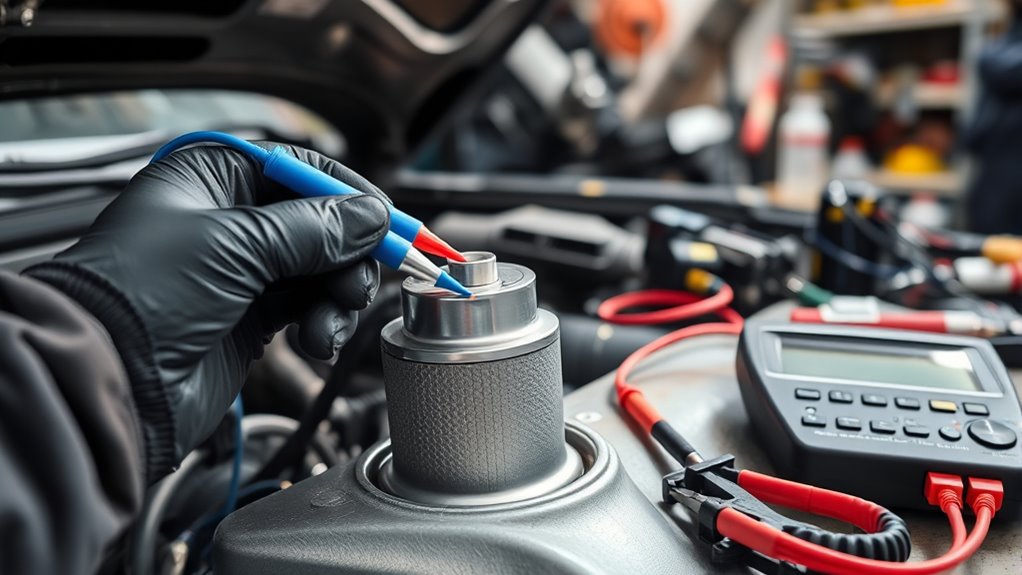
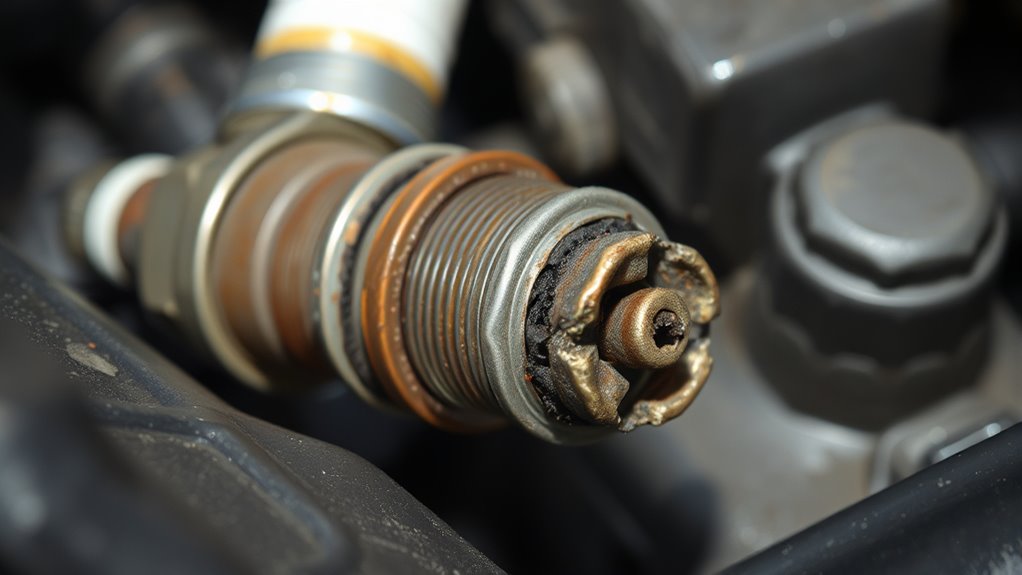
To be sure if your spark plugs need replacing, take them out and inspect. Look for worn or eroded electrodes and any buildup of deposits. If they can’t transfer heat well, they tend to overheat or foul quicker.
Spotting these issues early can help prevent bigger engine problems and make sure your spark plugs are working their best when you need them.
What Are the Signs Your Spark Plugs Are Worn Out?
You’ll notice your engine’s performance starting to slip when your spark plugs are worn out. One of the first signs is rough idling or difficulty starting your car, since worn spark plugs can’t ignite the fuel mixture effectively.
If you see your vehicle hesitating to accelerate or stalls often, it might be due to faulty sparking caused by degraded spark plug design. You might also experience increased fuel consumption because the ignition isn’t firing efficiently, forcing your engine to work harder.
Engine misfires and a noticeable drop in power during acceleration are common indicators. You may also notice rough vibrations or unusual sounds coming from the engine. Worn spark plugs can cause incomplete combustion, leading to spark plug fouling or carbon buildup that hampers ignition.
Pay attention to these signs because ignoring them can lead to more serious engine problems later on. This is especially true if your spark plug design has become outdated or damaged.
How Ignoring Spark Plug Maintenance Can Damage Your Engine
Neglecting spark plug maintenance can lead to serious engine damage over time. When you ignore signs of worn spark plugs, your ignition system takes a hit, causing misfires and poor engine performance. Over time, this shortens their lifespan and puts extra strain on other engine parts.
Neglecting spark plug care damages engine components and reduces overall performance over time.
Skipping regular checks risks reduced fuel efficiency, which can raise your costs. Misfires can lead to rough idling and loss of power, making driving less smooth. Plus, increased emissions can harm the environment.
Ignoring maintenance can also damage ignition coils and the catalytic converter. These issues make your engine work harder and can lead to costly repairs. If you don’t replace worn spark plugs on time, you stress the ignition system and risk engine failure.
Staying on top of maintenance helps keep everything running smoothly. It extends your spark plugs’ lifespan and helps prevent damage that could otherwise ruin your engine. Regular checks might seem small but pay off with long-term engine health.
How Old Spark Plugs Affect Fuel Economy and Emissions
Old spark plugs can really mess with how efficiently your engine burns fuel. When they’re worn out, your car might start using more gas than it needs to, which can add up to higher fuel costs over time. Plus, those old plugs can cause your vehicle to emit more pollutants, making it less eco-friendly than it could be.
Increased Fuel Consumption
As spark plugs wear out, they can cause your engine to burn fuel less efficiently, leading to increased fuel consumption. Old spark plug materials may produce weak or inconsistent sparks, which hurts the ignition system’s performance.
When spark plugs fail to fire properly, your engine has to work harder. This means using more fuel to keep going, which reduces your fuel economy and puts extra strain on engine components.
You might notice your trips costing more or needing refueling more often. To avoid this, check for signs of wear like rough idling or misfires, and replace spark plugs promptly. Regular maintenance keeps your ignition system running smoothly.
Ignoring worn spark plugs can lead to inefficient combustion that wastes fuel. Weak sparks increase the chances of misfires, which add stress to the engine and make it work harder.
Increased engine load from poor ignition results in reduced overall efficiency. Keeping your spark plugs in good shape helps conserve fuel and keeps your vehicle running smoothly.
Elevated Emission Levels
When spark plugs wear out, they not only lower fuel efficiency but also cause higher emissions. An aging ignition system struggles to ignite the fuel-air mixture properly, leading to incomplete combustion.
This inefficiency increases emissions of hydrocarbons and carbon monoxide. Plus, wear and deposits on the spark plug can prevent proper sparking, making emissions even worse.
As the spark plug’s performance drops, your engine releases more pollutants because the combustion isn’t clean. Over time, this can make your vehicle fail emissions tests and harm the environment.
Regularly replacing spark plugs keeps the ignition system working well, maintains proper spark plug design, reduces emissions, and helps your vehicle run cleaner and more responsibly.
Common Issues Caused by Not Replacing Spark Plugs on Time
If you don’t replace your spark plugs when they’re due, your engine can start to act up. It’s like running a marathon with worn-out shoes — it just doesn’t perform at its best. This can make your car use more fuel than it should and make starting your engine feel rough or sluggish.
Plus, ignoring this simple maintenance step can lead to even bigger problems down the line. Your vehicle might run poorly, and you could end up spending more money fixing issues that could’ve been avoided by just replacing those spark plugs on time.
Reduced Engine Efficiency
Neglecting to replace your spark plugs on time can significantly decrease your engine’s efficiency. Worn spark plugs disrupt the spark plug’s structure, causing incomplete combustion.
This reduces engine cooling and leads to misfires. As a result, your engine has trouble running smoothly, wastes fuel, and loses power.
You might notice poor acceleration and a sluggish response from your vehicle. Incomplete combustion can also increase emissions.
Other signs include rough idling and stalling, along with higher engine temperatures due to inefficient cooling.
When spark plugs degrade, they can cause irregular spark timing, which affects overall performance.
This not only hurts fuel economy but also puts extra strain on engine parts. Keeping up with spark plug maintenance helps your engine run smoothly and efficiently.
Increased Fuel Consumption
Have you noticed your fuel tank empties faster than it used to? When spark plugs wear out, your ignition system struggles to fire efficiently, causing incomplete combustion. This impacts your vehicle’s fuel injection process, making it less precise and increasing fuel consumption.
You might see lower miles per gallon and more trips to the pump. Here’s how worn spark plugs can affect your fuel use:
| Issue | Effect | Solution |
|---|---|---|
| Misfiring | More fuel used to make up for incomplete combustion | Replace spark plugs |
| Inefficient ignition | Higher demand on fuel injection | Regular maintenance |
| Poor combustion | Increased emissions and reduced economy | Change spark plugs on time |
| Fuel waste | Higher costs and environmental impact | Keep spark plugs healthy |
Skipping spark plug replacements can reduce fuel efficiency and boost your expenses.
Harder Engine Starts
As spark plugs wear out, starting your engine can get noticeably harder. Worn plugs often struggle to produce a strong enough spark, which means longer cranking times or even just failing to start.
This issue happens because of changes in spark plug design and how well they match your engine’s specs. Over time, deposits build up or the electrodes erode, weakening the spark and making ignition less efficient.
You might notice increased effort to start, longer warm-up times, frequent misfires, or that your engine feels less responsive. All these signs mean your spark plugs aren’t doing their job as well.
Choosing the right spark plug for your vehicle ensures a proper spark strength, which is key for easy starts. If you ignore this, misfires and rough idling can happen, making it even harder to start your engine.
Regularly replacing spark plugs keeps your engine running smoothly and helps prevent starting problems before they get serious.
When Is the Best Time to Change Your Spark Plugs?
Wondering when you should swap out your spark plugs? The best time depends on the spark plug materials and your vehicle’s engine needs.
Typically, conventional copper spark plugs last about 20,000 to 30,000 miles, while platinum or iridium plugs can go 60,000 to 100,000 miles before needing a replacement.
If you notice engine misfires, rough idling, or poor fuel economy, it might be a sign your spark plugs are overdue for a change. Regular maintenance schedules are useful, but always check your owner’s manual for specific recommendations.
Using high-quality spark plug materials often means better durability and performance. Remember, changing spark plugs at the right interval keeps your engine running smoothly and efficiently.
Don’t wait for noticeable problems—changing them proactively can save you from more costly repairs down the road.
How to Replace Spark Plugs in Simple Steps
Replacing spark plugs is pretty straightforward and something you can do yourself with some basic tools. First, make sure you pick the right spark plug for your vehicle by checking the owner’s manual or spark plug color recommendations.
Replacing spark plugs is simple with basic tools; select the proper one based on your vehicle’s manual or color indicators.
Look for tips that are white or gray—these usually mean the plug is working well. Black tips could mean fouling, so keep an eye on that. Before you begin, disconnect the negative battery terminal to avoid shocks.
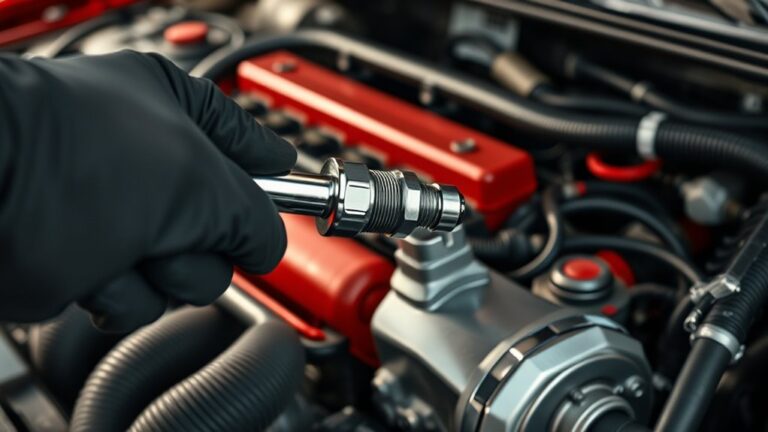
Next, remove the engine cover if you need to get to the spark plugs. Locate them and unplug the ignition coils or wires attached to each.
Use a spark plug socket and ratchet to unscrew the old plugs. When installing the new ones, tighten them to the torque specs recommended by the manufacturer.
Always double-check the spark plug gap to match the specs. Reattach the ignition components carefully, reconnect the battery, and you’re all set.
This simple task helps keep your engine running smoothly and improves overall performance.
The Benefits of Regular Spark Plug Maintenance
Regular spark plug maintenance keeps your engine running efficiently and can prevent costly repairs down the line. When your spark plugs are in good shape, they ensure a strong ignition system, which is essential for consistent engine performance.
Clean, properly gapped spark plugs promote smooth combustion, helping your engine run better and improving fuel economy. Regular maintenance also cuts down the chances of misfires, which can cause rough idling and power loss.
By checking and replacing spark plugs when needed, you’re supporting your vehicle’s overall engine health. Taking this proactive step minimizes stress on other parts and extends your engine’s lifespan.
Plus, well-maintained spark plugs make cold starts easier and boost acceleration. Spending a little time on regular spark plug care really pays off by keeping your engine reliable, efficient, and performing at its best.
Final Tips for Keeping Your Engine Running Smoothly
Regular maintenance checks are a great way to catch problems early before they turn into big headaches. Keeping up with these checks helps your engine run smoothly and efficiently.
And don’t forget—using quality replacement parts is really important. It makes sure your vehicle stays at its best and avoids unnecessary breakdowns.
Staying proactive with these tips not only extends your engine’s lifespan but also keeps your car performing like a champ for miles and miles.
Regular Maintenance Checks
To keep your engine running smoothly, make a habit of performing routine maintenance checks. Regular inspections help you track the spark plug lifespan and stick to your maintenance schedule. This proactive approach prevents misfires and engine performance issues.
During these checks, look for signs of wear like corrosion or deposits. Also, listen for rough idling or difficulty starting, which could signal spark plug problems.
Key tips include:
- Inspect spark plug wires and connections
- Check for gas or oil leaks around the engine
- Replace air filters timely
- Monitor engine performance regularly
Sticking to these steps guarantees your spark plugs last longer and your engine stays in excellent condition. Consistent maintenance is essential to avoid costly repairs and keep your vehicle running reliably.
Use Quality Replacement Parts
Choosing high-quality replacement parts plays a vital role in maintaining your engine’s health and performance. When replacing spark plugs, focus on materials like platinum or iridium, which last longer and resist wear.
Superior materials guarantee reliable sparks, promoting efficient combustion within your ignition system. Using genuine or reputable aftermarket parts ensures compatibility and quality, preventing misfires or engine hesitation.
Poorly made or cheap replacements can lead to poor fuel economy, rough idling, or engine damage over time. Investing in quality spark plugs helps your ignition system function smoothly, providing a consistent spark and peak performance.
Frequently Asked Questions
Can Worn Spark Plugs Cause Engine Stalling?
Yes, worn spark plugs can cause engine stalling. If you notice signs like misfiring or difficulty starting, it’s probably time for a replacement.
Ignoring the recommended replacement interval can lead to poor engine performance, rough idling, and stalling. Regularly changing your spark plugs helps keep your engine running smoothly.
Does Delaying Spark Plug Replacement Affect Vehicle Acceleration?
When you delay replacing your spark plugs, you might notice your vehicle’s acceleration feeling a little sluggish, kind of like a runner hitting the wall.
As spark plug lifespan shortens, the ignition system doesn’t work as efficiently, making your engine work harder.
This hesitation can lead to reduced power and responsiveness, affecting how your car feels on the road.
Keep those spark plugs fresh to ensure your engine runs smoothly and you get the maximum acceleration every time you press the pedal.
How Does Old Spark Plug Corrosion Impact Engine Performance?
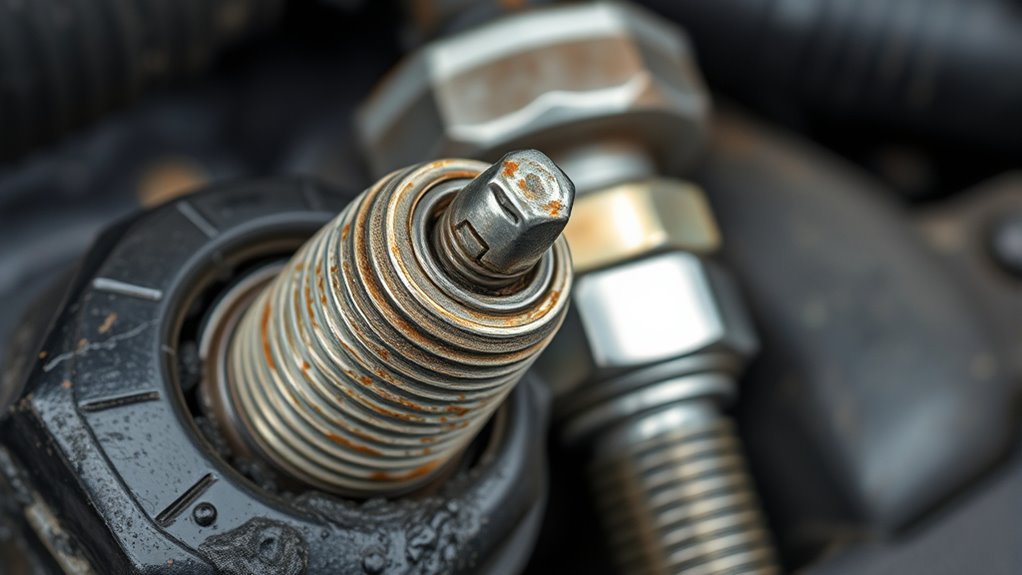
Old spark plug corrosion can seriously harm your engine’s performance by disrupting the electrical system, causing misfires, and reducing fuel efficiency.
Corroded plugs struggle to generate a strong spark, leading to poor combustion. This affects acceleration and can leave your engine running roughly.
Over time, the corrosion worsens, putting undue stress on other parts. Replacing spark plugs when they’re corroded helps maintain the best performance and keeps your vehicle running smoothly.
Are Specific Engine Types More Affected by Old Spark Plugs?
Certain engine types, like high-performance or fuel-injected engines, are more affected by old spark plugs.
You might notice a drop in fuel efficiency and poor ignition timing, which can cause rough idling or misfires.
Modern engines rely heavily on precise spark timing, so worn plugs lead to decreased performance and increased emissions.
Regularly replacing spark plugs guarantees peak ignition timing and keeps your engine running smoothly and efficiently.
Will Ignoring Spark Plug Issues Harm Other Engine Components?
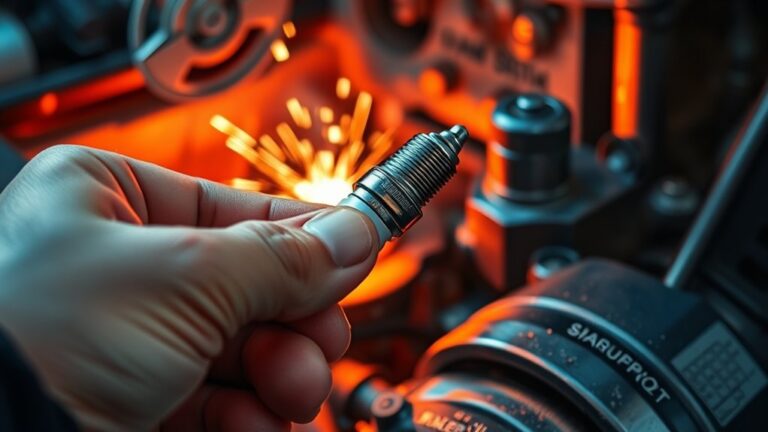
Striking coincidence: ignoring spark plug issues can seriously harm your engine components. When spark plugs are worn, they can cause a spark plug glow, leading to engine misfire.
This misfire stresses other parts like the catalytic converter, ignition coils, and fuel system, potentially causing damage and costly repairs.
Conclusion
Neglecting to change your spark plugs is like inviting chaos to your engine’s party. It’ll cause serious damage if you ignore it.
By staying on top of maintenance and replacing them when needed, you keep your engine running smoothly. This also helps you avoid costly repairs down the line.
Don’t let worn-out spark plugs turn your ride into a sluggish, fuel-guzzling disaster. Keep those sparks flying strong.
Remember, regular spark plug replacement is key to maintaining your engine’s health. It keeps your performance sharp and your fuel economy in check.