How Do Hydrogen Fuel Cell Vehicles Work
Many people want to switch to cleaner, more sustainable transportation but often feel overwhelmed by new technology and complex options. If you’re curious about green vehicle alternatives, hydrogen fuel cell vehicles are an exciting solution worth exploring.
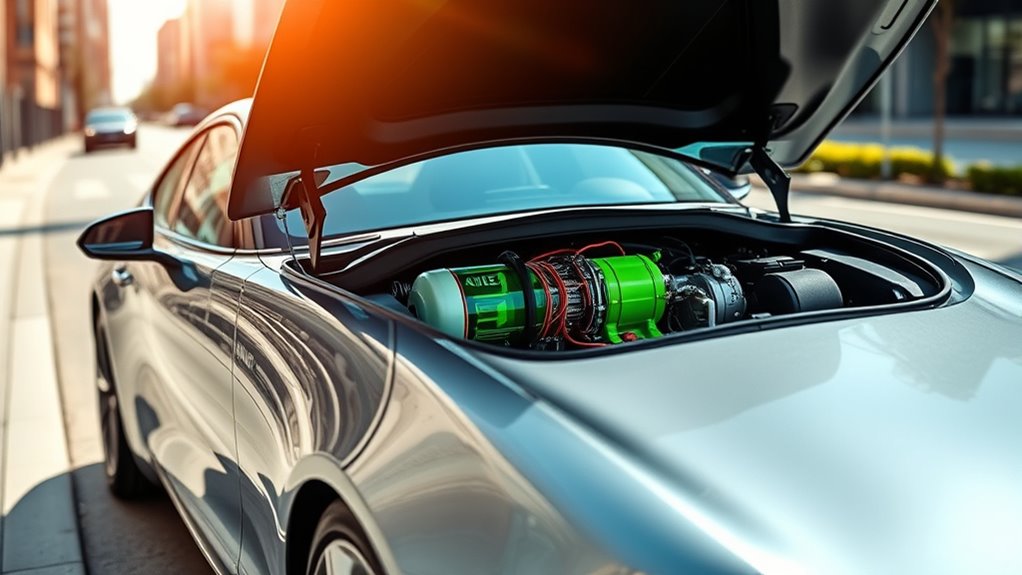
Hydrogen fuel cell vehicles work by converting hydrogen gas into electricity that powers an electric motor. You carry hydrogen stored in high-pressure tanks, and when you start the vehicle, hydrogen enters the fuel cell stack.
There, catalysts split it into protons and electrons, creating electrical power. The only waste product is water vapor. If you want to understand how core components and infrastructure work together, keep exploring this innovative technology.
Key Takeaways
- Hydrogen fuel cells turn hydrogen gas into electricity through chemical reactions, which then powers electric motors in vehicles.
- The hydrogen is stored in high-pressure tanks or cryogenic systems and is fed into the fuel cell stack.
- Inside the fuel cell, hydrogen’s protons and electrons are separated. The electrons generate electrical current.
- The electrons flow to the electric motor, giving the vehicle its propulsion, while the protons move through an electrolyte to the cathode.
- At the cathode, oxygen reacts with the protons and electrons, creating only water vapor as a byproduct.
What Are Hydrogen Fuel Cell Vehicles and How Do They Work?
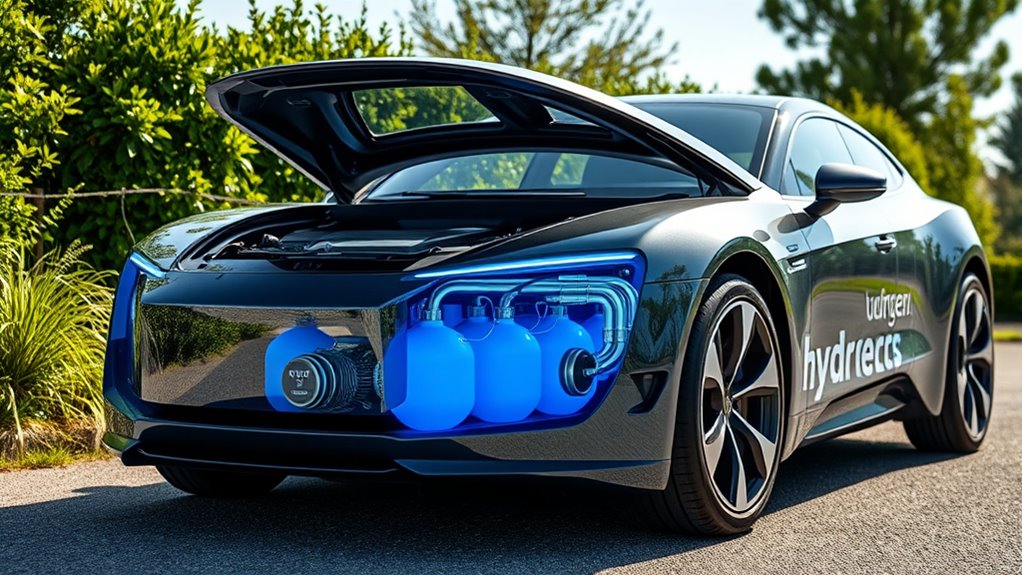
Hydrogen fuel cell vehicles are an innovative type of zero-emission vehicles that run on hydrogen instead of conventional gasoline or diesel. They use a fuel cell to convert hydrogen gas into electricity, powering an electric motor.
Hydrogen fuel cell vehicles are eco-friendly, zero-emission cars that use hydrogen to generate electricity and power electric motors.
When you drive, hydrogen from the tank combines with oxygen from the air in the fuel cell, producing electricity, heat, and water vapor. That’s the only emission from the vehicle.
Safety is a key concern with hydrogen, so manufacturers focus on hydrogen safety through rigorous design standards and strong storage tanks. These ensure the gas stays contained.
Fuel cell efficiency is also important because it affects how well the vehicle converts hydrogen into usable power. Modern fuel cells are highly efficient and provide better energy conversion than traditional engines.
Thanks to their clean operation, hydrogen fuel cell vehicles offer a sustainable future. They are a promising alternative for reducing carbon footprints while providing reliable, efficient transportation.
Key Components of a Hydrogen Fuel Cell Vehicle
Sure! Here’s a more conversational version of your text:
—
If you want to get a good handle on how a hydrogen fuel cell vehicle works, it’s helpful to know the main parts involved. First up, there’s the fuel cell stack, which is the core component that makes electricity. Then, you’ve got the hydrogen storage system, which keeps the fuel safe and ready to use. Finally, the power control module acts like the traffic cop, managing how the energy flows to different parts of the vehicle. When all these components work together, your car runs smoothly and efficiently.
Fuel Cell Stack
The fuel cell stack is at the heart of a hydrogen fuel cell vehicle. It’s where hydrogen’s chemical energy gets turned into electrical power.
As a key part, it supports the push toward a hydrogen economy, aiming to replace fossil fuels with cleaner energy sources. The stack has multiple fuel cells stacked together, which boosts efficiency.
This setup produces electricity through electrochemical reactions instead of burning fuel. That means higher power output and better use of energy.
It generates electricity with very little emissions, making it a crucial player in sustainable transportation. By efficiently converting hydrogen, the fuel cell stack helps make hydrogen vehicles a practical, eco-friendly alternative to gasoline cars.
Hydrogen Storage System
Ever wondered how hydrogen fuel cell vehicles store the energy needed for operation? The hydrogen storage system is essential for safely holding fuel until it’s ready for use.
It typically involves high-pressure tanks made from lightweight, durable materials that guarantee storage safety. These tanks are designed to withstand extreme conditions and prevent leaks, reducing risk during accidents.
Maintaining hydrogen purity is critical. Impurities can harm the fuel cell, so the system includes filters and purification processes.
By storing hydrogen at high pressure, vehicles maximize energy density without taking up too much space. This setup allows for quick refueling and consistent fuel delivery.
This ensures the vehicle runs smoothly. Overall, the hydrogen storage system combines safety, efficiency, and reliable fuel storage for ideal performance.
Power Control Module
Once hydrogen is stored and properly purified, it needs to be managed efficiently to power the vehicle. The Power Control Module handles this by regulating how electrical energy flows between the fuel cell stack, electric motor, and batteries.
It uses advanced control algorithms to optimize power management, making sure you get the right amount of power when needed. This module continuously monitors real-time data and adjusts outputs to keep the system stable and efficient.
It also protects key components by preventing overloads or shortages. With precise control, you’ll enjoy smooth acceleration, consistent performance, and a longer lifespan for the fuel cell. Overall, the Power Control Module is vital for seamlessly integrating hydrogen energy into your vehicle’s drivetrain, ensuring driving is efficient, safe, and reliable.
How Is Hydrogen Stored and Supplied to the Fuel Cell?
You’ll want to get a good handle on how hydrogen is stored and supplied to the fuel cell. There are a few different methods used for storage, like compressed gas, liquid hydrogen, and metal hydrides. Each method has its own advantages and challenges, so understanding these helps you see how they fit into the bigger picture.
Once stored, hydrogen needs to be delivered to the fuel cell efficiently and safely. This usually involves a network of pipelines, storage tanks at fueling stations, or on-demand delivery systems. Safety is really critical here—proper handling, leak prevention, and quick response protocols are all part of making sure everything runs smoothly and securely.
Hydrogen Storage Methods
Hydrogen must be stored safely and efficiently to ensure a reliable supply for fuel cell vehicles. Storage methods focus on keeping hydrogen pure, which is essential for optimal fuel cell performance.
Specialized storage containers, often made from high-strength materials like carbon fiber composites, hold hydrogen at high pressure or low temperature. Compressed gas tanks are common, storing hydrogen at pressures of up to 700 bar, but cryogenic tanks are also used for liquid hydrogen.
Each method ensures minimal hydrogen loss and preserves purity. Proper storage solutions are key to preventing leaks, improving safety, and providing a steady fuel supply. These systems are built to meet strict safety standards, keeping hydrogen secure until it’s needed in the fuel cell.
Supply Chain Infrastructure
Efficient supply chain infrastructure is key to ensuring hydrogen reaches fuel cell vehicles safely and reliably. It relies on a network that supports hydrogen production, whether through electrolysis or natural gas reforming, to generate enough fuel.
Once produced, hydrogen needs to be stored and transported securely using pipelines, compressed gas cylinders, or liquid tanks. As demand grows, infrastructure expands to make distribution more efficient and widespread.
This involves investing in refueling stations, reliable transportation systems, and storage facilities. A strong supply chain reduces costs, cuts delays, and builds consumer trust.
Ultimately, a well-developed infrastructure makes hydrogen-powered vehicles more practical, accessible, and ready to support a cleaner transportation future.
Safety and Handling
Because of its flammable nature and small molecular size, hydrogen must be stored and handled with strict safety measures.
You should follow thorough safety protocols to prevent leaks and accidents, like regular inspections of storage tanks and transfer lines.
Handling procedures require specialized equipment, such as high-pressure tanks and venting systems, to ensure safe storage and delivery.
When refueling, always check for leaks and keep open flames or sparks away from the area.
At fueling stations, trained personnel oversee the process to minimize risks.
By following proper handling procedures and safety protocols, hydrogen can be a safe and reliable energy source for fuel cell vehicles.
These measures help protect both people and the environment while promoting clean transportation.
How Do Fuel Cells Generate Electricity From Hydrogen?
Ever wonder how a fuel cell turns hydrogen into electricity? Inside the fuel cell, hydrogen gas enters the anode side, where a catalyst splits it into protons and electrons.
Hydrogen enters the anode, where a catalyst splits it into protons and electrons, powering the fuel cell.
The electrons flow through an external circuit, creating electrical power to run the vehicle. Meanwhile, the protons pass through an electrolyte membrane to the cathode side.
At the cathode, oxygen from the air combines with the protons and electrons, producing water as the only byproduct. This process showcases how fuel cells support the growing hydrogen economy and offer a clean energy solution.
Recent advancements have made fuel cells more efficient, durable, and cost-effective. As hydrogen becomes more accessible, fuel cells are set to play a big role in sustainable transportation.
With every step, hydrogen is directly converted into usable electricity, powering the vehicle without emissions. This pushes us toward a cleaner, greener future.
Powering the Vehicle: The Role of the Electric Motor
How does the hydrogen fuel cell actually power the vehicle? When hydrogen produced through various methods is supplied to the fuel cell, it undergoes a chemical reaction with oxygen, creating electricity. This electricity powers the electric motor that drives your vehicle.
The electric motor is highly efficient, turning electrical energy into mechanical energy to move the car smoothly and quietly. Unlike internal combustion engines, it doesn’t burn fuel but relies directly on the electricity generated by the fuel cell.
Fuel cell efficiency is key to how well the vehicle converts hydrogen into usable power. Higher efficiency means you can travel farther on the same amount of hydrogen. The process produces minimal waste, making hydrogen fuel cell vehicles an energy-efficient alternative.
As long as hydrogen is supplied and the fuel cell works properly, the electric motor remains the reliable powerhouse that keeps your vehicle moving seamlessly.
Environmental Benefits: Why Hydrogen Cars Are Cleaner
Hydrogen cars don’t emit any tailpipe pollutants, so they’re a lot cleaner than your regular gas-powered vehicles. And the cool part is, if the hydrogen they use is made from renewable energy sources like wind or solar, then their overall environmental footprint gets even smaller. All of this adds up to making hydrogen fuel cell cars a pretty promising choice if we’re serious about cutting down air pollution and protecting the planet.
Zero Emissions Emitted
Because hydrogen fuel cell vehicles produce only water vapor as a byproduct, they emit zero tailpipe emissions. This makes them much cleaner than gasoline-powered cars since no harmful pollutants or greenhouse gases are released during operation.
As more countries adopt hydrogen vehicles worldwide, their environmental advantages become clearer. However, hydrogen pricing varies, which influences how quickly these vehicles become mainstream.
Lower costs can speed up adoption, leading to fewer emissions overall. The cleaner profile of hydrogen cars helps combat climate change and improves air quality in cities.
Choosing hydrogen supports a sustainable future and a healthier planet. Here’s a quick look at how this impacts the environment:
| Benefit | Impact |
|---|---|
| Zero tailpipe emissions | No greenhouse gases or pollutants |
| Reduced air pollution | Creates healthier urban environments |
| Lower overall emissions | Helps in fighting climate change |
| Increased adoption | Offers more eco-friendly transportation options |
| Influence of hydrogen pricing | Affects how fast hydrogen vehicles spread |
Renewable Production Methods
Here are three ways renewable production maximizes environmental benefits:
- It notably lowers carbon emissions, supporting a cleaner planet.
- It guarantees a sustainable hydrogen supply, reducing dependence on finite resources.
- It creates a healthier environment by reducing pollutants linked to traditional fuel sources.
Adopting renewable methods helps you drive cleaner, greener, and more sustainably.
Understanding the Fuel Cell Stack and Its Critical Role
The fuel cell stack is the main part that turns hydrogen into electricity to power the vehicle. Instead of burning hydrogen like in traditional engines, it uses an electrochemical process, which is more efficient.
Inside the stack, hydrogen molecules split into protons and electrons at the anode. The electrons move through an external circuit to create electricity that powers the motor.
At the same time, protons travel through an electrolyte membrane to the cathode, where they combine with oxygen and electrons to make water. This process only produces water and heat, which is environmentally friendly.
The system’s efficiency depends on how well the fuel cell converts hydrogen into usable electricity. The design of the fuel cell stack helps maximize efficiency by reducing energy losses and optimizing reactions.
Refueling Hydrogen Vehicles: How It Works and Infrastructure Challenges
How do you refill a hydrogen fuel cell vehicle, and what challenges does its infrastructure face? You go to a hydrogen refueling station, kind of like a gas station but made for hydrogen. You connect the dispenser, and in just a few minutes, your tank empties and fills with compressed hydrogen, ready for your trip.
But there’s a catch. Infrastructure barriers make it tough for more people to adopt hydrogen cars because stations are few and far between. This sparse network can make drivers see hydrogen vehicles as inconvenient.
The main challenges include:
- Limited refueling stations, making access hard for many potential users.
- The high costs of building these stations, slowing down widespread use.
- Public perception and awareness, which influence how many people accept and choose hydrogen.
To fix these issues, we need investments and better education about hydrogen’s safety and environmental benefits. Improving infrastructure is key to making hydrogen fuel cell vehicles a practical, everyday option for drivers everywhere.
Pros and Cons of Hydrogen Fuel Cell Technology
Hydrogen fuel cell technology is an exciting alternative to traditional gasoline engines. It produces electricity through a chemical reaction between hydrogen and oxygen, only releasing water as a byproduct.
One big advantage is its high fuel cell efficiency, meaning it turns hydrogen into electricity very effectively. This offers better energy use compared to combustion engines.
But safety is a concern since hydrogen is highly flammable. Proper storage and handling are crucial to prevent accidents. Luckily, safety measures at refueling stations and for vehicles have been improving.
A major benefit is that it’s environmentally friendly. The only emission is water vapor. On the downside, making, storing, and distributing hydrogen can be expensive and requires a lot of energy.
Building the necessary infrastructure also needs a lot of investment, which limits wide adoption right now. Overall, hydrogen fuel cell tech has great potential, but tackling safety risks and improving efficiency are key to unlocking its full benefits.
The Future of Hydrogen Fuel Cell Vehicles and What’s Next
Advances in technology and increasing environmental concerns are making hydrogen fuel cell vehicles more practical and likely to become widespread soon. As the push toward a hydrogen economy picks up pace, these vehicles could change how we get around.
You might soon enjoy cleaner air and less reliance on fossil fuels, transforming your commute and community for the better.
Here are some exciting possibilities to consider:
- Helping meet global environmental goals by reducing carbon emissions.
- Lessening dependence on oil, which boosts energy security.
- Driving innovation, creating new jobs, and supporting economic growth.
The future of hydrogen fuel cell cars depends on international collaboration, investment, and smarter infrastructure. As more people adopt these vehicles worldwide, you’ll be part of a movement toward sustainable mobility.
This new era of transportation promises cleaner, more efficient travel, all built on the promise of a hydrogen-powered economy.
Frequently Asked Questions
How Long Does a Hydrogen Fuel Cell Vehicle Typically Operate on a Full Tank?
A hydrogen fuel cell vehicle typically operates between 300 to 400 miles on a full tank, depending on fuel efficiency and tank size. When you fill up, your car uses the stored hydrogen to generate electricity and power the motor.
Your driving habits, terrain, and climate can affect how long a full tank lasts. Overall, these vehicles are designed to give you a longer range compared to many electric cars.
What Are the Safety Measures for Handling and Storing Hydrogen Fuel?
You need to follow strict safety measures when handling and storing hydrogen fuel. Always check for hydrogen leaks with proper detectors. Make sure tanks are well-maintained and secure, avoiding damage.
Follow storage regulations by keeping hydrogen in designated, ventilated areas. This helps prevent the buildup of hydrogen gas, which can be dangerous.
Proper training, regular inspections, and good ventilation are key. These steps help minimize risks, keeping you safe and ensuring hydrogen remains a reliable, clean energy source.
Can Hydrogen Fuel Cell Vehicles Operate in Cold Weather Conditions?
In cold weather, hydrogen fuel cell vehicles can still operate, but they face unique challenges. You might notice a slight dip in fuel efficiency since low temperatures slow down the chemical reactions inside the fuel cell.
However, advanced heating systems and insulation techniques help keep the vehicle running smoothly. This ensures you stay confident on your journey.
With ongoing technological improvements, cold weather operation is becoming increasingly reliable for hydrogen-powered cars.
How Quickly Can a Hydrogen Fuel Cell Vehicle Be Refueled?
You can refuel a hydrogen fuel cell vehicle in about 3 to 5 minutes, similar to traditional gasoline cars. This quick refueling is possible because of the high fuel cell efficiency and the way hydrogen is stored and transferred.
Hydrogen production methods ensure a steady supply, making it easy to quickly refill. This allows for fast, convenient refueling that fits into your regular driving routine without long waits.
This fast process makes hydrogen vehicles practical for everyday use.
What Are the Main Challenges in Building Widespread Hydrogen Refueling Stations?
Building widespread hydrogen refueling stations faces key challenges like developing robust hydrogen infrastructure and overcoming regulatory hurdles. You’ll find that establishing a reliable network requires significant investment, safety standards, and collaborative policies.
The complexity of producing, storing, and distributing hydrogen safely makes the process more complicated. Addressing these regulatory hurdles is vital because they can delay deployment and boost costs.
Overcoming these barriers is essential to making hydrogen refueling accessible and promoting clean transportation adoption.
Conclusion
Just like filling up your car, refueling a hydrogen fuel cell vehicle is quick—taking about the same time as a gasoline car. Imagine powering your journey with a clean, almost silent engine, like a whisper of innovation.
Hydrogen cars hold the promise of cleaner air and energy independence. Think of them as the seed for a greener future. With each fill, you’re nurturing progress toward a sustainable world powered by hydrogen fuel cell technology.