
How Do Air Shocks Work
If you’ve ever felt every bump and jolt while driving or hauling heavy loads, you’re not alone. Many people struggle with a rough, uncomfortable ride, especially on uneven roads or when carrying extra weight. Luckily, air shocks can help smooth out those bumps and improve overall comfort.
Air shocks work by using compressed air stored in a chamber to dampen road impacts and adapt to changing loads. You can adjust the air pressure to control ride firmness and height, responding quickly to bumps or heavy cargo.
Sensors and valves automatically help maintain smooth performance.
By understanding how they respond to terrain and load changes, you’ll see how they improve ride quality. Keep exploring to learn more about their features and maintenance.
Key Takeaways
- Air shocks use compressed air stored in an air chamber to absorb bumps and vibrations during driving.
- Adjustment mechanisms let you inflate or deflate air to change ride firmness and vehicle height.
- Sensors and valves respond quickly to road conditions, adjusting air pressure to keep your ride comfortable and stable.
- When you add more load, the internal air pressure increases, stiffening the shocks for better load support and stability.
- Regular maintenance helps ensure proper air pressure and catch leaks or wear early, keeping your shocks working their best.
What Are Air Shocks and How Do They Work?
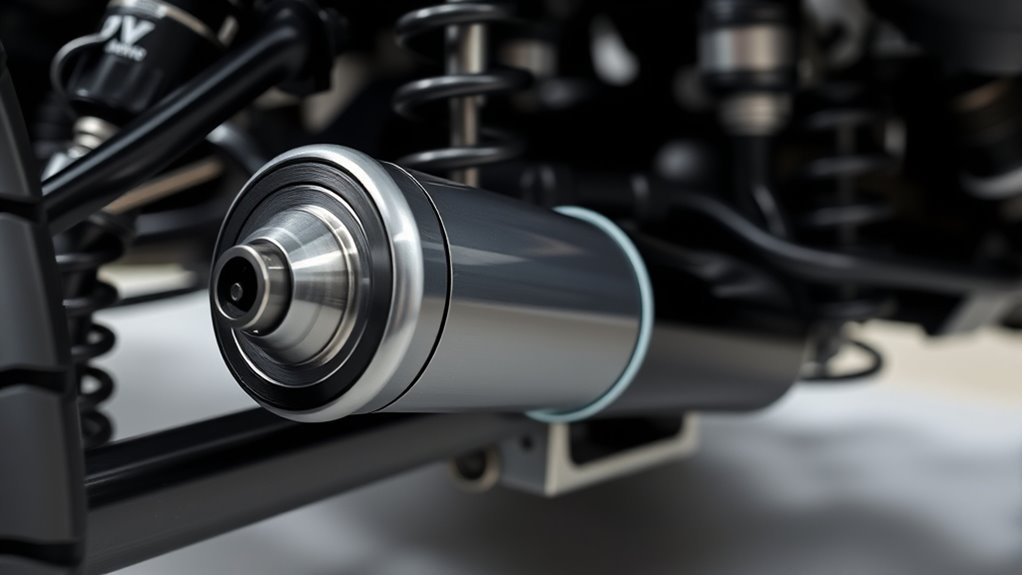
Air shocks are a type of suspension system that uses compressed air to absorb shocks and improve ride quality. They often appeal to those seeking vintage looks since they can be customized with classic designs while still providing modern performance.
Air shocks offer vintage style with modern comfort through adjustable, air-filled suspension.
When you inspect these shocks, shock fluid analysis becomes essential. It reveals the health of your suspension system and helps ensure everything is working properly.
The air inside adapts to different terrains, offering adjustable firmness for comfort or precise handling. You control the ride stiffness by inflating or deflating the air chamber.
This adaptability also helps keep your vehicle at the proper height, maintaining that vintage look. Unlike traditional coil or leaf springs, air shocks offer a smoother, more consistent ride.
Regular shock fluid analysis ensures the internal components are functioning well. It prevents leaks or wear that could affect performance.
Key Components of an Air Shock System
If you want to get a good grip on how air shocks work, it’s helpful to know their main parts. The air chamber is basically where compressed air is stored—this is what absorbs those bumps and impacts when you’re riding.
Then, there are adjustment mechanisms, which you can tweak to make your ride smoother or snappier, depending on your preference. And of course, mounting components are what keep everything securely attached to your bike or vehicle, so it stays in place no matter where you go.
Air Chamber Structure
The air chamber is the main part responsible for absorbing shocks and adjusting suspension firmness in an air shock system. It’s a sealed space that holds compressed air to give you that cushioning effect during rides.
This structure is built to handle high pressures while staying durable and responsive. Inside, pressure regulation is key; it lets you fine-tune the firmness by adding or letting out air.
Making small adjustments to the pressure directly changes how your suspension reacts to different terrains and loads. The size and shape of the chamber are carefully designed for optimal performance, ensuring consistent shock absorption.
Adjustment Mechanisms
Adjustment mechanisms are key parts that let you customize your air shock’s performance for different riding conditions. They give you control over things like compression and rebound damping, which directly impact how comfortable and controllable your ride feels.
By adding or releasing air through a valve, you can change the air pressure in the chamber and fine-tune the shock’s firmness. Some shocks have knobs or dials for even more precise adjustments, helping you adapt the suspension to various terrain types.
Making proper adjustments ensures your bike absorbs bumps smoothly while keeping control. Mastering these mechanisms helps you get the best ride quality whether you’re on rough trails or smooth pavement.
Mounting Components
Mounting components are essential to making sure your air shock works properly and stays securely attached to your bike. They include bolts, brackets, and bushings that hold the shock in place.
Proper installation prevents movement that could affect your bike’s handling and comfort. When mounting your air shock, check that all components are clean, aligned, and torqued to the right specifications.
This helps ensure smooth compression and rebound. While interior lighting isn’t directly related to mounting components, it can help you see clearly when making adjustments or checking for damage.
Good mounting also improves fuel efficiency by maintaining ideal suspension performance and reducing unnecessary strain on other parts. Keeping your mounting components secure and well-maintained keeps your ride smooth, safe, and efficient.
How Air in Shocks Adjust to Road Conditions
Air in shock absorbers constantly responds to changing road conditions by adjusting its pressure. This keeps your ride smooth and stable. When you hit a bump or pothole, the shock senses the jolt and quickly redistributes air pressure.
This adjustment helps maintain optimal damping without over-compressing. The system uses a valve connected to an air pump and sensor to react fast to surface changes.
As a result, the shocks compensate for uneven terrain and reduce the impact felt. But excessive air pollution from the environment can hurt the system’s performance.
Understanding How Vehicle Load Affects Air Shocks
When your vehicle’s load increases, the air shocks respond by increasing the internal pressure to keep the ride smooth. This adjustment makes sure your vehicle handles extra weight without sacrificing comfort, which is essential for off-road adventures or luxury driving.
Here’s how vehicle load impacts air shocks:
- Ride Height: Heavier loads compress the shocks, slightly lowering your vehicle. This helps improve stability, especially when off-road or towing heavy loads.
- Damping Control: More load makes the shocks stiffen up, preventing excessive sag and keeping the suspension geometry in check. This results in better handling.
- Comfort & Safety: Proper air pressure adapts to load changes, reducing wear and tear while offering a smooth, controlled ride whether you’re hauling equipment or cruising in style.
Knowing how load affects your air shocks helps you optimize performance. It gives you better control, comfort, and responsiveness, whether on tough terrains or in luxury setups.
Installing and Maintaining Air Shocks: What You Need to Know
Installing and maintaining air shocks requires careful attention to detail to guarantee ideal performance and safety. Start by inspecting the vintage design shocks for any leaks or worn parts, making sure they fit your vehicle properly.
Inspect vintage air shocks for leaks and wear to ensure proper fit and safe performance.
When installing, follow the manufacturer’s guidelines closely, especially paying attention to the hydraulic systems involved. Proper mounting is crucial to prevent misalignment or damage.
Regularly check the air pressure because maintaining the right level helps keep the shock’s function and ride comfort at their best. Keep an eye on the shock body and connections for any signs of corrosion or wear and replace damaged parts promptly.
Maintaining air shocks also means cleaning to remove dirt and debris that could harm the hydraulic systems. Remember, vintage design shocks might have different specs, so always verify compatibility with your vehicle.
Proper installation and routine checks will help extend the life of your air shocks, ensuring a smooth and safe ride.
Signs Your Air Shocks Need Attention
Your vehicle may start showing signs that your air shocks need attention, especially if you notice a rougher ride or unusual noises. Air shocks were originally designed to improve comfort and handle heavy loads, but neglect can cause issues.
Recognizing these signs early helps prevent more damage and reduces waste from premature replacements. Addressing problems promptly keeps your vehicle safer and more efficient.
Here are three warning signs to watch out for:
- Uneven or bumpy ride: If bumps feel jolty or rough, your air shocks might be failing, hurting both handling and comfort.
- Visible leaks or hissing sounds: Damaged shocks can leak air, making your vehicle sag or producing hissing noises.
- Excessive bouncing or sagging: When your vehicle bounces too much or sags when loaded, your air shocks aren’t supporting properly anymore.
Fixing these issues early keeps your ride smooth and safe. Plus, it helps you avoid costly replacements and supports eco-friendly maintenance by keeping parts in good shape longer.
Air Shocks vs. Traditional Springs: Which Is Better?
Choosing between air shocks and traditional springs depends on your driving needs and what’s important to you. Air shocks give you adjustable ride comfort, better handling, and flexibility for different loads, making them great for towing or off-road adventures.
Traditional springs are simple, reliable, and durable, which makes them perfect for everyday driving. They don’t need much maintenance and last a long time.
Air shocks started from basic coil and leaf springs but added adjustable air chambers for more customization. Material-wise, they often use aluminum or lightweight composites to reduce weight and improve response.
Steel springs are heavier but tend to be more resilient over time. The materials used make a big difference in how long each option lasts and how they perform.
| Feature | Air Shocks | Traditional Springs | Evolution & Material |
|---|---|---|---|
| Adjustability | High | Low | Grew from simple springs, now with lightweight materials |
| Durability | Moderate | High | Steel versus composites, trend toward lightweight alloys |
| Cost | Higher | Lower | Cost depends on complexity and materials used |
| Maintenance | Moderate | Low | Material choices impact longevity |
Can You Customize Your Ride With Air Shocks?
Sure, with air shocks, you can really personalize your ride to match your style. Want to raise or lower the suspension? No problem—just a quick adjustment, and you’re good to go. It’s pretty neat because you can tweak the ride height whenever you want, whether you’re tackling rough terrain or cruising on smooth roads.
Plus, you’ve got control over how things feel. You can dial in softer, more comfortable rides or go for that stiffer, sportier feel—whatever suits your mood or driving needs. It’s like having the ability to customize your driving experience on the fly, making every trip feel just right for you.
Adjustable Ride Height
Ever wondered if you can tweak your vehicle’s ride height on the fly? With air shocks, you absolutely can. Adjusting your ride height involves controlling the air compressor to add or release air, which directly impacts shock absorber geometry.
This feature lets you lower or raise your car for better handling or clearance, depending on your needs. To keep it working smoothly, proper air compressor maintenance is essential.
Here are a few points to keep in mind:
- Regularly check for leaks and wear in the air lines.
- Monitor pressure levels to prevent over- or under-inflation.
- Adjust ride height when necessary to optimize shock absorber geometry for your driving conditions.
This setup offers flexibility and control, making your ride adaptable at a moment’s notice.
Tailored Suspension Feel
Have you ever wanted your vehicle’s suspension feel to match your driving style or road conditions perfectly? Air shocks make it easy to customize your ride’s suspension feel, giving you a tailored experience.
You can adjust stiffness and comfort based on what you prefer, which can improve handling and ride quality. This flexibility also makes your interior driving experience more enjoyable.
Proper car maintenance helps keep air shocks performing their best and retains this ability to customize your ride. To pick the best settings, consider this simple table:
| Driving Conditions | Suspension Feel |
|---|---|
| Smooth highway | Soft and comfortable |
| Rough terrain | Stiff and controlled |
| Heavy cargo | Robust and stable |
| City driving | Balanced and responsive |
With this setup, you can create the perfect ride for any situation.
Custom Damping Settings
Adjusting damping settings on air shocks lets you fine-tune your vehicle’s ride quality and handling just the way you like it. By customizing damping, you can control how your air shocks respond to different driving conditions, boosting both comfort and stability.
Before making adjustments, make sure your air shocks are compatible with your vehicle. Proper damping settings also help extend the life of your air shocks by reducing unnecessary strain and wear.
Here are three ways to personalize your ride:
- Crank up damping for a firmer, sportier feel on smooth roads.
- Turn down damping for a softer, more comfortable ride over rough terrain.
- Strike a balance with damping settings to handle various conditions while keeping your air shocks in good shape.
These tweaks let you customize your suspension while keeping your components safe and long-lasting.
Troubleshooting Common Air Shock Failures
When air shocks stop working properly, quick diagnosis can save you both time and money. Knowing their history helps you understand common failure points, often caused by wear or manufacturing issues.
Early air shocks were simple but prone to leaks. Today’s designs are more durable thanks to better manufacturing, but failures still happen. Common problems include air leaks, uneven ride height, or loss of damping control.
Early shocks leaked easily; modern designs are more durable but can still fail, causing leaks, uneven ride, or damping issues.
Start by inspecting air lines and fittings for leaks or cracks. If the shocks aren’t holding air, the problem might be with the air compressor or internal seals. Uneven ride height or poor handling could point to failed internal parts or blocked valves.
Regular maintenance and catching leaks or damage early can help extend the life of your shocks. Understanding their manufacturing background lets you identify potential weak spots. But for quick troubleshooting, focus on visual checks, listening for hissing sounds, and testing air pressure to find the root cause.
Are Air Shocks a Good Investment for Your Vehicle?
Air shocks can be a worthwhile investment if you value improved ride comfort, adjustable handling, and better load management for your vehicle. They offer benefits like smoother rides and the ability to adapt to different driving conditions.
However, consider a few key factors before investing.
First, look at air shock durability. Quality units tend to last longer and withstand daily wear, ensuring consistent performance over time.
Next, think about pricing considerations. Air shocks vary in price, so balance your budget with the features you need. Cheaper options might save money initially but could require more frequent replacements.
Finally, consider your performance needs. If you often haul heavy loads or tow, air shocks can noticeably improve handling and reduce strain on your vehicle’s suspension.
Frequently Asked Questions
How Long Do Air Shocks Typically Last?
Air shocks typically last between 50,000 and 100,000 miles, depending on your ride comfort preferences and shock durability. If you keep them maintained, check for leaks, and replace the air compressor when needed, you’ll enjoy a smoother ride for longer.
Be aware that colder temperatures can slightly reduce shock lifespan. So, regular inspections are important to make sure your air shocks perform as well as possible and last as long as they should.
Can Air Shocks Improve Off-Road Performance?
While air shocks excel on smooth roads, they can also boost off-road performance by offering adjustable suspension that adapts to rough terrain. You’ll enjoy better control, comfort, and load capacity.
But keep in mind, regular maintenance and suspension adjustments are key to getting the most out of your shocks. Proper tuning helps absorb bumps more effectively.
When set up correctly, air shocks provide stability and confidence whether you’re tackling rocky trails or uneven ground.
Are Air Shocks Compatible With All Vehicle Types?
Air shocks aren’t compatible with all vehicle types. You’ll want to check your vehicle’s make and model before choosing to install air shocks.
Regular maintenance is key to keeping them working well. Some vehicles, especially lighter or older models, might not support air shocks.
How Do Temperature Changes Affect Air Shock Performance?
Did you know temperature swings can change air shock performance by up to 20%? When it gets colder, the air inside shocks contracts, which drops the pressure and can affect your ride quality.
On the flip side, heat makes the shock fluid viscosity decrease, making shocks less responsive. So, extreme temperatures can really impact how your shocks perform.
That’s why keeping an eye on the weather is key. Proper temperature regulation helps maintain peak performance and prevents damage or discomfort during your ride.
What Are the Safety Precautions When Using Air Shocks?
When using air shocks, you should follow proper safety precautions. Always perform air shock maintenance regularly, checking for leaks and signs of wear.
Follow shock adjustment guidelines carefully to prevent over-inflation or under-inflation, which can impact safety. Use a reliable pump with a pressure gauge, and wear eye protection while making adjustments.
Make sure the vehicle is on a level surface and secure before you start adjusting. This helps minimize the risk of accidents or damage.
Conclusion
Understanding how air shocks work is like mastering a dance—every move, from adjusting air pressure to handling different loads, helps you glide smoothly over any terrain.
With their ability to adapt and provide a cushioned ride, air shocks can truly transform your driving experience.
If you take good care of them, they become your reliable partner on the road, turning rough patches into a gentle waltz you enjoy every mile.