How to Do Spark Plugs Come Pre-Gapped Check
If you’ve ever struggled with ensuring your spark plugs are properly gapped, you’re not alone. Many car owners find this little detail tricky, but it’s essential for your engine’s smooth operation.
Most spark plugs come pre-gapped to the manufacturer’s specifications, so they’re ready for installation. You can verify this by using a spark plug gap tool or feeler gauge to check the gap before installation.
If it’s slightly off, you can gently adjust it by bending the ground electrode.
Ensuring the correct gap helps your engine run smoothly.
To learn how to accurately check and adjust your spark plugs, keep exploring the steps involved.
Key Takeaways
- Most spark plugs come already pre-gapped at the factory to match the manufacturer’s specs, so they should be ready to go when you buy them.
- To check the gap, grab a feeler gauge or a spark plug gap tool and measure the distance between the electrodes.
- Then, compare that measurement to your vehicle’s recommended gap, which you can find in the owner’s manual.
- Handle the plugs carefully, especially if they’re iridium or platinum, to avoid damaging the electrodes while you’re checking.
- If needed, gently bend the ground electrode to adjust the gap to the right size, then recheck to make sure it’s correct.
How Do Spark Plugs Typically Come From the Factory?
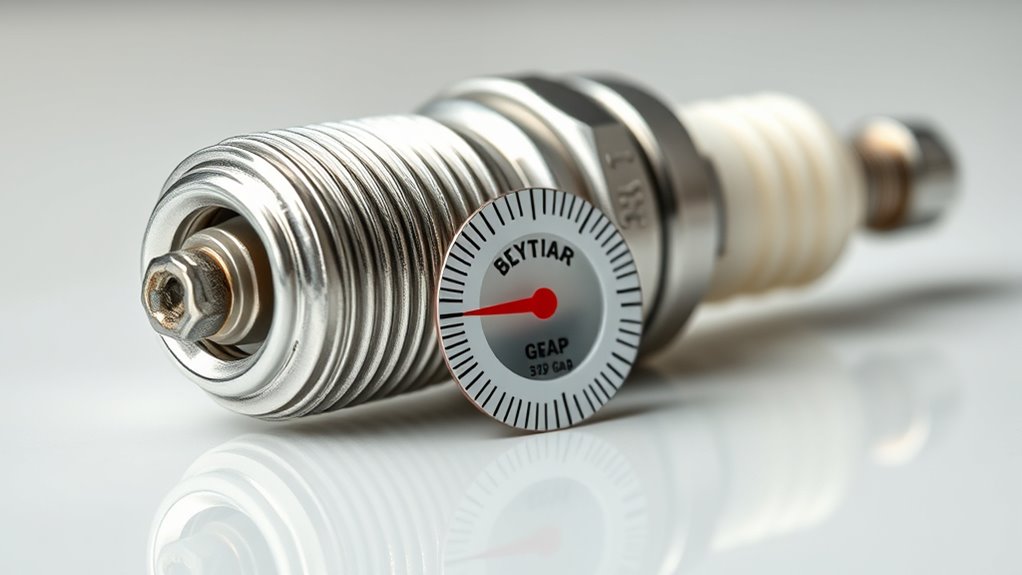
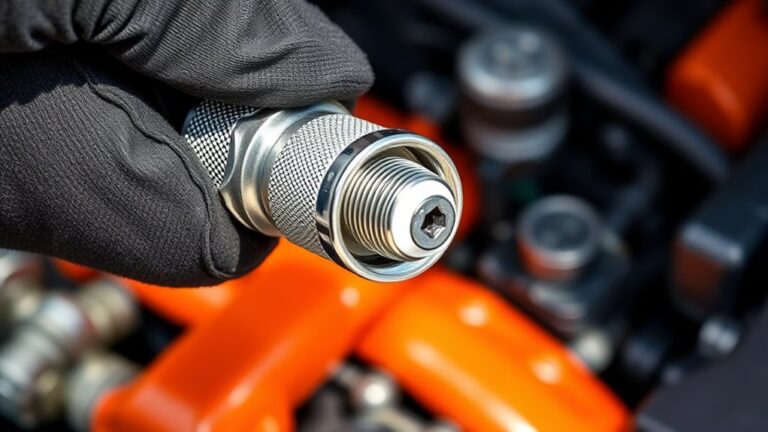
Most spark plugs come from the factory pre-gapped to the standard specifications for their intended engine. During manufacturing, the process starts with selecting high-quality materials like copper, platinum, or iridium to ensure durability and performance.
Most spark plugs are pre-gapped at the factory to match engine specifications for convenience and optimal performance.
The manufacturing involves forming the insulator and shell, then assembling the central and ground electrodes. These parts are precisely put together with advanced machinery to maintain consistent quality.
Once assembled, the spark plug is tested for electrical performance and durability. The gapping process happens afterward to make sure the gap between the electrodes matches the specifications.
Most modern spark plugs are pre-gapped at the factory for common engine requirements. This saves you time because you usually don’t need to make adjustments unless your vehicle’s manual says otherwise.
What Does Pre-Gapped Mean for Spark Plugs?
Pre-gapped means that the spark plug already has the right gap between the center and side electrodes when you get it from the factory. This gap is really important because it helps ensure your engine fires correctly and runs smoothly.
If the gap isn’t set just right, it can cause problems with how your engine performs and how easily it starts. Having a properly gapped spark plug makes sure everything runs efficiently and keeps your engine happy.
Definition of Pre-Gapped
When it comes to spark plugs, pre-gapped means the electrode gap is already set to the manufacturer’s recommended distance before you buy or install them. This setup makes sure they’re compatible with your vehicle based on spark plug technology and manufacturing standards.
Pre-gapped spark plugs save you time because you don’t have to manually adjust the gap. Here’s a quick overview:
| Term | Explanation | Benefits |
|---|---|---|
| Electrode Gap | Distance between the center and ground electrode | Ensures proper ignition spark |
| Pre-Gapped | Factory set to the specified gap | Ready to install, no adjustment needed |
| Manufacturing Standards | Guidelines for consistent quality | Reliable performance |
With pre-gapped plugs, you’re getting a component that’s already optimized for your engine’s needs.
Purpose of Gapping Spark Plugs
Understanding the purpose of gapping spark plugs is important because the gap directly impacts how well your engine ignites fuel. A proper gap ensures the right ignition timing, which is crucial for smooth engine operation.
When the spark plug gap is set correctly, it allows the spark to jump efficiently, igniting the air-fuel mixture evenly. This leads to better combustion, more power, and improved fuel economy.
If the gap is too small or too large, it can cause misfires or weak sparks, which disrupts the ignition process. Pre-gapped spark plugs are set to the manufacturer’s specs, saving you time during installation.
Keeping the right gap helps your engine run reliably, prevents damage, and helps keep emissions within healthy limits.
How Gaps Affect Performance
Gaps in spark plugs directly influence how effectively your engine performs. If the gap is too small, the spark may be weaker, leading to incomplete combustion, reduced fuel efficiency, and sluggish acceleration.
Conversely, a gap that’s too large can cause misfiring, stallouts, and engine hesitation, impacting overall engine reliability. Properly gapped spark plugs guarantee a strong, consistent spark, optimizing fuel burn and maximizing power output.
When spark plugs are pre-gapped correctly, your engine runs smoother and more efficiently, saving fuel and reducing wear on other engine components. Maintaining the correct gap is essential for consistent performance and longevity, preventing costly repairs or replacements.
In short, the right gap improves both fuel efficiency and engine reliability. It’s a key factor in keeping your engine healthy and running smoothly.
How to Check if Your Spark Plug Is Pre-Gapped Correctly?
Ever wonder if your spark plug is pre-gapped correctly? First, check the gap using a spark plug gap tool. Spark plug materials, like copper, platinum, or iridium, affect how tightly the gap needs to be maintained, but manufacturing standards usually ensure consistency.
To verify, compare your spark plug’s current gap to your vehicle’s specs, typically listed in the owner’s manual. If the gap isn’t within the recommended range, gently adjust it by bending the ground electrode.
Be careful not to damage the tip or the electrode, especially with precious metal plugs. Many spark plugs are manufactured to high standards to be pre-gapped correctly, but it’s always good to double-check.
Properly gapped plugs help promote efficient combustion and better engine performance. Regular inspection of the gap can prevent misfires or poor fuel economy and keep your engine running smoothly.
Tools Needed to Check Spark Plug Gap
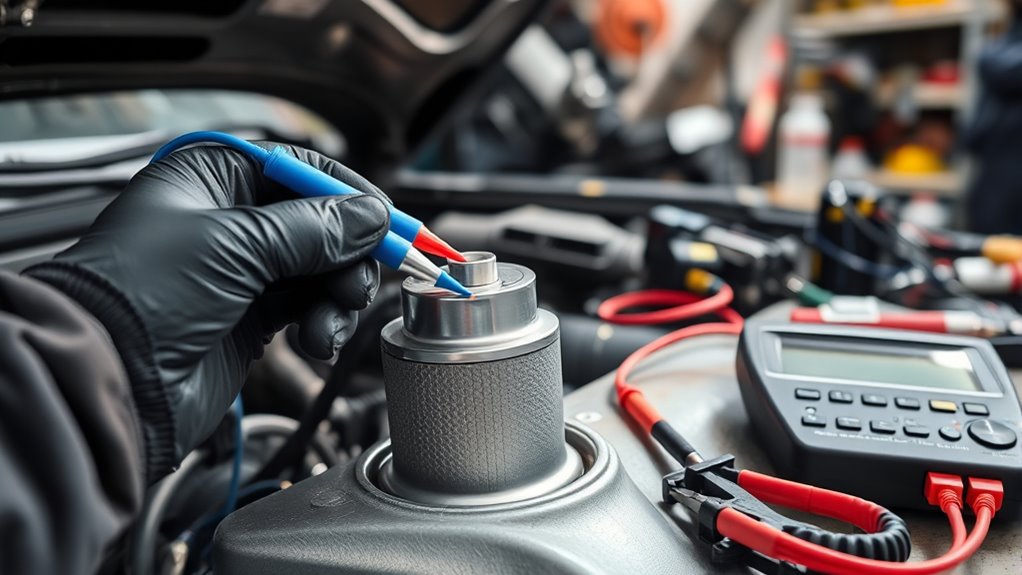
To check your spark plug gap accurately, you’ll want a spark plug gap tool or a feeler gauge. It’s a good idea to pick the right size that matches your vehicle’s specifications. Having some extra measuring tools nearby can also come in handy. When you have the proper tools ready, the whole process gets much easier and you can be confident in getting an accurate measurement.
Spark Plug Gap Tool
A spark plug gap tool is an essential device for checking and adjusting the gap on your spark plugs. It helps ensure the gap matches manufacturer specifications for maximum engine performance.
The tool usually has a wire or blade that lets you measure and make precise adjustments easily. When choosing a gap tool, think about the spark plug material—such as copper, platinum, or iridium—as different materials may need specific gap sizes.
Using a quality gap tool ensures you meet the right standards, preventing misfires or inefficient combustion. Most tools work with various spark plug sizes and materials, offering durability and accuracy.
Properly using this tool makes sure your spark plugs deliver the right spark at the right time, improving engine efficiency and extending its lifespan.
Feeler Gauge Selection
Selecting the right feeler gauge is key to accurately checking your spark plug gap. You want a set with a range of thicknesses to match your vehicle’s specs.
Choosing the correct gauge helps keep your spark plug at the ideal gap size, which affects fuel efficiency and ignition timing. An incorrect gap can cause rough idling, misfires, or less power.
When picking a feeler gauge, go for one made of sturdy, corrosion-resistant material. This keeps your measurements accurate over time. Make sure the numbers are clear and easy to read.
Using the right feeler gauge allows you to measure precisely and ensures consistent engine performance. Proper selection helps prevent issues like misfiring, saves fuel, and keeps the ignition timing just right.
Additional Measuring Supplies
Besides a feeler gauge, you’ll need a few additional tools to accurately check and adjust your spark plug gap. A small socket wrench or spark plug socket makes removing and installing the plugs easier.
While you’re at it, check your vehicle’s battery maintenance to ensure proper charging and prevent electrical issues. A tire pressure gauge is also handy, as maintaining correct tire pressure improves overall vehicle performance.
Properly gapped spark plugs help ensure efficient combustion, but don’t forget to inspect your spark plug wires and ignition system during maintenance. Using these tools together helps you avoid misfires or poor fuel economy.
Keep your vehicle in top shape with precise measurements and regular checks. This will help ensure smooth operation and extend your spark plug lifespan.
How to Check Your Spark Plug Gap
Checking your spark plug gap is an easy but important step to keep your engine running smoothly. The right gap size helps with proper ignition timing and spark advance, which can prevent misfires and rough running.
Checking your spark plug gap ensures smooth engine performance and prevents misfires.
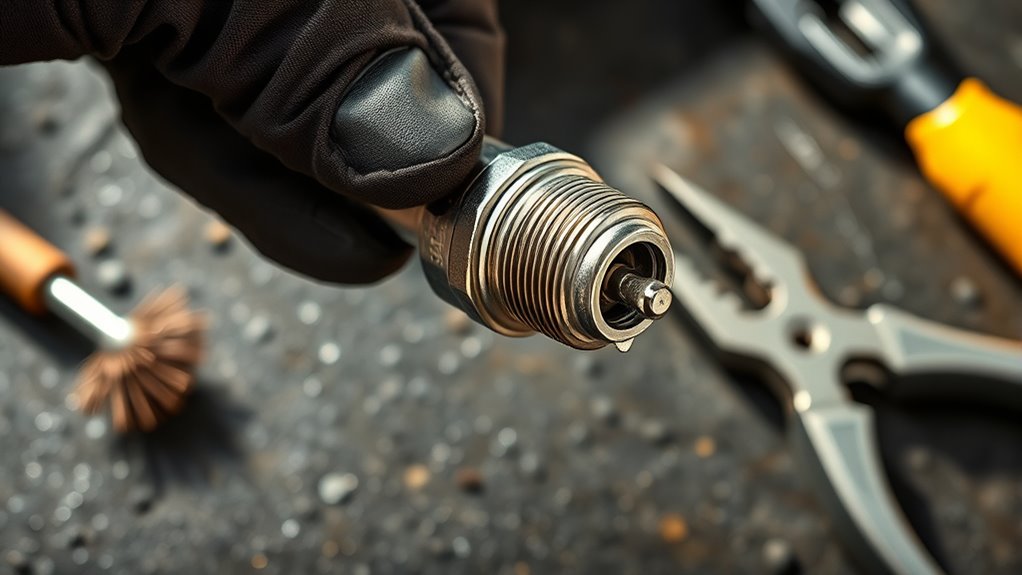
To check it, start by removing the spark plug from your engine. Use a spark plug gapping tool to get an accurate measurement. If the gap is too wide or narrow, gently bend the electrode to adjust it, being careful not to damage the plug.
Keep these points in mind:
- The correct gap keeps your ignition timing on point.
- Proper spark advance helps your engine use fuel efficiently.
- An incorrect gap can cause hesitation and slow acceleration.
- Maintaining the right gap helps stop engine misfires.
- Regular checks can help extend your engine’s life and keep it powerful.
What to Do If Your Spark Plug Is Not Properly Gapped
What should you do if you find your spark plug isn’t properly gapped? First, don’t ignore it, because a misadjusted gap can cause misfires or poor engine performance.
To fix it, remove the spark plug and examine the gap with a feeler gauge. If it’s too narrow or wide, carefully bend the electrode to match the recommended gap for your vehicle.
Make sure to handle the spark plug by its insulator to avoid damaging the electrode. Once adjusted, reinstall the spark plug, ensuring it’s tight but not over-torqued.
Check the spark plug wire connection to confirm it’s secure. A loose wire can mimic ignition system issues. Proper gapping guarantees the ignition system fires correctly, providing smooth engine operation.
Always double-check the gap after adjustment, and if in doubt, consult your vehicle’s manual. Correctly gapped spark plugs help your ignition system perform at its best.
Are Pre-Gapped Spark Plugs Reliable or Should You Always Recheck?
Pre-gapped spark plugs are generally reliable because they’re manufactured to meet specific gap specifications, but it’s still a good idea to recheck them before installation. Spark plug materials and manufacturing consistency play key roles in guaranteeing quality, but small variances can occur.
Even with high standards, handling and transport can alter the gap slightly. Why take chances with your engine’s performance? Double-checking ensures you’re installing a quality part, giving you peace of mind.
When you verify the gap yourself, you eliminate risks of misfiring, poor fuel economy, and potential damage. Plus, it ensures every component is working at its best.
Don’t rely solely on factory settings — your vehicle’s performance depends on precision. Remember, paying attention to detail makes all the difference, so trust your instincts and verify that the pre-gapped spark plugs are ready for peak performance.
Common Signs Your Spark Plug Gap Needs Adjusting
If your engine suddenly hesitates or stalls out, it could be a sign that your spark plug gap needs a little tweaking. Sometimes, it’s those small adjustments that make a big difference in how well your engine performs.
You might also notice that your fuel efficiency isn’t quite what it used to be, especially if your spark plugs aren’t properly gapped. Taking care of these little issues early on can really help keep your engine running smoothly and save you money in the long run.
Engine Hesitation or Stalling
Have you ever experienced your engine hesitating or stalling unexpectedly? It’s frustrating and often means your spark plug gap might need adjustment. When the gap isn’t set correctly, ignition timing can become inconsistent, leading to misfires.
Fuel injection may also suffer, causing uneven power delivery. You might notice a sudden engine stumble, loss of power during acceleration, or rough idling. It can even make starting your vehicle harder.
Unexplained hesitation when pressing the gas pedal is another sign. These symptoms usually point to issues with spark plug gaps affecting ignition and fueling. If your spark plugs aren’t firing properly, your engine won’t run smoothly, increasing the chances of stalling.
Adjusting the gap helps ensure proper combustion. This reduces hesitation and helps keep your engine running reliably. It’s a simple fix that can make a big difference in how your vehicle performs.
Poor Fuel Economy
Noticing that you’re using more fuel than usual could be a sign there’s an issue with your spark plug gap. When the gap isn’t set correctly, it can mess with your fuel efficiency, making your engine burn more fuel than necessary.
An incorrect gap can also throw off your ignition timing, leading to incomplete combustion. This mismatch can hurt your engine’s performance and boost fuel consumption.
To fix this, check your spark plug gap and adjust it if needed. Making sure it’s set properly helps ensure ideal ignition timing. When your spark plugs are gapped right, they promote complete combustion, which improves fuel efficiency and makes your engine run smoother.
With the proper gap, ignition timing becomes more accurate, helping your engine run more efficiently. Regularly inspecting and adjusting your spark plug gap can save you money on fuel and extend your engine’s lifespan.
Tips for Properly Gapping Spark Plugs at Home
Gapping spark plugs correctly is essential for ideal engine performance, and doing it at home can save you both time and money. Proper gap adjustment guarantees maximum ignition timing and fuel mixture, leading to smoother runs and better fuel efficiency.
When gapping, handle the porcelain insulator carefully to prevent damage. Use a spark plug gap tool to check and adjust the electrode to the manufacturer’s specifications. Be precise — small deviations can cause misfires or poor combustion.
Keep these tips in mind:
- Stay calm and patient, precision matters more than speed
- Use the right tools designed for spark plug gaps
- Double-check the manufacturer’s gap specs before making adjustments
- Protect the electrode to avoid inaccurate gaps or damage
- Test the spark plug after gapping to confirm proper clearance
Getting the gap right directly impacts ignition timing and fuel efficiency, boosting engine performance and longevity.
When to Consult a Professional for Spark Plug Gapping
While many vehicle owners can confidently gap spark plugs at home, there are times when it’s better to get professional help. If your ignition system is complicated or if you’re unsure about the correct gap, a professional can do it accurately.
Incorrectly gapped spark plugs can cause poor engine performance or misfiring, which hurts fuel efficiency. If you recently installed new spark plugs and notice your fuel economy has dropped, it’s a good idea to have a technician check the gapping.
If your vehicle is having trouble starting or running roughly, a professional assessment might reveal ignition issues that simple gapping can’t fix. Also, if you don’t have the right tools or experience, it’s best to leave it to the experts.
Some spark plugs require specific gaps beyond standard measurements. Proper gapping by a professional can improve ignition performance and help your vehicle run smoothly and efficiently.
Frequently Asked Questions
Can Using an Incorrect Gap Damage My Engine?
Using an incorrect gap can damage your engine because it affects how well the spark plug materials work and can throw off engine performance.
A spark plug with too wide or narrow a gap can cause misfires, uneven combustion, and faster wear.
Over time, these problems can lead to damage to engine parts and shorten the engine’s lifespan.
Always make sure your spark plugs are gapped correctly to protect your engine and keep everything running smoothly.
How Often Should I Recheck Spark Plug Gaps?
You should recheck your spark plug gaps every 30,000 miles or if you notice engine issues like misfires or poor acceleration.
Over time, spark plug gaps can widen, especially during the spark plug’s lifespan, which may cause problems with your ignition system.
Regularly inspecting and adjusting the gaps helps ensure your engine performs at its best, prevents damage, and extends the life of your spark plugs and engine components.
Are There Different Gapping Standards for Different Vehicles?
Yes, different vehicles do have varying gapping standards. You can’t just take a one-size-fits-all approach since spark plug materials and manufacturer specs matter.
Always check your vehicle manufacturer’s recommended gap size in the owner’s manual. Going off course is like putting a square peg in a round hole.
Following the right gap ensures peak performance and prevents misfires, helping your engine run smoothly.
What’s the Best Method to Adjust a Spark Plug Gap Accurately?
The best way to adjust a spark plug gap accurately is by using the right tools and precise techniques. Start by selecting a wire gauge or feeler gauge that matches your vehicle’s specifications.
Gently bend the electrode until it matches the recommended gap, being careful not to apply too much force. Always double-check with the gauge to ensure you’ve got the right measurement.
This careful approach helps your engine perform at its best and improves fuel efficiency.
Do Platinum or Iridium Spark Plugs Come Pre-Gapped Differently?
Think of spark plug design like unique fingerprints; platinum and iridium plugs often arrive pre-gapped because of how they’re made. Iridium plugs, with their stronger, durable tips, usually come precisely gapped and ready to go.
Platinum plugs, which have a softer metal coating, might need a quick check, but typically, both types are pre-set. This careful manufacturing helps with smoother starts and longer life, so you spend less time fiddling.
Conclusion
So, if you ignore spark plug gaps, your car might start misfiring like a rocket on a roller coaster, wasting fuel and losing power faster than you can say “engine trouble.” Always check those gaps—even if they come pre-gapped—to keep your engine running smoothly.
With just a little attention, you’ll avoid major breakdowns, costly repairs, and become the superhero of your own garage. Keep those plugs perfect, and your ride will thank you with endless miles of happiness. Regularly checking spark plug gaps is key to keeping your engine running at its best.