What Are the Basics of How Do Fuel Gauges Work
Are you tired of unexpectedly running out of fuel and getting stranded? Many drivers experience this frustration, but understanding how fuel gauges work can help you stay ahead of the game.
Fuel gauges work by measuring the amount of fuel in your tank using sensor systems like floats or resistance-based sensors. These sensors send electrical signals that are interpreted either by analog meters with a needle or digital displays showing precise levels.
By converting fuel level into electrical signals, the gauge provides real-time information to help prevent running out of fuel or damaging your engine.
Keep exploring to uncover how these systems stay accurate and reliable over time.
Key Takeaways
- Fuel gauges detect how much fuel is in the tank using sensors like floats or resistance-based systems. These sensors turn the fuel level into electrical signals.
- The system has a sending unit inside the tank, some wiring, and a gauge that shows the fuel level. This gauge can be either analog or digital.
- When the fuel level changes, it affects the sensor’s resistance or pressure, which then translates into a visible reading on the gauge.
- Calibration is important to make sure the gauge shows the right amount of fuel. It compares the readings with the actual tank levels.
- Regular maintenance of sensors and wiring helps prevent problems and keeps the fuel level reading accurate and reliable.
What Is a Fuel Gauge and Why Is It Important?
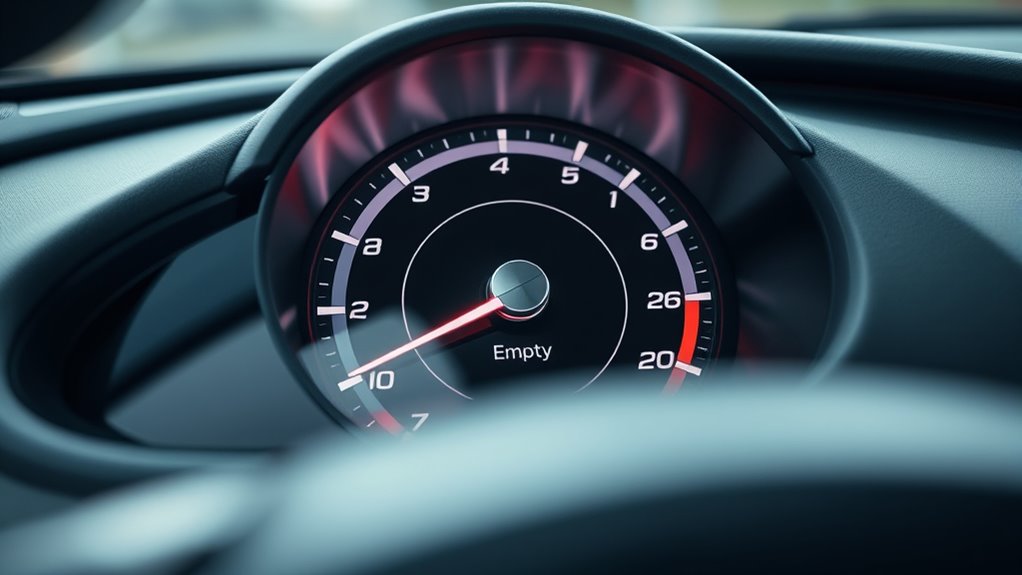
Have you ever wondered how you know when your car needs refueling before it’s too late? That’s where a fuel gauge comes in, playing a crucial role in keeping your vehicle running smoothly.
It helps you monitor your fuel level so you can plan refills and avoid running on empty, which could damage your engine or hurt your car’s performance.
A fuel gauge helps you track your fuel level to prevent engine damage and maintain optimal car performance.
A fuel gauge gives you real-time info, preventing unnecessary stops and making sure you always know how much fuel you have left.
Beyond saving you time, it also helps preserve your battery life by preventing your vehicle from working harder than it needs to when the fuel runs low.
Without a reliable fuel gauge, you risk unexpected stalls or breakdowns, which can be costly to fix.
In short, it’s an essential tool that helps keep your vehicle efficient and in good shape.
How Do Fuel Gauges Measure Gas Levels?
Fuel gauges measure gas levels by detecting how much fuel is in your tank through a sensor system that turns fuel quantity into an electrical signal. This signal then tells the gauge what the fuel level is.
The sensors inside your tank are usually float-based, pressure, or resistance-type. They all translate the fuel height into an electrical value that the gauge reads.
To keep readings accurate, proper calibration of the fuel gauge is really important. Calibration involves tweaking the system so the gauge matches the actual fuel level.
Sensor accuracy is key because any drift or malfunction can cause incorrect fuel estimates. Regular calibration helps keep the readings reliable and prevents surprises on the road.
Modern sensors are designed to be precise, but factors like temperature and fuel quality can affect measurements. By understanding how these sensors work and why calibration matters, you can see how your fuel gauge stays reliable and consistent.
Types of Fuel Gauges in Cars
There are mainly two types of fuel gauges in cars that you’ll come across: mechanical and electronic. Mechanical gauges work with physical parts, like a float that moves with the gas level, to show you how much fuel is left. On the other hand, electronic gauges use sensors and digital screens to give you the fuel readings. Knowing how these two types differ can help you better understand what your car’s fuel gauge is telling you.
Mechanical Fuel Gauges
| Feature | Operation | Maintenance | Pros | Cons |
|---|---|---|---|---|
| Float mechanism | Moves with the fuel surface | Check for wear regularly | Simple and reliable | Becomes less precise over time |
| Needle indicator | Moves on a calibration scale | Perform manual calibration | Easy to read | Sensitive to damage |
| Manual measurement | Physically checking fuel level | Inspect regularly | No electronics needed | Gradually less accurate |
Electronic Fuel Gauges
Proper calibration of the fuel gauge is key to reliable measurements, so you’re not caught off guard with an empty tank. Besides showing fuel levels, electronic gauges often include fuel economy indicators to help you track efficiency and driving habits.
This real-time data can be useful for maintenance and saving money. Electronic fuel gauges are also more durable and less prone to mechanical failure than mechanical ones, making them a favorite in today’s cars.
Key Components of a Fuel Gauge System
Understanding the key components of a fuel gauge system is essential to grasp how it accurately measures and displays your vehicle’s fuel level. These parts work together to help you improve fuel efficiency and promote fuel conservation. The main components are the fuel sending unit, the fuel gauge itself, and the power source.
Here’s a quick overview:
| Component | Function | Importance |
|---|---|---|
| Fuel Sending Unit | Sends fuel level data via electrical signals | Determines how accurate your fuel reading is |
| Fuel Gauge | Shows the fuel level visually based on signals | Keeps you informed so you don’t run out of fuel |
| Power Source | Provides electrical power to the gauge system | Ensures the system works consistently, helping with fuel efficiency |
How Float and Sending Units Work
The float and sending units work together to measure your vehicle’s fuel level accurately. The fuel level indicator depends on the float arm mechanism, which connects to a float sitting on the fuel surface inside your tank.
As the fuel level changes, the float moves up or down, shifting the float arm mechanism accordingly. This movement is then transmitted to the sending unit, usually a variable resistor or potentiometer.
The sending unit adjusts its electrical resistance based on the float’s position. This resistance change corresponds to the fuel level and sends a signal to your vehicle’s gauge.
When the tank is full, the float is high, and the resistance is at a specific value. When it’s empty, the float drops, and the resistance shifts accordingly.
This entire system ensures your fuel level indicator shows an accurate reading, helping you know when to refuel without guesswork.
How the Circuit and Display Show Your Gas Level
Once the sending unit adjusts its resistance based on the float’s position, this electrical signal needs to be interpreted and displayed clearly. The circuit takes this changing resistance and converts it into a voltage that the gauge can understand.
The circuit converts resistance changes into understandable voltage signals for accurate fuel level display.
Inside, a needle moves across a dial, showing your gas level. Because gasoline density can vary with temperature and quality, the system accounts for typical fluctuations to give a consistent reading.
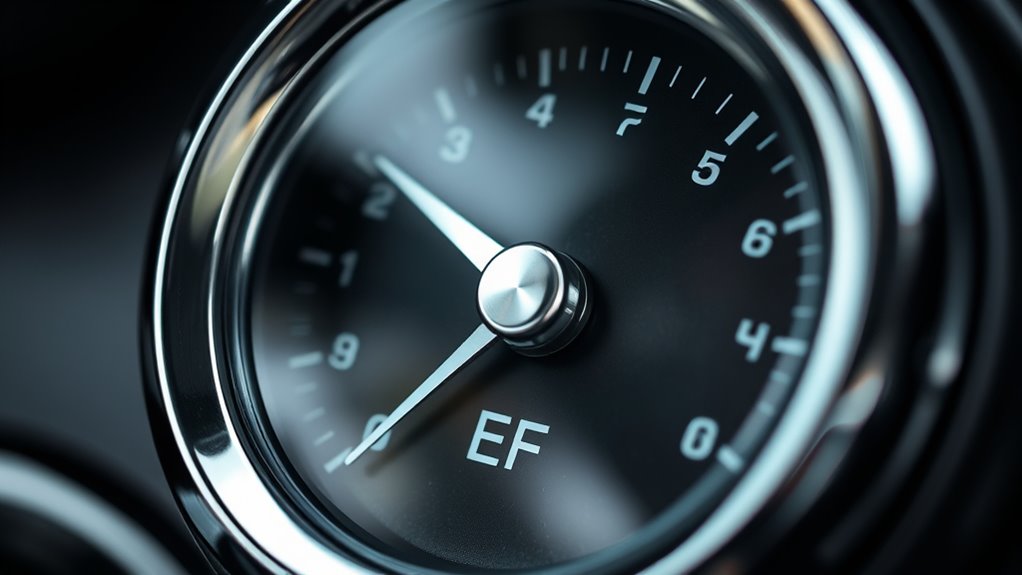
The fuel gauge doesn’t directly measure fuel amount. Instead, it shows the level based on the resistance signal, which relates to the fuel’s volume. As you use fuel, the float drops, increasing the resistance, and causing the needle to move downward.
This setup helps you monitor fuel consumption accurately, so you know when to refuel. Overall, the circuit and display work together to turn a complex resistance change into a simple, visual indication of how much gas is left in your tank.
Common Fuel Gauge Problems and How to Fix Them
If your fuel gauge isn’t showing the right level, it’s probably due to a few common issues like a faulty fuel sending unit, a broken sensor, or wiring problems. These kinds of issues can cause your gauge to give inaccurate readings or sometimes show nothing at all. Luckily, with a bit of troubleshooting, you can usually figure out what’s going on.
Once you’ve identified the problem, fixing it can often be straightforward. Whether it’s replacing a bad sensor or fixing broken wires, getting your fuel gauge back to normal is usually doable with some basic steps. Just take your time and follow the right procedures, and you’ll have your fuel gauge working correctly again in no time.
Faulty Fuel Sending Unit
A faulty fuel sending unit is a common reason for inaccurate or stuck fuel gauges. If your gauge isn’t reading properly, the problem might be with the fuel sensor calibration.
Over time, the sending unit’s parts can wear out or get damaged, causing incorrect fuel level readings. You might notice the needle stuck or jumping around unexpectedly.
To fix this, start by inspecting the sending unit and replacing it if needed. Usually, this means removing the fuel tank, which can be a bit of a hassle.
In some cases, you might need to replace the entire fuel gauge if the whole unit is faulty. Making sure the fuel sensor calibration is correct can help restore accurate readings.
This way, you’ll avoid running out of fuel unexpectedly.
Broken Fuel Gauge Sensor
Broken fuel gauge sensors are a common reason why your fuel readings can be inconsistent or just plain wrong. Usually, it’s a faulty sensor that can’t tell the gauge the right fuel level.
You might notice sudden jumps in the gauge or it gets stuck on full or empty. To fix this, you could try calibrating the gauge or replace the sensor altogether.
Think of a worn-out sensor covered in corrosion or dirt, causing those misreads. Visualize connecting new wiring or installing a fresh sensor to get your readings accurate again.
Replacing the sensor can do the trick, but you might also need to calibrate afterward. Fixing these issues makes sure your fuel gauge shows the real fuel level, so you don’t run out unexpectedly.
Wiring or Connection Issues
Wiring and connection issues are common culprits when your fuel gauge refuses to display accurate readings. Check the sensor placement to confirm it’s installed correctly—it’s often near the tank’s bottom.
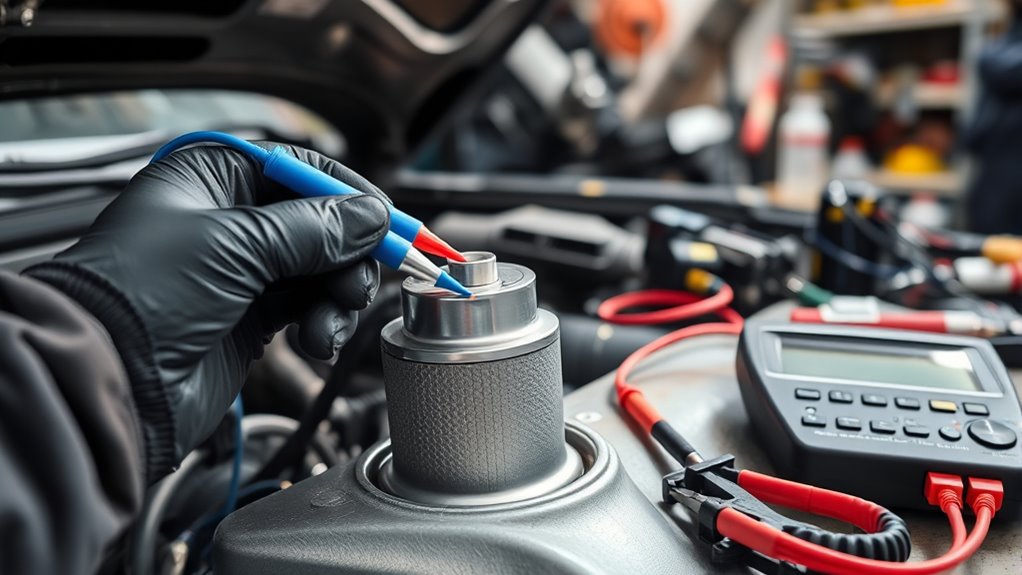
Loose or damaged wiring can cause inaccuracies, so inspect the wiring color codes for proper connections. Most fuel gauges use specific color codes for connections, such as red for power and black for ground. Verify these match the manufacturer’s diagram.
Loose connectors or corrosion at connection points can interrupt signals, resulting in faulty readings. If you find damaged wiring, replace or repair it promptly. Make sure all connectors are securely plugged in and free from corrosion.
Proper wiring and correct sensor placement are critical for your fuel gauge to work accurately.
How to Calibrate and Maintain Your Fuel Gauge
Calibrating and maintaining your fuel gauge ensures it provides accurate readings and stays reliable over time. Regular checks help keep your vehicle running efficiently and prevent unexpected breakdowns.
To calibrate, start by filling your tank completely and noting the reading on your gauge. Then, run the tank down to “empty” to see if the gauge reflects that. If these readings don’t match, you may need to adjust the gauge or have a professional do it.
Here are some key steps to keep your fuel gauge in top shape. First, inspect wiring connections for corrosion or looseness to make sure power flows properly. Next, regularly check for leaks or damage to the fuel sending unit or float, as these can affect accuracy.
Always follow safety precautions when working near the fuel tank or handling fuel to avoid hazards. Consistent maintenance not only improves the gauge’s accuracy but also promotes overall vehicle safety and better fuel efficiency.
Analog vs. Digital Fuel Gauges: Pros and Cons
Have you ever wondered whether an analog or digital fuel gauge is better for your vehicle? Each has its own advantages based on how you read fuel levels and your driving style.
Analog gauges give you quick visual cues, which some drivers find easier to interpret. But they can be less precise, making it harder to know exactly how much fuel you have.
Digital gauges show exact measurements, so you get a more accurate reading. This helps you manage your fuel more precisely, especially on long trips or when trying to save fuel.
Your driving habits matter too. If you like glancing at a gauge quickly, an analog might suit you better. But if you prefer exact data, a digital gauge is probably the way to go.
| Feature | Analog | Digital | Your Preference |
|---|---|---|---|
| Fuel gauge accuracy | Approximate | Precise | |
| Ease of reading | Quick visual cues | Exact measurement | |
| Response to fuel changes | Slight lag | Immediate | |
| Driver behavior impact | Less detailed info | More detailed info | |
| Reliability | Fewer electronic parts | More sensitive to faults |
Troubleshooting Your Fuel Gauge When It Malfunctions
When your fuel gauge starts acting up, troubleshooting it quickly can save you from unexpected fuel runs and costly repairs. First, check the dash indicator color—if it’s flickering or stuck, there might be a loose connection or sensor issue.
Consider the fuel tank materials because older tanks with rust or debris can disrupt sensor signals. Next, inspect the wiring for corrosion or damage, which can cause inaccurate readings or no reading at all.
Sometimes, the fuel sender unit or float may be faulty, especially if your gauge shows empty even after filling up. Make sure the lights and dashboard connections are secure. If the gauge still malfunctions, replacing faulty parts like the sender unit or sensor can fix it.
Frequently Asked Questions
Can Fuel Gauges Display Inaccurate Readings?
Yes, your fuel gauge can sometimes give inaccurate readings. This often happens because of issues with calibration or sensor problems.
Over time, the fuel sensor can drift or get dirty, leading to false readings. If the calibration isn’t right, the gauge won’t show the correct fuel level.
Regular maintenance or replacing the sensor can usually fix these issues and help you get accurate fuel readings.
How Does Temperature Affect Fuel Gauge Accuracy?
Think of your fuel gauge as a sensitive musician, tuning itself with perfect measurement calibration. When fuel temperature rises, it’s like the instrument’s strings stretch, causing the gauge to read inaccurately. Cooler temperatures tighten the strings, making readings more precise.
Are All Vehicle Fuel Gauges Electronically or Mechanically Operated?
Not all vehicle fuel gauges are electronically operated; some still use mechanical systems. Electronically operated gauges rely on a fuel sensor that sends electrical signals to the gauge, which then shows the fuel level.
Mechanical gauges, on the other hand, use a movable mechanical part connected directly to the fuel tank. Proper gauge calibration ensures accurate readings, no matter which system your vehicle uses.
It’s a good idea to check your vehicle’s manual to understand your specific fuel gauge type and what calibration needs it may have.
What Are Signs of a Failing Fuel Sender Unit?
Imagine your car’s fuel gauge as a musical instrument needing proper tuning. When it’s off-beat, the readings falter.
Signs of a failing fuel sender unit include erratic gauge readings, sudden drops, or a consistently empty-looking gauge even when fuel’s present. You should perform a fuel sender assessment and verify gauge calibration.
These problems often point to issues in the sender or connections. Ignoring this can leave you stranded unexpectedly.
Can Fuel Gauge Issues Cause Other Dashboard Warning Lights?
Yes, fuel gauge issues can trigger other dashboard warning lights. When there’s a problem with sensor calibration or faulty electrical connections, the gauge may give inaccurate readings.
This can cause warning lights like the check engine or other alerts to turn on. These signals are meant to alert you to potential issues in your vehicle’s electrical system.
Addressing sensor calibration problems and fixing electrical connections promptly can prevent false warnings. Doing this helps ensure you get accurate information from your dashboard.
Conclusion
So, next time your fuel gauge reads empty just as you hit the gas station, remember it’s a marvel of engineering, not a mysterious mind-reading device.
Despite all the high-tech gadgets in your car, a simple float and sender unit are behind what you see on the dashboard.
Maybe it’s comforting to know that even in this digital age, a tiny floating ball still holds the key to your next road trip.
Ironically, sometimes it’s the most basic parts like the fuel gauge that cause the biggest mysteries.