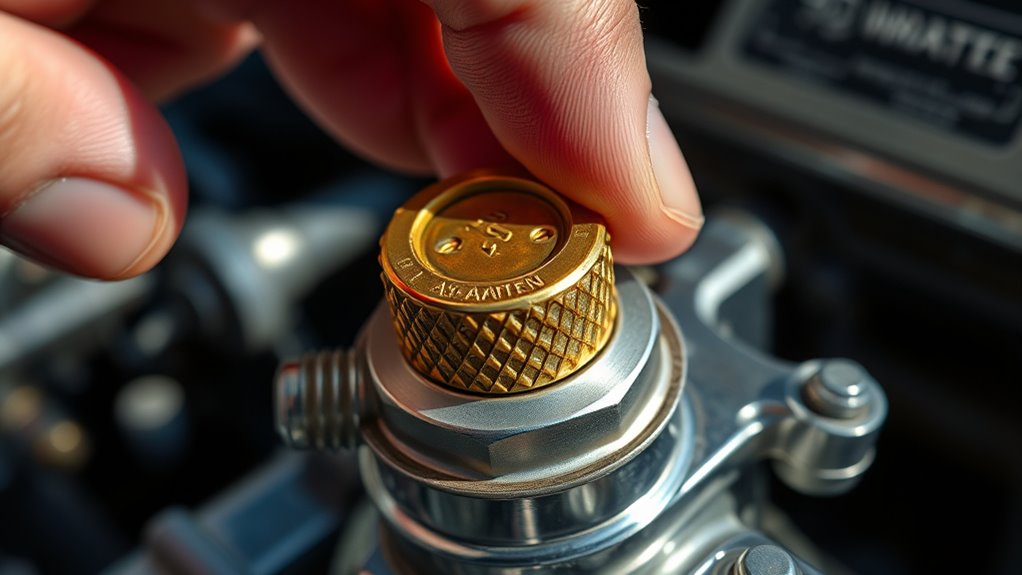
How Do You Adjust the Air Fuel Mixture Screw in 7 Simple Steps
Many car enthusiasts and DIYers know the frustration of trying to fine-tune their engines for the perfect ride. The air-fuel mixture screw is a common issue that many struggle with, but don’t worry—you’re not alone.
Adjusting it can seem tricky at first, but with a little guidance, you’ll master it in no time.
To adjust the air-fuel mixture screw, start by ensuring your engine is cool and gather the right tools. Locate the screw, usually marked “L” or “H,” on your carburetor, and understand it controls the fuel amount entering the engine.
Turn the screw slowly clockwise to lean out the mixture or counterclockwise to enrich it, while listening for smooth engine operation.
Once you get a steady idle, keep an eye on performance signs—more tips await you as you continue.
Key Takeaways
- Warm up the engine to the right temperature so your adjustments are accurate.
- Find the mixture screw on the carburetor, usually marked “L” or “H.”
- Turn the screw clockwise to make the mixture leaner, or counterclockwise to make it richer.
- Keep adjusting until the engine RPM peaks smoothly and the engine idles steadily.
- Test how the engine responds, then readjust if needed for the best performance.
Gather Tools and Prepare Your Vehicle

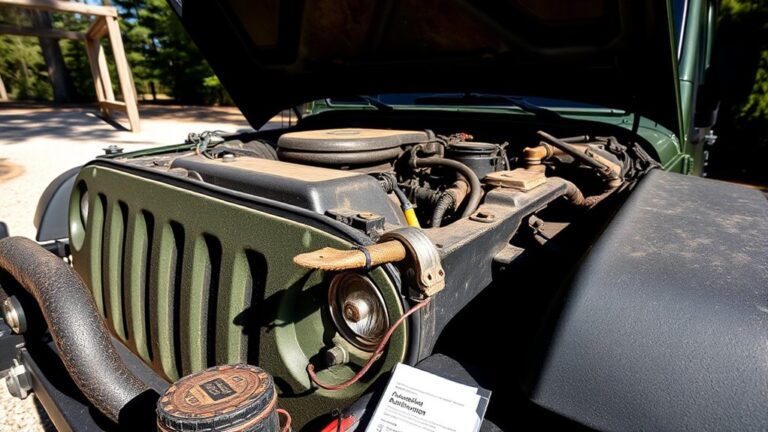
Before you start adjusting the air-fuel mixture screw, gather the necessary tools and prepare your vehicle. Make sure your engine is cool to avoid burns.
Ensure your engine is cool and gather all tools before adjusting the air-fuel mixture screw for safe, precise tuning.
Get basic tools like a flat-head screwdriver, which you’ll need to turn the screw carefully. It’s also a good idea to have carburetor cleaning supplies nearby in case you see dirt or buildup that might affect your adjustments.
Proper preparation is essential for better fuel efficiency. Check your air filter—an old or dirty one can throw off your adjustments.
Clear the area around your engine so you have room to work safely. Before making any changes, park your vehicle on a flat surface and engage the parking brake.
This preparation will help you make precise adjustments and keep your carburetor performing well, which can boost fuel efficiency and improve engine smoothness.
Locate the Air-Fuel Mixture Screw on Your Carburetor
To adjust the air-fuel mixture screw, the first step is to find where it’s located on your carburetor. It might seem tricky at first, but knowing what the screw does really helps—you’ll recognize it faster and avoid getting confused with other parts. Once you understand its purpose, locating the screw becomes a lot easier.
Taking a moment to look at the layout of your carburetor can make a big difference. Visualizing how everything fits together means you’ll be able to spot the screw quickly and with confidence. Trust me, a little prep work goes a long way in making the adjustment process smoother.
Identify Proper Location
Locating the air-fuel mixture screw on your carburetor is a straightforward but essential step in tuning your engine. To do this, follow these steps:
Open the engine cover to access the carburetor. Look for a small screw, usually on the side or bottom of the unit. Check for markings like “L” or “H,” which indicate the mixture screw location.
Confirm you’re identifying the right screw because adjusting it impacts fuel efficiency and emission control. Once found, you’ll be ready to fine-tune your carburetor.
Correct identification helps optimize engine performance, fuel economy, and helps meet emission standards by ensuring the proper air and fuel mixture.
Understand Screw Function
Understanding how the air-fuel mixture screw works is really important because it controls how much fuel gets mixed with the incoming air. This directly impacts how well your engine runs.
When you turn the screw, you’re adjusting the mix to find the sweet spot for fuel efficiency and emissions. Think of it like a simple switch that fine-tunes your motor’s air-fuel blend.
Here’s a visual to help you understand different screw positions:
| Screw Position | Effect on Engine | Impact on Emissions |
|---|---|---|
| Turned in | Rich mixture | Higher emissions |
| Turned out | Lean mixture | Reduced emissions |
| Slight adjustment | Balanced performance | Cleaner exhaust emissions |
| Maximum in | Excess fuel | Increased pollution |
| Maximum out | Less fuel | Improved emission control |
Getting to know how the screw works will help you master better tuning for your engine.
Visualize Carburetor Layout
Ever wondered where to find the air-fuel mixture screw on your carburetor? To see where it’s located, take a close look at your carburetor. It’s often a small screw sticking out from the side or the base.
Here are some key points to help you spot it. Look for a tiny screw near the throttle body; it’s usually easy to access without taking off the whole assembly. Check if there’s a sealed or covered screw—some models have a plug that you need to remove first.
Be aware of vacuum leak points nearby, because leaks can mess with your mixture adjustments. Unlike modern fuel injection systems, carburetors rely on this screw to fine-tune the air and fuel flow.
Getting familiar with the layout helps prevent accidental adjustments and keeps your engine running smoothly.
Understand What the Mixture Screw Does
Have you ever wondered how adjusting the air-fuel mixture screw can impact your engine’s performance? This tiny screw controls the fuel balance by regulating the amount of fuel mixed with the air intake before combustion. When you turn the screw, you’re essentially fine-tuning how much fuel gets into the combustion chamber.
Too much fuel makes the engine run rich, leading to poor gas mileage and smoke. Too little, and it’ll run lean, causing rough idling or stalling. The mixture screw helps optimize this balance for smoother operation and better efficiency.
By adjusting it, you influence how the engine responds at idle and low RPMs. Understanding what this screw does allows you to make precise tweaks, improving throttle response and preventing issues like hesitation or misfires.
In short, it’s a small part but has a big impact on your engine’s overall fuel management and performance.
Adjust the Air-Fuel Mixture Screw Step-by-step
To properly adjust the air-fuel mixture screw, start by warming up your engine to its normal operating temperature. This ensures that your adjustments are accurate, especially with fuel injection and throttle response.
Follow these steps: Locate the mixture screw, usually near the carburetor or throttle body. Turn the screw clockwise to lean the mixture or counterclockwise to enrich it. Do this slowly.
Listen or watch for engine smoothness. Adjust until you find the highest, steadier RPM. Fine-tune the screw slightly back and forth for the best idle and response, avoiding over-tightening or loosening.
Test and Fine-Tune for Optimal Engine Performance
Once you’ve adjusted the mixture screw, it’s important to test and fine-tune your engine for the best performance. Start by observing how it runs at idle and under load.
Listen for smoothness—if it’s rough or stalls, more adjustment might be needed. Use a tachometer to check RPMs, aiming for stable, recommended levels. Fine-tune gradually to balance power and fuel efficiency.
Here’s a quick overview:
| Adjustment Stage | Engine Response | Key Indicators |
|---|---|---|
| Idle Adjustment | Should run smoothly and consistently | No stalling or rough idling |
| Acceleration Test | Accelerates steadily without hesitation | Smooth throttle response |
| Fuel Efficiency | Uses less fuel over time | Longer trips and fewer refills |
| Emission Control | Produces clean emissions | No black smoke or odd fumes |
| Fine-Tuning | Finds the best mix of fuel and air | Runs smoothly with minimal gas use |
Following this process helps maximize fuel efficiency and keeps emissions low, making your vehicle run better and more environmentally friendly.
Signs You’ve Got the Mixture Right
Achieving the right air-fuel mixture means your engine runs smoothly, efficiently, and with minimal emissions. When you’ve properly adjusted the screw, you’ll notice several key signs.
1. Improved Fuel Efficiency: Your vehicle uses less fuel, saving you money and helping the environment.
2. Steady Idle: The engine stays consistent and smooth without stalling or feeling rough.
3. Clean Emissions: You won’t see black smoke or strong fumes, which means better emission control.
4. Responsive Acceleration: The engine reacts quickly and steadily when you press the gas pedal, with no hesitation.
These signs show you’ve dialed in the mixture correctly. An ideal balance improves fuel efficiency and keeps emissions low. If you notice rough idling, lots of smoke, or slow acceleration, it’s time to revisit your adjustments.
When tuned properly, your engine not only performs better but also helps protect the environment.
Maintain Your Mixture for Long-Term Performance
To keep your engine running smoothly for the long haul, it’s important to regularly check and tweak your air-fuel mixture. Don’t forget to use the right tools — they make sure your readings are spot-on and take the guesswork out of things.
Keep an eye on how your engine is performing. If you notice any changes, catching them early can save a lot of hassle down the road. Maintaining that perfect balance helps your engine stay efficient and last longer.
Regularly Check Mixture
Regularly checking your air-fuel mixture is key to keeping your engine running smoothly and avoiding damage. Staying on top of the mixture helps you get the best fuel efficiency and keeps emissions under control.
Here are four simple steps to keep your mixture in check:
First, listen for rough idling or uneven acceleration—these can be signs of a problem.
Next, use a vacuum gauge to watch engine stability and make adjustments to the screw if needed.
Then, do regular visual checks for carbon buildup around the carburetor.
Finally, keep an eye on your mileage and fuel consumption to spot any drops in efficiency early.
Use Proper Tools
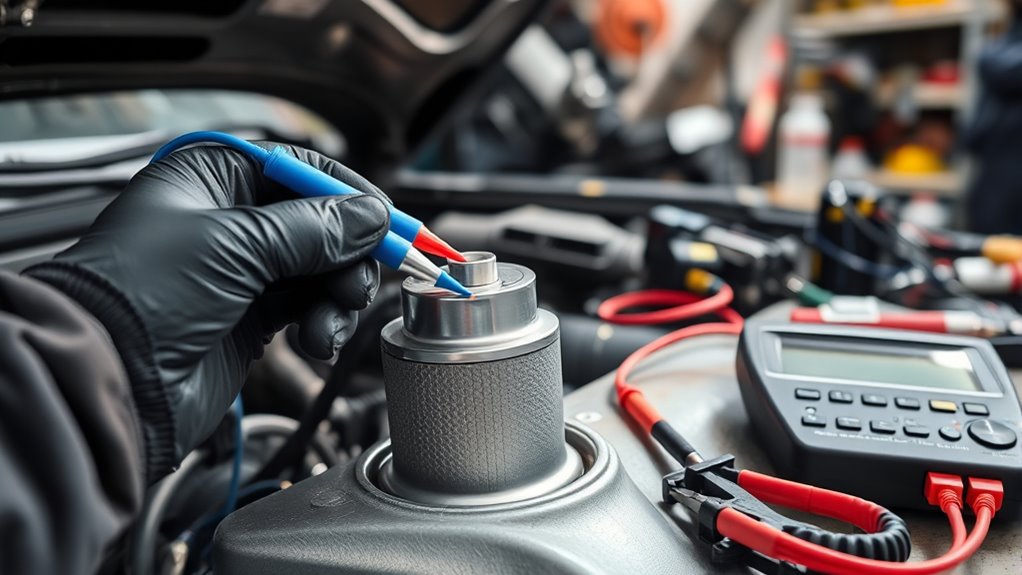
Using the right tools is essential for maintaining your air-fuel mixture over time. Proper tools guarantee accurate calibrations and consistent adjustments, helping you follow manufacturer specifications precisely.
Invest in a quality screwdriver or ignition wrench designed specifically for your carburetor. This prevents damage and allows for fine-tuned calibration techniques.
Avoid guessing or using inappropriate tools. Improper adjustments can lead to poor engine performance or increased emissions.
Always refer to your vehicle’s manual for recommended settings, and use calibrated tools to verify adjustments.
Maintaining the correct tools guarantees your adjustments stay true to manufacturer specifications. This ultimately supports long-term engine health and efficient operation.
Proper tool use is a key step in keeping an ideal air-fuel mixture over time.
Monitor Engine Performance
Ever wonder if your engine is running at its best after tweaking the air-fuel mix? Monitoring engine performance is key to making sure you get long-term efficiency and keep emissions in check.
To do this, keep an eye on a few things:
- Fuel efficiency: Use your odometer or fuel gauge to see if your mileage is getting better or worse.
- Engine response: Pay attention to how smoothly your engine accelerates and idles. Rough or sputtering starts can signal an imbalance.
- Exhaust emissions: Watch out for excessive smoke or strange odors, which can point to improper mixture adjustments.
- Troubleshooting codes: Use a scan tool to check for any diagnostic trouble codes related to fuel or emissions. Regular monitoring helps keep your engine performing its best.
Frequently Asked Questions
Can Adjusting the Mixture Screw Improve Fuel Economy?
Yes, adjusting the mixture screw can improve fuel economy. By fine-tuning the air-fuel mixture, you help the engine run more efficiently.
Check your air filter regularly because a clean filter supports ideal combustion and better fuel efficiency. When adjusting the screw, aim for the right balance between air and fuel, which can reduce waste and save you money on gas over time.
How Often Should I Re-Adjust the Air-Fuel Mixture?
You should re-adjust the air-fuel mixture roughly every 1,000 to 3,000 miles or when you notice poor fuel economy or rough idling.
During this process, focus on idle adjustments and sensor calibration to keep your engine running smoothly.
Regularly checking these settings helps maintain peak performance, especially if you notice changes in acceleration or unusual engine noise.
Consistent adjustments ensure your vehicle remains efficient and responsive.
Will Adjusting the Screw Affect Engine Emissions?
Yes, adjusting the air fuel mixture screw can affect your engine emissions.
Fine-tuning the screw helps optimize the air-to-fuel ratio, which controls exhaust pollutants and keeps emissions in check.
If you turn it too rich or too lean, it might increase harmful emissions.
Make small, careful adjustments and, after tweaking, consider testing your emissions to make sure your vehicle stays environmentally friendly and compliant with regulations.
Is It Safe to Adjust the Mixture Screw Myself?
Yes, it’s generally safe to adjust the mixture screw yourself if you follow proper DIY maintenance steps.
Just make sure you’re working in a well-ventilated area and wear safety gear like gloves and goggles.
Turn the screw slowly and carefully, keeping the engine off when you’re making adjustments.
If you’re unsure about what you’re doing, it’s a good idea to check with a mechanic to prevent any damage or safety risks.
Following these tips will help you adjust the screw safely without any issues.
What Are Common Signs of a Misadjusted Mixture Screw?
You’ll notice carburetor tuning issues like rough idling, engine stumbling, or stalling when the mixture screw is misadjusted.
A too-rich mix causes black smoke and poor fuel efficiency, while a too-lean mixture may lead to hesitation and higher temperatures.
These signs mean you should carefully readjust the screw to optimize fuel efficiency and ensure smooth engine performance.
Regular tuning helps keep the right balance and prevent potential engine damage.
Conclusion
So there you have it—your foolproof guide to perfecting your air-fuel mixture. Follow these steps, boast about your newfound mechanical prowess, and enjoy the satisfaction of a finely tuned engine.
Just remember, if your car still runs rough, maybe it’s time to admit that not all of us are natural-born mechanics. But hey, at least now you’ll look good pretending you are, wielding that tiny screwdriver like a true expert.
And don’t forget, when adjusting the air-fuel mixture screw, taking your time and making small tweaks can make all the difference. With a little patience, you’ll master the art of tuning your air-fuel mixture and keep your engine running smoothly.
Lastly, maintaining your engine’s air-fuel mixture is key to performance and efficiency. So embrace the process and enjoy the benefits of a perfectly tuned ride.