Do Bad Spark Plugs Look Like Visual Signs?
Are you worried about your engine’s performance and unsure if your spark plugs are the culprit? Many car owners struggle with diagnosing spark plug issues because these signs aren’t always obvious.
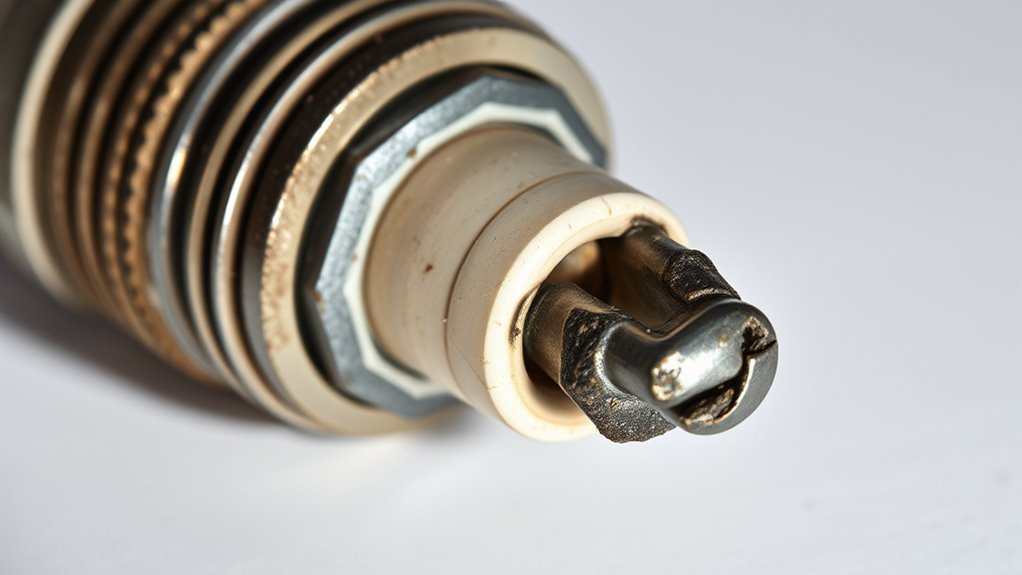
Yes, bad spark plugs often show visible signs like deposits, cracks, or erosion on the electrodes, as well as discoloration such as white spots or burnt marks, indicating overheating.
You might also notice soot buildup or corrosion, which signals wear or potential engine problems.
However, some problems aren’t visible on the surface, so knowing what to look for can help you catch issues early.
Keep exploring to learn what other clues might reveal spark plug troubles.
Key Takeaways
- Bad spark plugs often show discoloration, like soot, white spots, or burnt areas, which can mean they’ve overheated or are contaminated.
- Worn or eroded electrodes are clear signs of deterioration and need to be replaced.
- Cracks, chips, or burn marks on the insulator suggest physical damage that indicates failure.
- If you notice buildup or deposits, it could point to engine issues like misfires or poor fuel efficiency.
- Corrosion or damage on metal parts signals corrosion-related problems affecting performance.
How Do You Recognize Visual Signs of Spark Plug Wear or Damage?
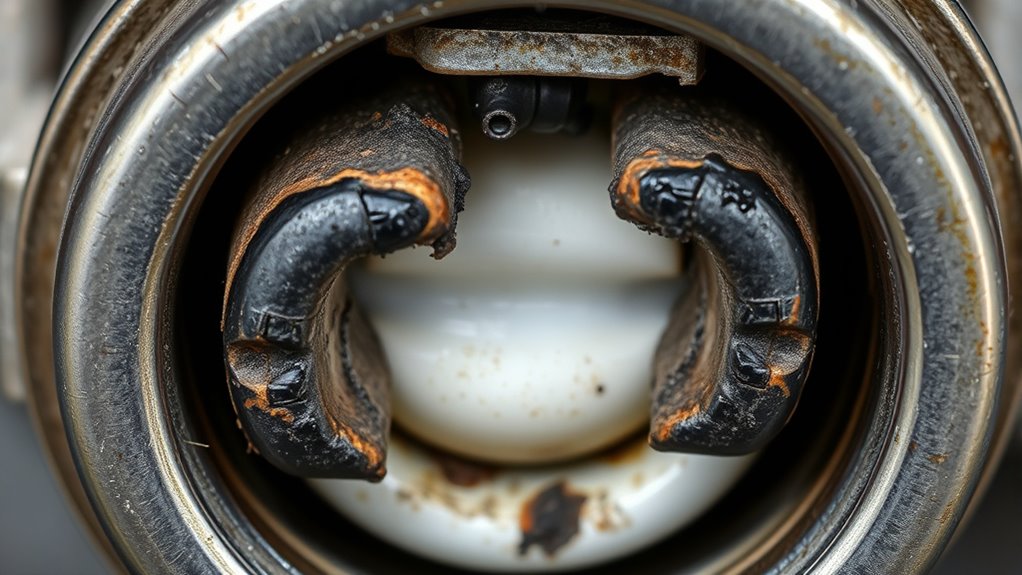
Identifying visual signs of spark plug wear or damage is key to keeping your vehicle running smoothly. Start by checking the spark plug’s coating. A healthy plug usually looks light tan or gray, while one that’s worn or damaged might have black soot, oil residue, or lots of carbon buildup.
Healthy spark plugs appear light tan or gray; dark soot or oil indicates wear or damage.
Look closely for broken or chipped electrodes, which can cause misfires or sluggish engine response. Also, examine the insulator—cracks or burn marks here indicate damage that could affect spark efficiency.
Engine noises can give you hints too. Rough idling, knocking, or hesitation might point to worn spark plugs. If the electrode’s surface looks burnt, eroded, or covered in shiny deposits, it’s probably time to replace it.
A quick visual check combined with listening to how your engine sounds helps catch problems early. This way, you keep your spark plugs performing well and prevent further engine issues.
Common Signs That Your Spark Plugs Might Be Bad
If your engine is running rough or misfiring, it’s a good chance your spark plugs might be worn out or damaged. You might also find that your car is having trouble starting up, or maybe you’re noticing a sudden drop in your fuel economy. These are pretty common signs that something’s up with your spark plugs and that they could use some attention.
Rough Idle or Misfires
When your spark plugs start to fail, you might notice your engine running rough or misfiring when you accelerate. This is often due to inconsistent spark delivery or fouled plugs, which can also shorten their lifespan.
Different types of spark plug materials, like copper or iridium, wear at different rates, affecting how well they perform over time. Misfires usually feel like hesitation or sputtering, especially at higher speeds or during acceleration.
Here’s a quick overview:
| Symptom | Cause |
|---|---|
| Rough idle | Worn or dirty spark plugs |
| Engine misfires | Failing spark plug material or spark gap issues |
| Hesitation or sputtering | Degraded spark plug performance |
| Poor acceleration | Deposits or worn electrodes |
| Increased fuel consumption | Inefficient combustion |
Addressing these signs early helps keep your engine running smoothly and extends the life of your spark plugs.
Difficulty Starting Engine
Difficulty starting your vehicle can be a clear sign that your spark plugs are failing. If your engine struggles to turn over or takes longer than usual to start, it might be time for a spark plug replacement.
Worn or dirty sparks have trouble creating a strong spark, which makes ignition difficult. Check your engine for dirt or carbon deposits on the spark plugs, as these can harm performance.
Keeping your spark plugs clean and properly gapped helps your engine start smoothly every time. If you still have starting issues despite a clean engine, take a closer look at your spark plugs.
Regular maintenance and timely replacements can prevent these problems from getting worse. This keeps your vehicle reliable and starting effortlessly.
Decreased Fuel Efficiency
Are you noticing that your vehicle doesn’t go as far on a tank of gas as it used to? This decreased fuel efficiency can be a sign your spark plugs are wearing out or failing.
Bad spark plugs can cause incomplete combustion, making your engine work harder and burn more fuel. While aesthetic mods often focus on looks, ignoring engine performance issues like poor fuel economy can hurt your vehicle’s overall health.
If your fuel consumption suddenly spikes or your miles per gallon drop, it’s worth checking your spark plugs. Worn or fouled plugs struggle to ignite the air-fuel mixture properly, leading to inefficient engine operation.
Addressing this early can save you money on gas and prevent further damage.
What Does Discoloration on Spark Plugs Indicate?
Discoloration on your spark plugs can tell you quite a bit about how your engine is running. When you look at them, you might notice different colors like white, black, or gray — and each of these shades can point to certain issues or conditions inside your engine.
Understanding what these colors mean is pretty helpful. It can give you a better idea of whether your engine is functioning normally or if there’s something that needs checking out. Basically, paying attention to spark plug discoloration is like giving your engine a quick inspection without even opening the hood!
Common Color Changes
When you notice changes in the color of your spark plugs, it often signals underlying engine conditions that need attention.
Different spark plug materials like copper, platinum, or iridium can show discoloration in various ways. For instance, a light tan or brown hue usually means normal combustion.
A black, sooty coating suggests oil or rich fuel mixture issues. Meanwhile, a white or blistered appearance can indicate overheating.
To accurately assess discoloration, use proper inspection tools like a good flashlight and magnifying glass to examine the spark plugs closely.
Recognizing these common color changes helps you identify potential problems early and decide whether cleaning, replacement, or further diagnostics are needed.
Causes of Discoloration
Discoloration on spark plugs often points to specific engine issues that need attention. The plug’s color can reveal what’s happening inside your engine, often caused by factors like rich or lean fuel mixtures, overheating, or oil leaks.
For example, a tan or light brown hue indicates normal operation, but a black, sooty plug suggests incomplete combustion or excess fuel. A white or chalky appearance signals overheating, while a blue or rainbow tint points to contamination or poor fuel quality.
Visual damage like cracks or corrosion can also cause discoloration, highlighting the importance of inspecting your plugs. Recognizing these color changes helps you find underlying problems early, preventing further engine damage and keeping your vehicle running smoothly.
Implications for Engine
Color changes on spark plugs can tell you a lot about your engine’s health and how it’s running. Discoloration might highlight issues that, if left unchecked, could cause long-term damage to your engine.
For instance, a tan or light gray color usually means your spark plugs are in good shape and your engine is performing well. Dark, oily deposits, on the other hand, could indicate fueling problems or oil leaks that might lead to misfires.
White or chalky buildup might be a sign of coolant leaks, which could cause your engine to overheat if not addressed. When you notice these signs, it’s important to tackle the root problem as soon as possible.
Ignoring discoloration can lead to reduced power, worse fuel economy, or even serious engine damage. Regularly checking your spark plugs helps you catch issues early and keep your engine running smoothly.
Taking care of your spark plugs is key to extending your engine’s life and avoiding costly repairs down the road. Proper maintenance keeps your engine efficient and reliable for the long haul.
Is Build-Up on Spark Plugs a Warning Sign?
Build-up on spark plugs can be a warning sign that something’s off with your engine’s performance. If you notice a change in the spark plug color, like white or black soot, it might be from fuel or oil leaks.
This build-up can cause misfires or rough idling, making your engine run less smoothly. Keep an eye on the check engine light—it’s often a sign of underlying issues like carbon deposits on the spark plugs.
When deposits accumulate, they block the spark’s ability to ignite the fuel-air mixture properly. This leads to less power and worse fuel economy.
Catching this early can save you from bigger, more costly repairs down the line. If you spot signs of build-up, consider cleaning or replacing your spark plugs. Also, inspect your engine’s fuel and oil systems.
Addressing build-up quickly helps restore your engine’s peak performance and prevents further damage.
Can Cracks or Damage Be Seen on Spark Plugs?
You might notice cracks or damage on your spark plug if you take a good, close look. Sometimes, these cracks are pretty tiny, and other times, they’re more obvious. Either way, they can cause your engine to misfire or just not run as smoothly as it should.
If you see any kind of damage on the spark plug, it’s a good idea to replace it sooner rather than later. Staying on top of these signs helps keep your engine running well and prevents bigger issues down the line.
Visible Cracks on Insulator
Can cracks or damage be seen on spark plug insulators? Yes, sometimes cracks develop during manufacturing or from everyday wear, affecting the insulator’s integrity.
These cracks can be subtle but are visible with close inspection. Spark plug design influences how vulnerable insulators are, but flaws often happen during manufacturing.
Here’s a visual picture:
| Spark Plug Condition | Visible Damage | Effect on Performance |
|---|---|---|
| Intact Insulator | No cracks or chips | Operates smoothly |
| Minor Cracks | Small surface cracks | Slight misfire potential |
| Severe Damage | Large, deep cracks | Spark misfire or failure |
Recognizing these cracks helps prevent engine issues and confirms if the insulator’s integrity has been compromised.
Signs of Physical Damage
Physical damage to spark plugs often becomes visible upon close inspection and can point to underlying issues. Cracks, chips, or damage in the ceramic insulator are clear signs that the plug might not work properly anymore.
Damage can also come from engine problems like coolant leaks, which can cause the plug to foul or corrode earlier than expected. Oil leaks around the spark plug area can lead to fouling and damage the electrode and ceramic shell.
If you notice any visible cracks, burn marks, or corrosion on the metal or ceramic parts of the spark plug, it’s time to replace it. These damages reduce spark efficiency and can cause misfires or poor engine performance.
Make a habit of checking your spark plugs regularly for physical signs of damage, especially if your vehicle has coolant or oil leaks.
How to Safely Remove and Inspect Your Spark Plugs
Removing and inspecting your spark plugs requires careful attention to safety to prevent damage or injury. First, make sure your engine is cool to avoid burns, and disconnect the negative battery terminal for added safety.
Use a proper spark plug socket, extension, and ratchet to loosen and remove each plug carefully, avoiding excessive force that could damage the threads. As you remove them, check the plugs’ condition for signs of wear, carbon buildup, or corrosion.
Keep in mind that spark plug cleanliness influences engine performance. Cleaning or replacing plugs at the recommended intervals helps keep your engine running smoothly and efficiently. When inspecting, look for deposits, cracks, or other damage that might signal trouble.
Handle the plugs gently and store them in a safe area if you plan to re-install or compare them later. Regular inspection helps catch issues early, so your engine stays in good shape.
When Do Spark Plugs Usually Show Visual Signs of Wear?
Spark plugs start showing visible signs of wear after some use or when engine performance starts to drop.
Noticing these signs is key to keeping your ignition system in good shape.
You might see worn or eroded electrodes, which means it’s time to replace them to avoid misfires.
Black, sooty deposits can appear, signaling fuel mixture problems that hurt engine efficiency.
Adamant carbon buildup can also form, reducing the spark quality and hurting overall performance.
If the insulator is broken or cracked, it compromises the spark plug and could cause engine stalls.
These visual signs mean it’s a good idea to inspect your spark plugs more closely.
Regular maintenance isn’t just about keeping your car running smoothly, it’s about avoiding bigger ignition issues down the line.
Ignoring these signs can lead to rough idling, poor acceleration, or increased fuel consumption.
Stay alert and replace worn spark plugs early before small problems turn into costly repairs.
Are Some Spark Plug Types More Prone to Damage Than Others?
Certain spark plug types are more susceptible to damage due to their construction and design features. For example, spark plugs with fragile ceramic insulators or narrow electrode gaps tend to wear out faster.
The spark plug color can also hint at damage. Discoloration or odd shades might indicate problems like overheating or electrode buildup.
Electrode buildup is common in some designs, especially those without effective cleaning features, leading to misfires or poor combustion. Resistor-type spark plugs or those with fine wire electrodes may be more prone to damage because their materials are less durable under high temperatures and pressure.
Smaller or more delicate electrode designs can crack or erode more quickly. Knowing which types are more at risk helps you spot potential issues early.
Regular inspection of spark plug color and buildup patterns can save you time and help avoid costly repairs later on.
Other Clues That Might Signal Spark Plug Problems
Even if your spark plugs look fine visually, there are other signs that can hint at underlying problems. Your ignition system relies heavily on proper spark plug function, and issues often show up through more subtle clues.
- Engine misfires or hesitation: If your engine stumbles, it might be a sign your spark plug materials aren’t igniting properly.
- Poor fuel economy: A decrease can indicate inefficient combustion caused by spark plug problems.
- Rough idling: Irregular engine vibrations often signal weak sparks or faulty plugs within the ignition system.
- Troubles starting your vehicle: Hard starts can be traced back to worn-out spark plugs or issues with the ignition system’s timing.
Pay attention to these signs. They’re your vehicle’s way of telling you something’s wrong beneath the surface. Spark plug materials and their wear directly impact overall performance.
How Reliable Is Visual Inspection for Detecting Bad Spark Plugs?
While visually inspecting your spark plugs can give some clues about their condition, it shouldn’t be your only method of detection. Visual signs like cracks, fouling, or erosion may point to ignition problems, but they’re not always reliable.
Spark plugs can fail internally without any obvious damage on the outside. This can lead to misfires or rough idling that you won’t see just by looking. Relying only on visual checks might cause you to miss hidden issues that affect engine performance.
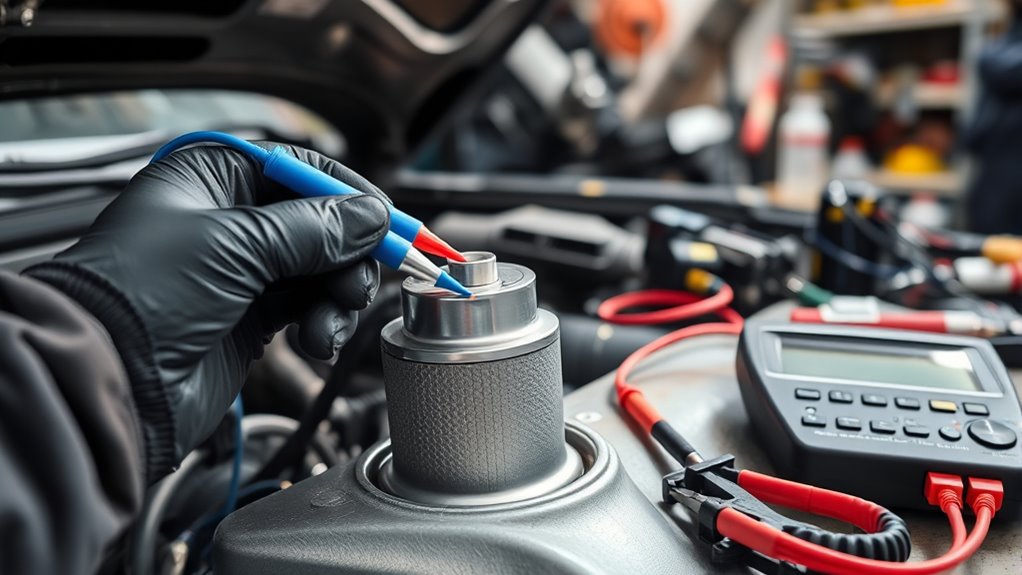
It’s a good idea to use a spark plug tester or diagnostic tools for a more thorough check. These tools can help confirm if there’s a real problem, beyond what you see with the naked eye.
Remember, ignition issues often stem from electrical or timing problems that you can’t see. So while visual inspection is useful as a first step, it’s best to combine it with other diagnostics to keep your engine running smoothly.
Taking this approach can help prevent unexpected breakdowns and keep your engine performing at its best.
Frequently Asked Questions
Can Bad Spark Plugs Cause Engine Misfires?
Yes, bad spark plugs can cause engine misfires. When the spark plug materials wear out or get fouled, they might not produce a strong spark, which can mess up your ignition system.
This leads to uneven combustion and can cause the engine to misfire. Over time, worn or damaged spark plugs can’t ignite fuel as well, making your engine run roughly, reducing acceleration, and increasing emissions.
Regularly checking and replacing your spark plugs can catch these issues early before they turn into bigger engine problems.
What Are the Hidden Signs of Spark Plug Failure?
You might not notice spark plug failure right away, but keep an eye on electrode corrosion and the spark plug color.
Corrosion can lead to misfires and poor engine performance, so that’s a key sign to watch for. A tan or gray color on the spark plug usually means everything’s normal.
However, if the electrodes look black, are covered in deposits, or if the color changes unexpectedly, it’s a hidden sign you should check your spark plugs.
Regular inspections can help catch these issues early before they cause bigger problems.
How Often Should Spark Plugs Be Visually Inspected?
How often should you visually inspect your spark plugs? You should check them every 30,000 miles or during routine maintenance to catch problems early. Regular visual inspection helps identify signs of wear or damage, like corrosion or deposits, before they cause bigger issues.
Keep in mind, replacing spark plugs on time can improve your vehicle’s performance and fuel efficiency. So, don’t overlook these routine checks.
Do All Spark Plug Damages Affect Engine Performance Equally?
Not all spark plug damages affect your engine the same way. Damage to the spark plug material, like the electrodes, can cause misfires and rough idling.
Issues with ignition timing affect how efficiently your engine runs overall. If your spark plugs are worn or damaged, they might not fire properly, which reduces performance and fuel economy.
Regular inspection helps catch these problems early. That way, you can replace or adjust them before serious damage happens.
Are There Specific Symptoms Besides Visuals Indicating a Spark Plug Issue?
You’ll notice engine misfires, rough idling, or sluggish acceleration, which are warning signs beyond just visual cues. When these symptoms show up, it’s time to replace your spark plugs and do a thorough engine check.
Misfire sounds and engine hesitation can make it feel like your car’s struggling to breathe, which might mean spark plug issues are more serious. Ignoring these signs can lead to worse performance, so it’s best to act quickly.
Other symptoms can include increased fuel consumption or trouble starting your vehicle. These signs shouldn’t be ignored—they’re your car’s way of telling you something’s wrong with the spark plugs.
Conclusion
Think of your spark plugs as the heartbeat of your engine’s rhythm. When they show signs of discoloration, cracks, or build-up, it’s like a warning light flickering—your engine can’t beat smoothly. Regular visual checks are your best way to catch issues early.
But sometimes, doubts can linger—kind of like fog on a window. Rely on your eyes, but remember, just like a doctor’s diagnosis goes beyond looks, proper testing is the key to keeping your car’s heartbeat strong.
When looking at spark plugs, bad ones often have noticeable signs. Discoloration or black soot, cracks, or built-up deposits can indicate trouble. These visual clues are helpful, but it’s wise to get them checked out thoroughly.
So, if your spark plugs look a little worn or suspicious, don’t wait. Visual signs can point to problems, but proper testing ensures your engine’s spark plugs are performing their best. Keeping your spark plugs healthy means a smoother, more reliable ride.