How to Identify Causes of Spark Plug Fouling
Struggling with spark plug fouling? You’re not alone—many car owners face this annoying issue that can cause rough running and decreased fuel efficiency. Understanding the causes of spark plug fouling is key to keeping your engine running smoothly.
To identify causes of spark plug fouling, start by inspecting the plugs for deposits, discoloration, or oily residue. These can indicate issues like oil leaks or rich fuel mixtures.
Check engine performance for rough idling or misfires, and consider engine temperature and air-fuel balance.
Poor maintenance, dirty filters, or faulty injectors can also contribute to fouling.
If you want to uncover the full list of causes and solutions, you’ll find helpful insights just ahead.
Key Takeaways
- Examine spark plug deposits for black soot, oil residues, or corrosion, which can indicate oil leaks or incomplete combustion.
- Check the engine temperature and cooling system to spot overheating or cold running conditions that can cause fouling.
- Inspect fuel mixture and air filters for signs of richness, dirt, or contamination, all of which can lead to unburned fuel deposits.
- Look for oil leaks from piston rings, valve seals, or turbochargers that might be contributing to oily fouling on the plugs.
- Assess ignition timing, fuel injector operation, and sensor performance to ensure proper combustion and prevent the buildup of deposits.
What Is Spark Plug Fouling and Why It Matters
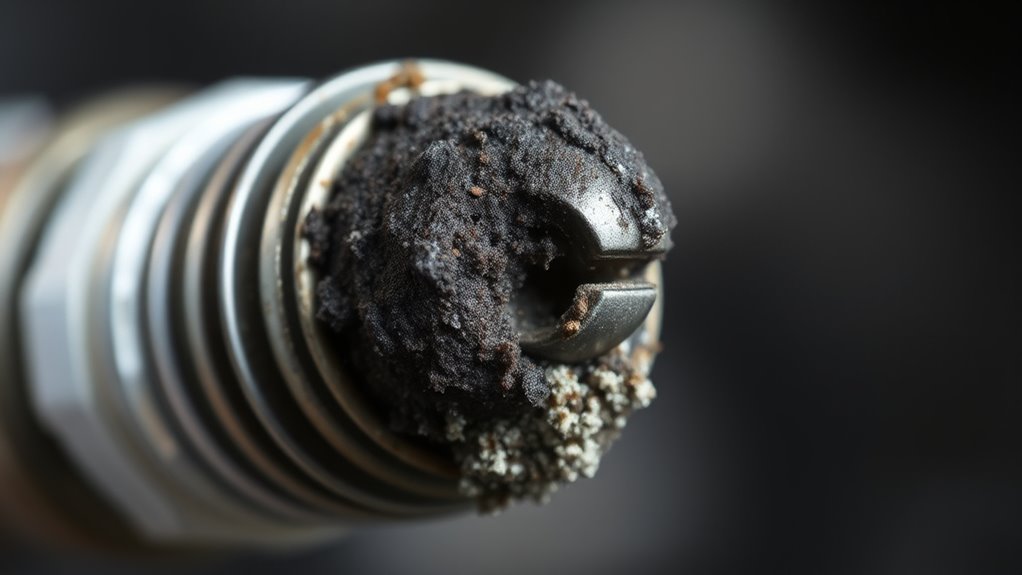
Spark plug fouling happens when deposits build up on the plug’s electrodes, making it harder for the spark to ignite the fuel-air mixture properly. This can cause misfires, rough idle, and lower fuel economy.
Fouling is often due to incomplete combustion, which can happen if sensors aren’t calibrated correctly or if emission control is poor. When sensors are off, your engine might run too rich or too lean, and both can lead to deposit buildup on the spark plug.
Emission systems are crucial here—they’re meant to cut harmful emissions, but if they don’t work right, they can hurt combustion and cause fouling. Keeping sensors calibrated properly and maintaining the emission system helps prevent deposits.
Addressing spark plug fouling is important because it impacts engine performance, fuel efficiency, and emissions. Regular maintenance of sensors and the emission system keeps your engine running smoothly and efficiently.
Signs Your Spark Plugs Are Fouled
If your spark plugs are fouled, you might notice some telltale signs like deposits building up on the electrodes. It’s pretty common, and catching it early can save you a lot of headaches down the road.
You might also feel your engine running rough or experience misfires—that’s a sign something’s not quite right. Recognizing these little clues means you can take action before the problem gets worse or causes more serious damage.
Visible Deposits on Electrodes
Have you noticed any unusual buildup or discoloration on your spark plug electrodes? If you have, it might be a sign that your plugs are fouled.
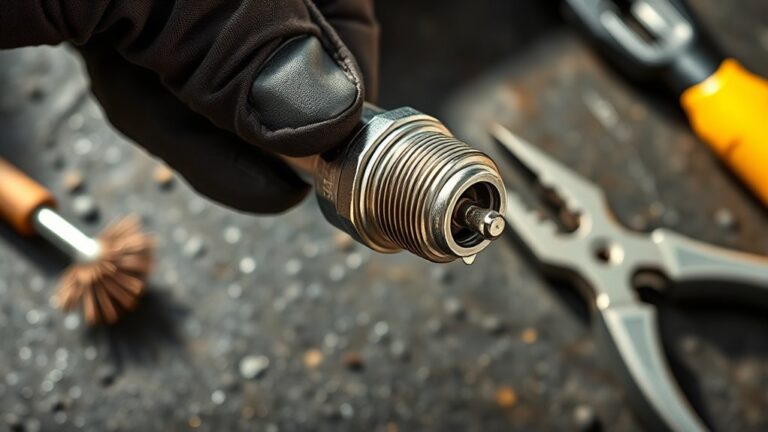
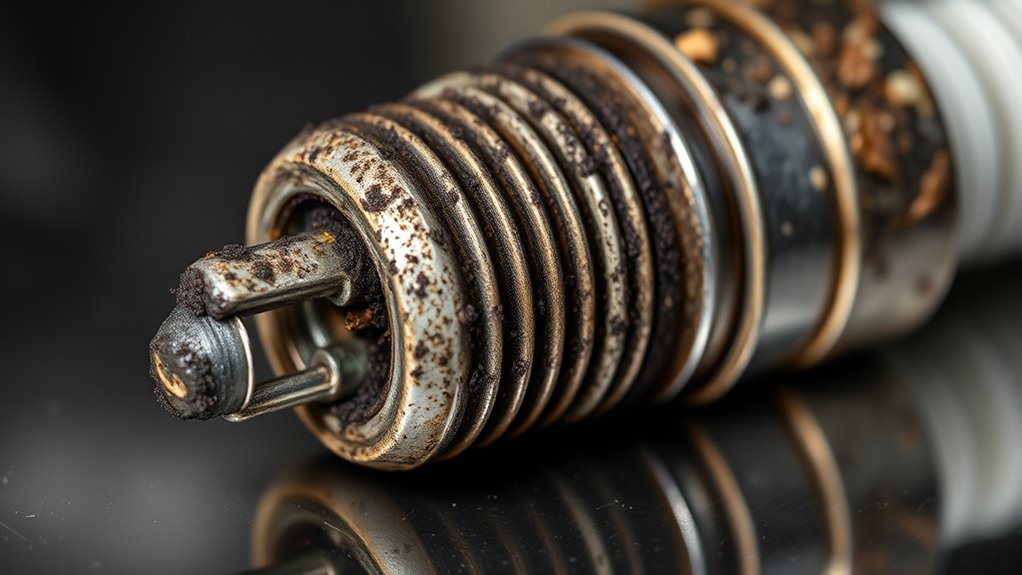
Visible deposits can include electrode corrosion, which looks like a flaky or rust-colored layer on the metal parts. This indicates oxidation from moisture or chemical reactions. Carbon buildup is another common issue, showing as a black, soot-like coating.
These deposits often come from incomplete combustion or oil leaks. They can interfere with spark transmission, causing misfires or rough engine running. Carefully check your spark plugs to catch these signs early.
Removing the buildup through proper maintenance can restore your engine’s performance. It also helps prevent more serious issues down the line.
Engine Performance Issues
When spark plugs become fouled, they can cause noticeable engine performance issues that disrupt smooth operation. You might notice rough idling, hesitation during acceleration, or engine misfires that suggest your ignition system isn’t firing properly.
A fouled plug can also lead to lower fuel efficiency and increased emissions, putting stress on your exhaust system. Keep an eye out for these signs:
- Engine stalls or hesitates
- Reduced acceleration response
- Increased fuel consumption
- Rough engine idling
- Excessive exhaust smoke
These problems often stem from fouling, which interferes with proper spark production and combustion. When the ignition system is compromised, it struggles to ignite the fuel-air mixture. Your exhaust might emit abnormal smoke or odors as a result.
Dealing with spark plug fouling promptly can restore your engine’s performance and prevent further damage.
Common Causes of Spark Plug Fouling
Sure! Here’s the modified version with a more conversational tone:
—
You might notice that things like oil leaking into the combustion chamber or having too much fuel in the mix are pretty common reasons why spark plugs get fouled. When this happens, it can lead to build-up of carbon deposits, which can mess with your engine’s performance.
The good news is, by pinpointing these issues early and fixing them, you can keep your spark plugs cleaner and help your engine run smoothly. It’s all about catching those little problems before they turn into bigger headaches!
Oil Leaks Within Combustion Chamber
Oil leaks within the combustion chamber are a common cause of spark plug fouling. This often happens because of worn piston rings, valve seals, or valve guides. When these parts are damaged, oil can seep into the chamber.
The oil mixes with fuel and air, creating carbon deposits that foul your spark plugs. When oil leaks into the chamber, the fouling can become more stubborn and harder to clean. You might see fouling that looks oily or greasy, which indicates oil contamination.
Keeping proper engine compression and replacing worn seals can help prevent this problem. Worn piston rings, damaged valve seals, and faulty valve guides are common culprits of oil seepage. Excessive oil consumption and poor cylinder compression also signal potential fouling issues.
Rich Fuel Mixtures
Regardless of oil leaks, another common cause of spark plug fouling is running a rich fuel mixture. When your engine runs too rich, excess fuel leaves behind carbon deposits that foul the spark plugs.
These deposits can insulate the electrodes, causing misfires and poor engine performance. To fix this, you might try cleaning methods like using a wire brush or specialized cleaning solutions designed for your spark plugs.
You can also adjust your fuel mixture or check the airflow sensor to prevent too much fuel from entering the combustion chamber. Proper maintenance helps prevent fouling from happening again.
Knowing that rich mixtures cause fouling highlights the importance of tailored maintenance and understanding your spark plug’s design to keep your engine running smoothly.
How Oil Consumption Leads to Fouling
Whenever excess oil enters the combustion chamber, it can cause spark plug fouling by creating a carbon-rich layer on the electrode. This buildup hampers spark efficiency and shortens the spark plug’s lifespan.
Oil leaks from worn piston rings, valve seals, or turbochargers are common causes of oil entering the cylinders. Once inside, the oil burns and deposits carbon on the spark plug, speeding up fouling.
To prevent this, regular engine maintenance and early diagnosis of oil leaks are essential. Using high-quality oil can also help reduce deposit buildup. Inspecting and replacing worn piston rings or valve seals helps keep oil out of the chambers.
Keeping an eye on oil consumption levels regularly is important. Address oil leaks promptly and choose the right oil grades for your engine. Also, make sure to replace worn engine parts and conduct periodic engine inspections to maintain optimal performance.
How Rich Air-Fuel Mixtures Cause Deposits
When the air-fuel mixture in your engine is too rich, it has more fuel than needed. This can cause excessive carbon deposits on the spark plugs.
These deposits form because unburned fuel leaves residue on the electrodes, making spark efficiency worse. The spark plug materials and electrode design impact how deposits form and are managed.
For example, copper plugs might show deposits faster than platinum or iridium plugs, which resist fouling better. The shape of the electrode also matters—fine-wire electrodes can trap more deposits due to their larger surface area.
| Spark Plug Material | Electrode Design | Deposit Resistance | Fouling Tendency | Maintenance Needs |
|---|---|---|---|---|
| Copper | Fine-wire | Moderate | Higher | Frequent cleaning |
| Platinum | Standard | High | Lower | Less frequent |
| Iridium | Iridium tips | Very high | Very low | Rarely fouled |
| Silver | Coated | Moderate | Moderate | Occasional |
| Nickel | Flat | Low | Higher | Regular checks |
Knowing these factors helps you pick the best spark plugs to reduce deposits when running rich mixtures.
The Impact of Engine Operating Conditions
Your engine’s operating conditions really play a big role in how your spark plugs stay clean. If the fuel mixture is out of balance, it can lead to deposits building up on the plugs. Likewise, if the temperature isn’t just right, you might get incomplete combustion, which also causes fouling.
Fuel Mixture Imbalance
Have you ever wondered how engine conditions can cause spark plug fouling? A fuel mixture imbalance can lead to deposits and fouling, especially if the air filter is clogged or the ignition timing is off.
When the mixture is too rich, unburned fuel leaves residues that foul the spark plugs. Poor air filtration allows dirt to interfere with combustion, making the problem worse. Incorrect ignition timing causes incomplete combustion and increases deposits.
Low engine speed or improper fuel injectors can also disrupt the right fuel-to-air ratio. To prevent mixture imbalances, inspect and maintain a clean air filter, adjust the ignition timing, and ensure proper fuel delivery.
Keeping these components in check helps maintain efficient combustion and prolongs spark plug life.
Engine Temperature Variations
Fluctuations in engine temperature can significantly affect spark plug performance and lead to fouling. When your cooling system isn’t working properly, it can cause the engine to run too hot or too cold, messing with spark plug efficiency.
Overheating engines may form deposits faster, which leads to fouling. On the other hand, cold engines might not burn fuel completely, leaving unburned residues. Temperature sensors are key in monitoring these changes and alerting you to issues that can impact engine temperature.
Keeping your cooling system well-maintained and using accurate sensors help keep everything running smoothly. Proper care helps prevent temperature swings that could cause fouling. Regular checks and repairs ensure your engine stays within the right temperature range, keeping your spark plugs clean and working right.
How to Diagnose Fouled Spark Plugs
How can you tell if your spark plugs are fouled? Start by inspecting their appearance. Fouled plugs usually have a black, oily, or carbon-covered electrode, which points to incomplete combustion or oil leaking into the combustion chamber.
Check for corrosion or deposits that could interfere with the spark. The electrode design and the materials used in the spark plug can also affect how quickly fouling happens and how noticeable it is.
To diagnose fouling effectively, look for signs like a black, sooty buildup on the electrode, oily or greasy deposits, white ash-like deposits, or excessive wear and damage. Also, watch out for deposits or discoloration caused by overheating.
Using a flashlight and a proper spark plug socket, carefully remove and examine each plug. Recognizing fouling early can help you prevent bigger engine problems, and understanding how electrode design interacts with fouling can help you choose better replacements.
Getting this right ensures your engine runs smoothly and efficiently.
How to Clean or Replace Your Spark Plugs
Wondering how to clean or replace your spark plugs effectively? First, understand your spark plug design—whether it’s copper, platinum, or iridium—since materials influence cleaning methods or replacement choices.
To clean, carefully remove the spark plugs using a spark plug socket, making sure you don’t damage the ceramic insulator.
Carefully use a spark plug socket to remove plugs without damaging the ceramic insulator.
For fouled plugs, gently scrub the electrodes with a wire brush or use a specialized spark plug cleaner. If cleaning doesn’t fix the issue, then replacing the plugs is the way to go.
When replacing, make sure the new spark plug matches your ignition system’s specifications, including the gap settings.
Before installing, check the gap with a feeler gauge and adjust if necessary.
Screw the spark plug in by hand to avoid cross-threading, then tighten to the manufacturer’s recommended torque.
Properly maintained spark plugs help your ignition system run smoothly, which boosts engine performance and fuel efficiency.
Preventing Spark Plug Fouling Through Maintenance
Regular maintenance plays a crucial role in preventing spark plug fouling because it helps your engine run smoothly and keeps deposits off the plugs. Proper upkeep also extends the life of your spark plugs and keeps your ignition system working well.
To do this, check and replace your spark plugs based on your vehicle’s recommended intervals. Using good quality fuel and oil can also help cut down on carbon and oil deposits that cause fouling.
Make sure to keep your air filter clean so your engine gets the right amount of air. Regularly inspect coils and wires to catch any issues with your ignition system early.
Keep an eye on how your engine is performing and how the fuel efficiency is doing. This way, you can spot potential problems before they get worse.
Following these simple maintenance tips improves your engine’s overall health, reduces buildup, and makes your spark plugs last longer. Consistent care helps keep your vehicle running smoothly, saving you both time and money.
When to See a Mechanic for Spark Plug Issues
While some spark plug issues can be fixed through routine maintenance, there are signs that clearly mean you should see a mechanic. If your spark plugs keep fouling despite cleaning or replacing them, that’s a red flag. It usually indicates something else going on with your engine.
Problems with ignition timing can cause misfires and incomplete combustion, which makes fouling worse. Also, if you notice poor fuel economy, rough idling, or trouble starting your car, don’t ignore these signs. Spark plug materials matter, too. Different types like platinum or iridium last longer but can still foul if there’s a bigger issue.
| Symptom | Possible Cause | Recommended Action |
|---|---|---|
| Persistent fouling | Ignition timing issues | Get a professional to adjust the timing |
| Rough idling | Spark plug materials declining | Have a mechanic check the spark plug condition |
| Poor fuel economy | Incorrect ignition timing | Check and calibrate your ignition system |
| Difficulty starting | Spark plug fouling or wear | Replace spark plugs under expert guidance |
| Frequent misfires | Faulty spark plugs or materials | Replace with the right type for your engine |
Frequently Asked Questions
Can Using Premium Fuel Prevent Spark Plug Fouling?
Using premium fuel might help prevent spark plug fouling, especially if the fuel quality is poor with contaminants or deposits. Premium fuel often burns cleaner and can reduce deposits that cause fouling.
However, the engine’s design also plays a role; some engines are tuned for regular fuel, so using premium won’t necessarily make a difference. Always check your vehicle’s manual to ensure you’re using the right fuel type for the best performance and to minimize fouling.
How Do Temperature Variations Affect Spark Plug Longevity?
You might notice that temperature variations play a big role in spark plug longevity. When engine temperature fluctuates, it impacts combustion efficiency, which can lead to inconsistent firing and fouling.
Too high temperatures can cause overheating, damaging the plug. On the flip side, low temperatures may lead to carbon buildup. Keeping the engine temperature stable helps ensure better combustion.
This not only extends the life of your spark plug but also prevents misfires. Basically, maintaining a steady engine temperature is the key to longer-lasting spark plugs.
Does Using Aftermarket Parts Influence Fouling Risk?
Using aftermarket parts can affect the fouling risk of your spark plug. Poorly made or incompatible aftermarket components might cause incomplete combustion or improper heat dissipation, which can lead to fouling.
These parts can also reduce engine performance, increasing the chance of carbon buildup on your spark plug. To minimize this risk and keep your engine running smoothly, always choose high-quality aftermarket parts that match your engine’s specifications.
Are There Specific Driving Habits That Reduce Fouling?
Adjust your driving style to reduce spark plug fouling by avoiding rapid accelerations and constant short trips, which can cause incomplete combustion and carbon buildup.
Practice smooth acceleration and let your engine warm up properly before driving.
Regular engine maintenance, like timely oil changes and replacing air filters, also helps prevent fouling.
How Often Should I Check Spark Plugs for Fouling?
You should check your spark plugs for fouling every 30,000 miles or during your regular maintenance. It’s a good idea to inspect them by removing the plugs and examining their condition.
Look for ash deposits, oil fouling, or carbon buildup. Regular checks can catch issues early and help prevent misfires.
If you notice fouling signs, try adjusting your driving habits or talk to a mechanic. This will help keep your engine running at its best.
Conclusion
Fouled spark plugs are like cracked mirrors reflecting hidden engine issues. Recognizing the signs and understanding the causes helps you keep a clear view of your vehicle’s health.
Regular maintenance keeps this mirror pristine, ensuring smooth rides and preventing unseen damage. When doubt clouds your vision, it’s best to consult a mechanic—sometimes only a skilled eye can restore clarity.
Stay vigilant about spark plug fouling, and your engine’s performance will shine, a true reflection of care and precision.