How Do You Prime a Fuel Pump in 10 Essential Steps
If you’re working on your vehicle or boat, you know how frustrating it can be to get the fuel system just right. Many people struggle with priming their fuel pumps, especially if they’re new to DIY repairs.
Don’t worry—you’re not alone, and with a little patience, you can do it yourself.
To prime your fuel pump in 10 essential steps, first locate the pump and make sure safety gear is worn. Disconnect the fuel lines and use a primer bulb or manually pump fuel into the system until you see fuel flow, checking for leaks.
Turn on the ignition briefly to activate the pump relay, listen for a humming sound, then verify fuel flow and inspect for leaks.
Finally, reassemble everything securely. Continuing will guide you through each step for a smooth priming process.
Key Takeaways
- Locate the fuel pump and carefully access its service panel or removal point. Take your time to avoid damaging any nearby parts.
- Disconnect the electrical connections and fuel lines, using the proper tools and following safety precautions. Make sure you’re working in a well-ventilated area.
- Use a fuel primer bulb or hand pump to manually fill the pump and lines with fuel. This helps ensure there’s fuel ready to go when you start the engine.
- Turn the ignition to “on” without starting the engine. This will activate the fuel pump briefly and begin moving fuel through the system.
- Check for fuel flow and leaks around all connections. Once everything looks good, reassemble the parts and then start the engine.
What Is Fuel Pump Priming and Why Is It Important?
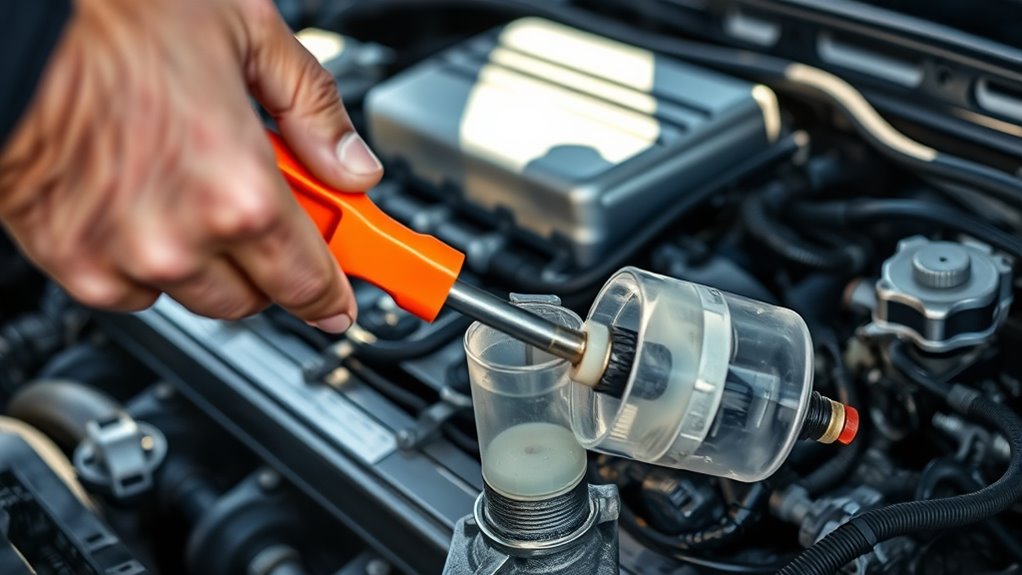
Fuel pump priming involves manually or automatically filling the pump and fuel lines with gasoline to ensure it works properly. This step is crucial because it makes sure the fuel system has enough fuel to start and run smoothly.
When you prime the fuel pump, you’re helping to get rid of air pockets that can block fuel flow. Without proper priming, your engine might have trouble starting or run inconsistently, which can affect performance.
Priming is especially important after replacing the fuel filter, pump, or doing maintenance that disconnects the fuel lines. A well-maintained fuel system needs a steady flow of clean fuel to work efficiently and last longer.
Tools and Safety Gear Needed for Priming Your Fuel Pump
Before you start priming your fuel pump, it’s a good idea to gather all the tools you’ll need, like wrenches and a fuel primer bulb. Having everything within reach will make the whole process smoother and less frustrating.
And don’t forget about safety! Make sure you’re wearing safety gear, such as gloves and safety glasses. This will help protect you from any fuel spills or fumes that might happen along the way. It’s also a good idea to familiarize yourself with the proper handling procedures so you can stay safe throughout the process.
Essential Tools Overview
To safely and effectively prime your fuel pump, gather the essential tools and safety gear you’ll need for the task. You’ll want a wrench set to disconnect fuel lines securely and a spare fuel filter if replacements are recommended.
A clean, lint-free cloth helps manage spills, while a flashlight ensures good visibility in tight spaces. A proper fuel container will store petrol safely during the process.
Consider a fuel pressure tester for precise measurements, especially if testing modern alternatives designed to improve fuel efficiency. You might also need a new fuel pump relay or fuse, depending on the vehicle.
Having these tools ready guarantees you can perform the task efficiently, minimizing risks while avoiding damage, and ensuring reliable operation of your fuel system.
Safety Equipment Importance
Why is safety equipment essential when priming your fuel pump? Safety gear protects you from fuel spills, fire hazards, and harmful fumes. Wearing protective clothing, including gloves and goggles, minimizes skin and eye exposure to fuel.
Proper safety equipment guarantees you’re prepared for unexpected accidents and helps maintain fuel safety standards. It’s important to have the right tools on hand, like a fire extinguisher, just in case.
Proper Handling Procedures
Practicing proper handling procedures when priming your fuel pump means choosing the right tools and safety gear to avoid accidents. Wear gloves and safety goggles to protect yourself from fuel spills or splashes, which can cause injuries.
Use a clean, approved container for transferring fuel to prevent contamination that might hurt engine performance and reduce fuel efficiency. Make sure you have a wrench to carefully loosen fittings without damaging the components.
Work in a well-ventilated area to prevent fuel vapor buildup, and keep fire extinguishing equipment nearby just in case. Always follow the manufacturer’s instructions for handling fuel lines and fittings.
Proper handling helps prevent leaks and damage, ensuring optimal fuel flow. This keeps your engine running smoothly and maintains good fuel efficiency.
How to Find the Fuel Pump in Your Vehicle
Locating your fuel pump is a key first step in priming it. In most vehicles, it’s either in the gas tank or just above it. To find it, start by locating the fuel tank, which is usually under the rear or side of your vehicle.
Once you’ve found the tank, look at the fuel line routing to see where it connects to the pump. Key signs include access panels or removable covers inside the trunk or under the rear seat, as well as the fuel line connecting to the tank, which is often hidden behind panels.
You might also spot the fuel pump assembly itself, which can be mounted on or inside the tank. If your vehicle has an external fuel pump, it’ll be mounted along the fuel line or in the engine bay, making it easier to identify.
Preparing Your Vehicle and Setting Safety Precautions
Before you start priming the fuel pump, it’s important to prepare your vehicle and take proper safety precautions. Make sure your vehicle is parked on a flat surface and the parking brake is engaged. Disconnect the negative terminal of the battery to prevent any electrical issues.
Clear the work area of any flammable materials and wear safety glasses and gloves for protection. Proper preparation helps keep your fuel efficiency high and safeguards your engine’s performance during priming.
Double-check that all your tools and parts are ready so you won’t have to rush or pause halfway through. Reviewing your owner’s manual for specific safety instructions for your vehicle is also a good idea.
Taking these simple steps reduces the risk of accidents, leaks, or damage, and helps ensure a smooth priming process. Safety always comes first to keep your vehicle reliable and efficient once the fuel system is back in action.
Accessing the Fuel Pump: Removing Covers or Components
To access the fuel pump, start by removing any covers, panels, or components blocking direct access to the pump assembly. This step is crucial for safe maintenance and inspection.
Carefully disconnect any electrical connectors or clips attached to the covers to avoid damage. Use the right tools to pry off panels without scratching or breaking them.
Carefully disconnect connectors with proper tools to prevent damage during panel removal.
Keep track of all fasteners and small parts so nothing gets lost. Before proceeding, inspect the surrounding area for leaks or signs of damage.
Removing these covers exposes the pump, making it easier to inspect, repair, or replace. Be sure to work in a well-ventilated space and follow safety precautions, like disconnecting the battery to prevent sparks.
Proper access to the fuel pump makes maintenance smoother and helps prevent costly repairs later on.
How to Manually Prime the Fuel Pump Step-by-Step
Sure! Here’s a more conversational, friendly version of your text:
—
Gather Necessary Tools
Gathering the right tools is an important first step to manually priming your fuel pump effectively. Having the right equipment makes the process smoother and helps keep your vehicle’s fuel efficiency in check.
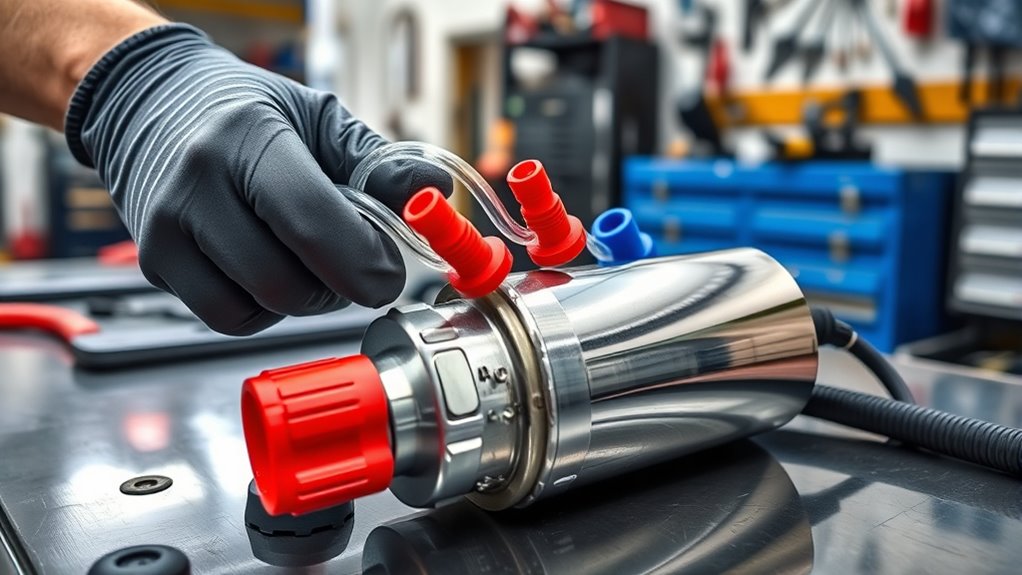
Make sure you have these items on hand: a clean wrench or socket set to disconnect and reconnect fuel lines, a transparent container or rag to catch any spills, and a hand-held vacuum pump or tool to create pressure in the fuel system.
Getting these tools ready saves you time and helps you stay focused on maintaining your vehicle. Proper preparation also reduces the risk of damage or leaks, making the priming process safer and more efficient.
With everything in place, you’ll be able to complete the task confidently and effectively.
Follow Step-by-Step Process
Wondering how to manually prime your fuel pump effectively? Follow these steps carefully to guarantee a smooth engine startup and peak fuel efficiency. First, locate the fuel pump and priming lever or access port.
Use the table below to visualize the process:
| Step | Action |
|---|---|
| 1 | Turn off the engine and safety switches. |
| 2 | Remove the access cover or fuel line cap. |
| 3 | Pump the priming bulb or lever repeatedly. |
| 4 | Watch for fuel reaching the line. |
| 5 | Reassemble all parts securely. |
This process helps with engine troubleshooting, prevents airlocks, and keeps your fuel system healthy. Proper priming improves fuel efficiency and helps your engine run smoothly.
Using the Fuel Pump Relay or Switch to Prime the System
Using the fuel pump relay or switch is a simple way to prime your fuel system. When you activate it, it sends power directly to the pump, helping fuel flow toward the fuel injector. This ensures the system gets pressurized without starting the engine, which can improve fuel efficiency and prevent damage.
To prime the fuel system with the relay or switch:
- Turn the ignition to the “on” position. Don’t start the engine. This powers the pump briefly.
- Listen for the humming sound—if you hear it, fuel is flowing.
- Repeat if needed, especially if the system hasn’t been used in a while.
This quick step helps make sure your fuel injector gets enough fuel, boosting performance and efficiency. Priming with the relay or switch is fast and effective, reducing strain on your pump and keeping your engine running smoothly.
Checking Fuel Flow and Looking for Leaks
Once you’ve primed the fuel system, it’s important to verify that fuel is actually flowing to the engine and that there are no leaks present.
Check the fuel lines and connections for any signs of leaks, like drips or puddles, which can waste fuel and reduce efficiency.
Inspect fuel lines and connections regularly for drips or puddles to prevent waste and maintain efficiency.
Make sure the fuel flow is steady and enough by observing the fuel filter and the fuel rail if accessible.
Proper flow shows your pump is working correctly. If flow is inconsistent or you see leaks, stop and fix the issue before using the vehicle further.
You might also consider adding fuel additives that boost combustion efficiency. This can help your engine run smoothly and save fuel.
Regularly inspecting for leaks and ensuring good fuel flow not only improves fuel efficiency but also extends your fuel pump’s lifespan.
This can save you money and prevent costly repairs down the line.
Troubleshooting Fuel Pump Priming Problems
When your fuel pump isn’t priming properly, it can prevent your engine from starting or running smoothly. Troubleshooting this issue requires finding the root cause to restore proper fuel flow.
Start by checking the fuel pump relay and fuse. A blown fuse or faulty relay can stop the pump from engaging. Next, listen for the fuel pump’s hum when turning the ignition on; silence might mean electrical problems or a bad pump.
Finally, inspect your fuel lines for blockages, leaks, or cracks that could block fuel delivery. Make sure electrical connections are secure and free of corrosion.
Replace any damaged relays or blown fuses, and ensure fuel lines are clear and properly connected.
Addressing these issues helps improve fuel efficiency and engine performance. It can prevent problems like stalling, misfires, or slow acceleration. Proper troubleshooting helps your vehicle run smoothly and saves fuel.
Final Checks: Confirming the Pump Is Fully Primed and Reassembling
First, take a moment to check that there’s a steady flow of fuel from the pump—that’s how you know it’s fully primed and good to go. Once you’ve confirmed that, give the fittings and connections a good look to see if there are any leaks. It’s better to catch and fix those now than deal with problems later.
Finally, before putting everything back together completely, make sure all the components are snug and secure. Tightening everything up properly helps prevent any issues down the line and keeps everything running smoothly.
Check for Fuel Flow
To confirm the fuel pump is fully primed, you need to check for fuel flow at the designated outlet or connection point. This helps ensure that fuel injection can happen smoothly and that fuel filtration remains proper.
Look for a steady stream of fuel without air bubbles or interruptions. This indicates the pump is working correctly.
Inspect the outlet for a consistent flow of fuel, making sure no air is mixing in.
Verify that the fuel has good pressure, which signals the pump is producing enough flow.
Check that fuel is reaching the fuel injection system without delays or sputtering.
If fuel flows steadily, your pump is primed. If not, revisit your priming steps.
Confirming consistent fuel flow ensures your system functions efficiently, prevents damage, and promotes ideal fuel filtration.
Inspect for Leaks
Have you thoroughly checked for leaks after priming the fuel pump?
Inspect the fuel filter connections carefully, making sure there are no drips or signs of escaping fuel.
Examine all hoses and fittings for tightness, especially around the pump and fuel filter. Also, check the ventilation system; proper ventilation helps prevent pressure buildup and leaks.
Look for any cracks or moisture around seals and gaskets. If you notice any leaks, tighten fittings or replace damaged parts immediately.
Confirm that all connections are secure and no fuel is escaping. This step is crucial to ensure your fuel system operates safely and efficiently before final reassembly.
Once you’re confident there are no leaks, you can move forward with reassembling the system securely.
Reassemble System Securely
Once you’ve confirmed that all leaks are sealed and the fuel system is properly primed, it’s important to make sure each component is reassembled securely. This helps ensure maximum fuel efficiency and keeps future problems at bay.
Double-check that hoses and clamps are tight and that connectors are fully seated. Make sure the fuel pump is properly positioned and secured to prevent vibrations that could cause leaks.
Tighten all fittings and clamps to the manufacturer’s specifications. Also, check that the fuel lines are free of cracks or damage.
Finally, confirm that all electrical connections are secure and free of corrosion. Doing these simple steps will help keep everything running smoothly.
Frequently Asked Questions
Can I Prime My Fuel Pump Without Professional Help?
Yes, you can prime your fuel pump without professional help if you’re comfortable working with your vehicle’s fuel system.
Start by making sure the fuel tank has enough fuel, then locate the fuel pump and listen for any sounds when turning the key to the “on” position.
If needed, you might have to manually bleed air from the fuel lines. This process can help with pump repair or troubleshooting, but always put safety first.
How Long Does the Priming Process Typically Take?
The priming process usually takes a few minutes, around 2 to 5 minutes, depending on your vehicle’s fuel system and pump mechanics.
As you work, listen for the pump to run smoothly and watch for fuel flow. If it’s taking longer, check for leaks or blockages.
Be patient and make sure your fuel system is properly sealed. This helps the pump build pressure quickly and prevents damage.
Is It Safe to Prime the Fuel Pump in Cold Weather?
You’re outside on a chilly morning, feeling the cold air settle into your bones, and wonder if priming your fuel system is safe. Cold weather can thicken fuel and cause issues in the pump, so proceed cautiously.
While it’s generally safe, take extra care to avoid damage from frozen components. Use proper techniques and consider warming the engine slightly first.
This helps make sure the fuel pump primes smoothly and safely in cold weather.
What Are Common Signs of a Failed Fuel Pump?
You’ll notice your vehicle struggles to start or stalls unexpectedly when your fuel pump fails. Common signs include strange fuel pump noise like whining sounds and a sudden loss of fuel pressure.
This can lead to poor acceleration or engine misfires. If your car shows these symptoms, it’s a clear sign to get your fuel pump checked.
Addressing these issues promptly can prevent more serious engine damage and help keep your vehicle running safely and reliably.
How Often Should I Prime My Fuel Pump During Maintenance?
You should prime your fuel pump during every maintenance session, especially if you’ve recently replaced parts or noticed fuel issues.
According to automotive experts, neglecting proper priming can lead to fuel system problems that might take longer to fix.
Incorporating priming into your maintenance schedule guarantees your fuel pump operates at its best, prevents damage, and keeps your vehicle running smoothly.
Regular priming is key to a reliable, efficient fuel system.
Conclusion
Once you’ve carefully followed these steps, your vehicle’s fuel system should be humming smoothly again. Think of it as waking up a sleeping engine with patience and gentle care.
A well-primed fuel pump means your vehicle will start confidently and run smoothly. It’s like telling your engine, “It’s time to go,” with every turn of the key.
Remember, priming your fuel pump properly sets your ride up for success. When done right, it guarantees everything runs seamlessly and ready for your next adventure.
So, take your time, stay patient, and enjoy the confident start a primed fuel pump provides. Safe driving and enjoy the open road ahead!