How Do You Unclog Fuel Injectors in 10 Simple Steps
Getting your fuel injectors clogged can be super frustrating, especially when your engine starts sputtering or running rough. If you’re tired of poor performance and want to save on costly repairs, you’re not alone—many people struggle with this issue.
Luckily, unclogging your fuel injectors is something you can do at home with just a few simple steps.
To unclog your fuel injectors, start by gathering tools, disconnecting the battery, and safely accessing the injectors. Remove them carefully and inspect for deposits or damage.
Use a fuel system cleaner or spray directly into the injectors to dissolve buildup.
For a thorough clean, consider ultrasonic cleaning. Reinstall everything securely, then test for leaks and proper flow.
Following these steps can help restore your injectors. Uncover more tips if you keep exploring.
Key Takeaways
- Safely depressurize the fuel system and disconnect the fuel lines before removing the injectors.
- Use a cleaning kit or ultrasonic cleaner to thoroughly clean and reverse-flush the injectors.
- Check the injector nozzles and replace any damaged or heavily clogged parts.
- Reinstall the injectors securely, making sure all clips and connections are properly in place.
- Finally, test the fuel pressure and run diagnostic checks to confirm the injectors are working correctly after cleaning.
What Causes Fuel Injectors to Get Clogged and Why It Matters
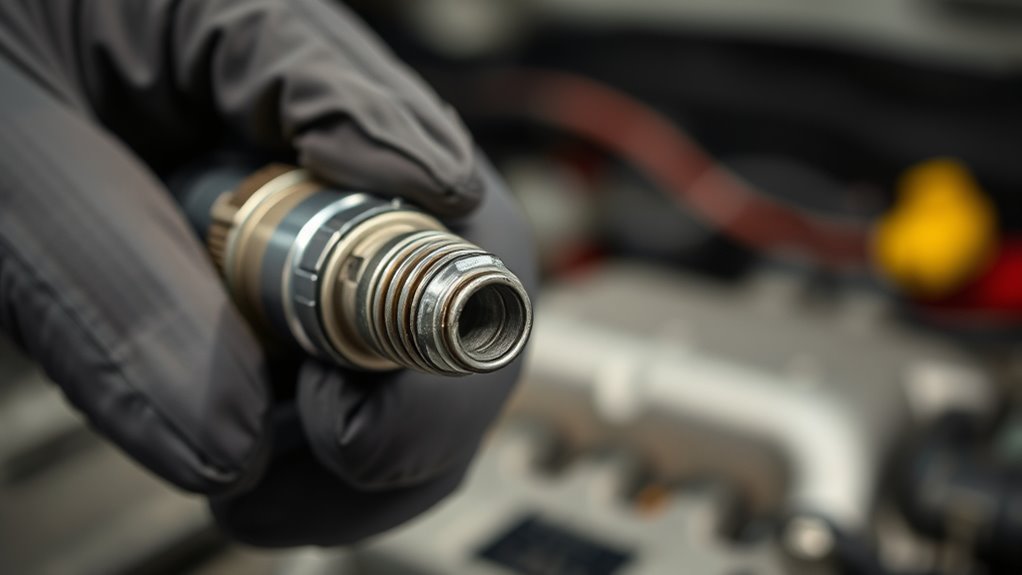
Fuel injectors can become clogged because of dirt, debris, and carbon deposits building up over time. A big reason is poor fuel quality, which has impurities that stick to the injectors and cause blockages.
If you often use low-quality fuel, deposits can build up quickly and limit fuel flow. When injectors are clogged, engine performance drops because they can’t deliver the right amount of fuel for optimal combustion.
This leads to rough idling, less power, and worse fuel efficiency. Over time, dirt and debris from the air filter can also settle in the injectors, making the problem worse.
Understanding these causes shows why using good fuel and keeping your engine clean are so important. Clogged injectors make your engine work harder, which lowers efficiency and causes wear.
Regular maintenance and choosing high-quality fuel can help prevent these issues, keeping your engine running smoothly.
Gather Your Tools and Prepare Your Workspace
Before you start cleaning your fuel injectors, it’s important to gather all the necessary tools and set up a clean, organized workspace. Proper preparation guarantees efficiency and safety during the process. You’ll want tools like a fuel injector cleaning kit, screwdrivers, and gloves. Remember, fuel composition and environmental factors, like dirt and moisture, can influence clogging. So, work in a controlled environment.
Use this table as a visual reminder of what you need:
| Tool Needed | Purpose | Emotional Benefit |
|---|---|---|
| Fuel injector cleaner | Breaks down grime and deposits | Confidence in a clean engine |
| Screwdrivers | Access and detach injectors | Satisfaction of a job well done |
| Clean workspace | Keeps small parts safe and organized | Peace of mind and efficiency |
Preparing your space with precision gives you control, making sure the task goes smoothly and effectively.
How to Access Your Fuel Injectors Safely
To access your fuel injectors safely, start by making sure the engine is completely off and has cooled down. This helps prevent burns or injuries. It’s an important step for proper maintenance and safety.
Wear gloves and eye protection to shield yourself from fuel and debris. Disconnect the negative terminal of your battery to avoid any risk of electrical sparks.
Locate your engine cover and carefully remove it, following the manufacturer’s instructions. Once the cover is off, find the fuel rail and injectors; they’re usually secured with clips or bolts.
Take your time during this process to avoid accidental damage. Remember, working on fuel system parts requires caution to prevent leaks or fire hazards.
Removing and Inspecting Your Fuel Injectors
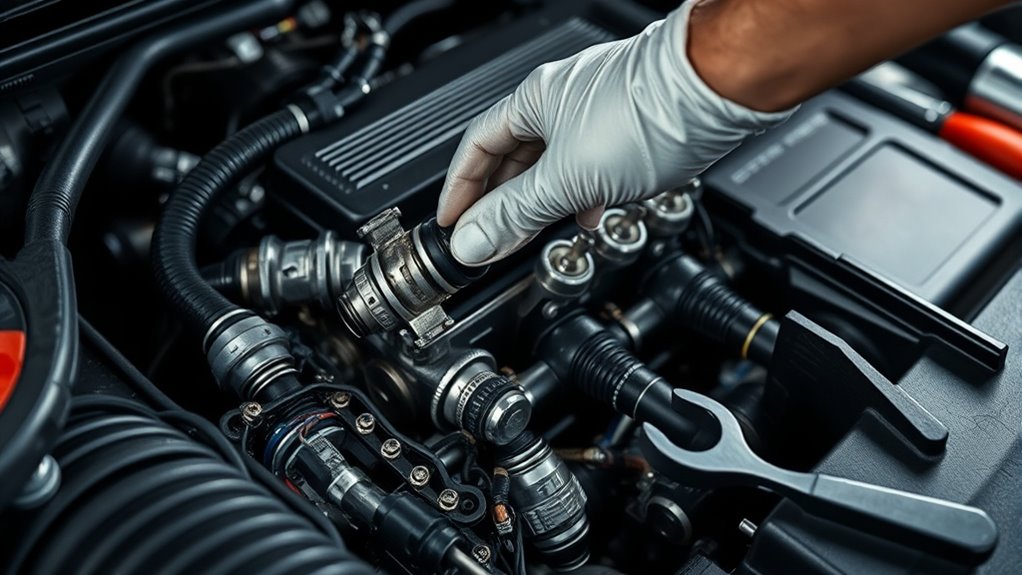
Next, disconnect the fuel lines carefully, making sure the engine is off and the system is depressurized to avoid leaks. Gently remove the injectors using the right tools, and remember where each one was placed for reinstallation.
Once you have the injectors out, inspect each one for signs of clogging, corrosion, or damage. Pay close attention to the nozzle tips and o-rings. Also, check the fuel quality—low-quality fuel or contaminants can cause clogging or injector failure.
If you notice deposits or irregularities, cleaning or replacing the injectors might be necessary. Handling them carefully helps prevent damage and ensures they work properly. Proper inspection helps you decide if your fuel system needs more cleaning or if parts need replacing.
Applying Fuel System Cleaner to Remove Deposits
Once your fuel injectors are out and inspected, applying a fuel system cleaner can help remove stubborn deposits that might be hurting performance. Use a trusted fuel additive made to dissolve gunk inside the injectors.
You can spray a high-quality injector cleaner directly into the cleaned injectors or add the fuel additive to your tank before filling up. This process helps loosen varnish and carbon buildup, bringing back the ideal spray patterns.
| Benefits of Fuel Additives | How They Work |
|---|---|
| Improve fuel atomization | Break down deposits inside the injectors |
| Boost engine performance | Ensure cleaner, more efficient combustion |
| Reduce emissions | Help maintain compliance with standards |
Using injector spray or fuel additive regularly can stop future clogging and keep your engine running smoothly.
How to Reverse Flush Your Fuel Injectors
Reverse flushing your fuel injectors is a great way to clear out stubborn deposits that might not come loose with normal cleaning. By reversing the flow of fuel, you can dislodge buildup caused by poor fuel or carbon buildup.
Reverse flushing clears stubborn injector deposits for better engine performance and fuel efficiency.
Before you start, disconnect your fuel supply and attach a special flushing kit or clear tubing to the injectors. Use a fuel-compatible cleaning solvent made for injectors, preferably with lubricants to protect them.
Carefully pump the cleaning solution backward through each injector, making sure it flows out and covers all internal surfaces. This helps remove deposits that could clog or restrict the flow.
Always follow the manufacturer’s instructions and use quality fuel and lubricants afterward to keep everything running smoothly. Reverse flushing can really boost engine performance and fuel efficiency, especially after neglect or poor-quality fuel.
Optional: Ultrasonic Cleaning for Deep-Cleaning Injectors
Sure! Here’s a revised version with a more conversational tone:
—
Ultrasonic cleaning is a really effective way to get rid of those tough deposits in fuel injectors. Basically, it uses high-frequency sound waves to create tiny bubbles that scrub away the grime, even in the hardest-to-reach spots.
This deep-cleaning method can really help bring your injectors back to almost their original performance. Plus, it saves you a lot of time and effort compared to manual cleaning.
Effectiveness of Ultrasonic Cleaning
Ultrasonic cleaning is highly effective for deep-cleaning fuel injectors because it thoroughly removes stubborn deposits and grime that traditional methods might miss. Ultrasound uses high-frequency sound waves to create microscopic bubbles in cleaning solutions, which then vigorously agitate and dislodge contaminants from every nook and cranny of the injector.
This process reaches areas that manual or chemical cleaning alone can’t access, ensuring a thorough clean. Using specialized cleaning solutions helps break down stubborn dirt and varnish, making the process even more effective.
As a result, ultrasonic cleaning restores injectors to near-new condition, improving fuel flow and engine performance. Its precision and efficiency make it a reliable method for deep-cleaning, especially when regular maintenance isn’t enough to remove stubborn deposits.
Deep-Cleaning Mechanism
Deep-cleaning fuel injectors uses a mechanism that employs high-frequency sound waves to create microscopic bubbles in a cleaning solution.
This process, called ultrasonic cleaning, effectively removes carbon buildup and debris, helping maintain the injectors.
During ultrasonic cleaning, sound waves generate cavitation, which agitates the cleaning solutions and helps loosen stubborn contaminants.
The table below highlights the key elements of this mechanism:
| Element | Function |
|---|---|
| Ultrasonic waves | Create microscopic bubbles for cleaning |
| Cleaning solutions | Dissolve fuel deposits and debris |
| Cavitation | Dislodges stubborn contaminants |
Using ultrasonic cleaning ensures thorough, efficient deep-cleaning of injectors, restoring performance and improving engine efficiency.
Reinstall and Reconnect Your Fuel Injectors Properly
Before reinstalling your fuel injectors, double-check that all sealing surfaces and gaskets are clean and in good condition. Proper installation guarantees maximum injector efficiency, helping your engine run smoothly.
When reconnecting the injectors, make sure each clip and connector clicks into place securely. Loose connections can lead to fuel leaks or misfiring, which can hurt your engine’s performance.
Also, verify that the fuel rail is tight and free of debris. Using high-quality fuel is essential, as poor fuel can quickly clog your injectors again.
Take your time during reassembly to avoid damaging delicate components. A quick visual check helps catch potential issues early.
Proper reinstallation ensures your injectors deliver the right amount of fuel efficiently, maximizing engine power and reducing emissions.
Accurate reconnecting minimizes the risk of future clogs and helps ensure consistent fuel atomization, which directly impacts your vehicle’s overall efficiency.
Testing to Confirm Your Fuel Injectors Are Clean
Want to make sure your fuel injectors are really clean? First, take a quick look at them—check for any leaks or clogs that could be causing a problem. Once that’s done, it’s a good idea to test the fuel pressure. That’ll tell you if fuel is flowing properly through the injectors.
Finally, run some diagnostic codes on your vehicle. That step can help catch any issues you might not see just by inspecting visually. Following these steps should give you a pretty clear idea if your cleaning has done the trick!
Visual Inspection Techniques
A visual inspection is a simple way to start confirming whether your fuel injectors are clean. Begin with a color-coded check: look at the injector tips for any residue or discoloration, which could indicate clogging or buildup.
Clean injectors usually look shiny and metallic, while deposits might appear as dark or uneven spots. Also, check for signs of fuel leaks around the connector seals or the injector body. Any dripping or pooling of fuel suggests a faulty seal or a damaged injector.
Take a close look at the wiring harness too. Cracks or corrosion can affect how well the injector performs. Doing this quick visual check can help you spot obvious problems before moving on to more detailed testing.
Fuel Pressure Testing
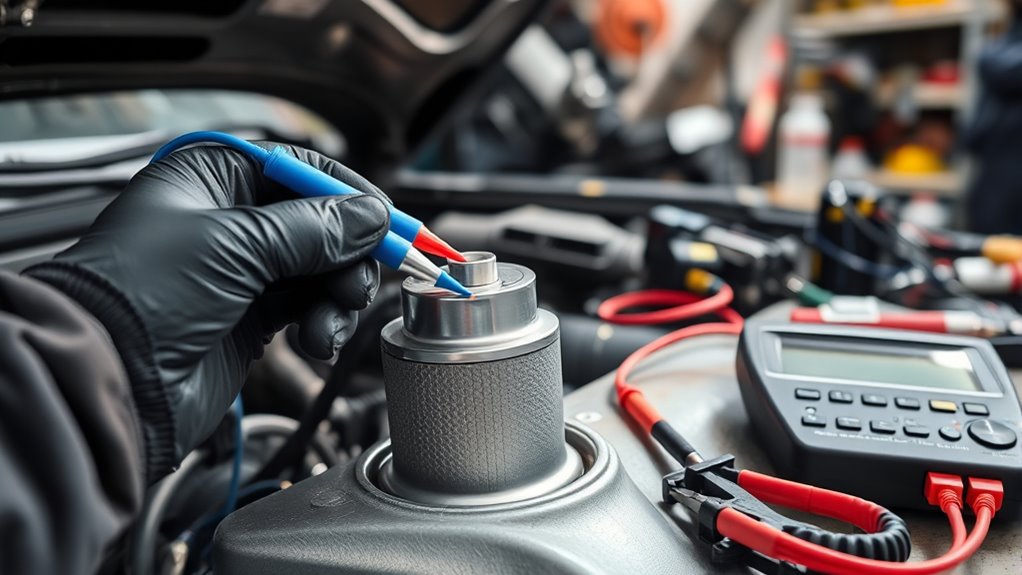
Performing fuel pressure testing is an important step to check if your injectors are working properly and aren’t clogged. You’ll need to use a gauge to make sure the pressure is within the manufacturer’s specs, which indicates proper injector calibration.
Proper fuel pressure helps keep your injectors clean and ensures the engine runs efficiently. If the pressure is too low or too high, it could mean your injectors are clogged or faulty.
To interpret the results, you can use this simple table:
| Fuel Pressure | Injector Condition | Calibration Status |
|---|---|---|
| Within Range | Likely Clean | Properly Calibrated |
| Too Low | Clogged or Leaking | Possible Calibration Issue |
| Too High | Pump or Regulator Fault | Needs Adjustment |
Make sure to verify your fuel pressure before moving on to cleaning or replacing the injectors.
Running Diagnostic Codes
If the scanner shows codes like P0201 to P0220, it points to injector problems, possibly from clogging. After fixing these issues, clear the codes and see if they come back. That will confirm whether your fuel injectors are the cause.
Running diagnostics also helps identify if dirty fuel filters are affecting fuel flow, which can mimic injector clogging. Keeping your fuel system clean improves engine performance and prevents unnecessary damage, saving you time and money.
Tips to Prevent Fuel Injector Clogs in the Future
To keep your fuel injectors clog-free, regularly use fuel additives designed to clean and prevent buildup. A good fuel additive helps break down deposits before they cause problems, reducing the risk of clogs.
Use fuel additives regularly to prevent deposits and keep your injectors clean and clog-free.
Choose additives that support the evaporative system as well, which plays a key role in controlling emissions and keeping your engine running smoothly.
Routine maintenance is also important. Be sure to replace your air filter and fuel filter regularly because dirty filters can introduce debris into the injectors and cause issues.
Always fill your gas tank with high-quality fuel since low-grade or contaminated fuel can contribute to deposits and clogging.
Lastly, drive your vehicle regularly. Infrequent use can allow deposits to settle and harden, leading to problems down the line.
Frequently Asked Questions
How Often Should I Clean My Fuel Injectors?
You should clean your fuel injectors every 30,000 to 50,000 miles to keep your fuel system in good shape. Regular cleaning helps prevent clogs that can hurt engine performance.
If you notice rough idling, poor acceleration, or decreased fuel efficiency, it’s a good idea to get them cleaned sooner. Staying on top of this keeps your engine running smoothly.
Plus, it can improve your fuel economy and help your vehicle’s fuel system components last longer. Regular maintenance like this can make a big difference in how your car performs.
Can I Clean Fuel Injectors Without Professional Tools?
Yes, you can do injector maintenance at home using simple cleaning methods. You don’t need special professional tools for that.
Just get a fuel system cleaner and follow the instructions carefully. You can pour the cleaner into your gas tank or connect it directly to the fuel rail if possible.
Cleaning regularly helps prevent clogs and keeps your engine running smoothly. Be patient and attentive to your car’s needs for the best results.
Are There DIY Kits Available for Fuel Injector Cleaning?
Yes, DIY kits for fuel injector cleaning are available. You can find these kits at most auto parts stores, and they’re designed for DIY use.
These kits usually include cleaning solutions, adapters, and tools to help you do the job yourself. With the right instructions, you can effectively remove deposits and boost injector performance.
Just make sure to follow the directions carefully so you can clean safely and thoroughly. It’s a great way to save time and money while keeping your engine running smoothly.
What Signs Indicate My Fuel Injectors Are Clogged?
You’ll notice your engine misfires, stalls, or has a rough idle, which are signs of clogged fuel injectors.
Injector grime buildup can reduce fuel flow, causing poor acceleration and decreased fuel efficiency.
You might also see increased emissions or difficulty starting your vehicle.
These symptoms indicate your fuel injectors need cleaning, so addressing them quickly can restore peak performance and keep your engine running smoothly.
Is Fuel Injector Cleaning Safe for All Vehicle Types?
Like a trusty steed, your vehicle deserves proper care, but fuel injector cleaning isn’t a one-size-fits-all.
It’s generally safe for most vehicles, but check your fuel types and manufacturer guidelines first.
Some older models or specialty vehicles might need professional maintenance tips or different cleaning methods.
Always verify compatibility to avoid potential damage.
When in doubt, consult your owner’s manual or a mechanic to guarantee safety and efficiency.
Conclusion
By following these straightforward steps, you’re giving your engine the gentle nudge it needs to run smoothly again. Think of it as giving your car a little spa day to keep those tiny parts singing in harmony.
Regular maintenance isn’t just about fixing problems. It’s about nurturing your vehicle’s health before issues bloom. A little care and attention can go a long way.
By doing so, you’ll help ensure your fuel injectors stay clean and functioning properly. This way, your engine’s quiet symphony keeps playing for miles to come.