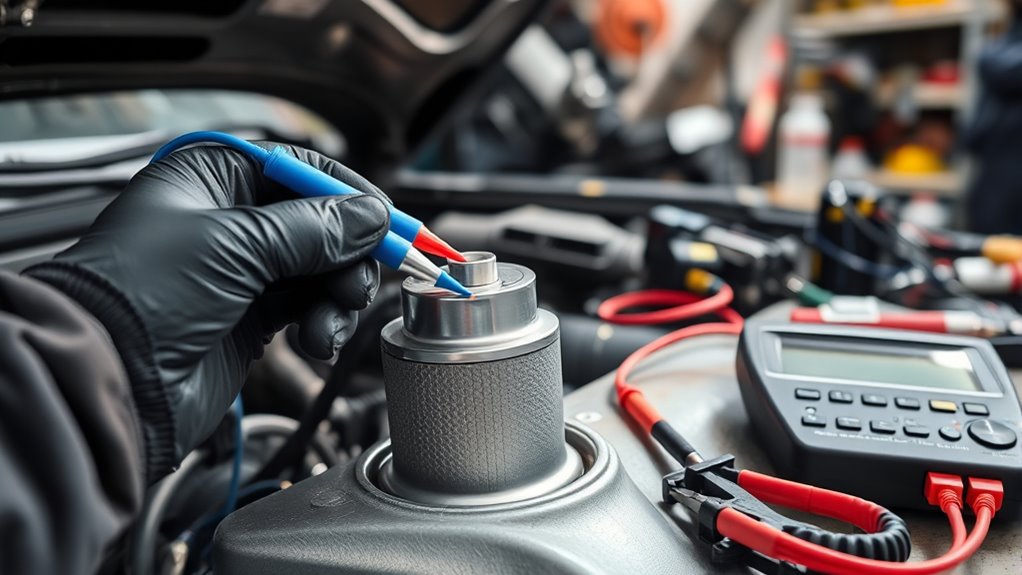
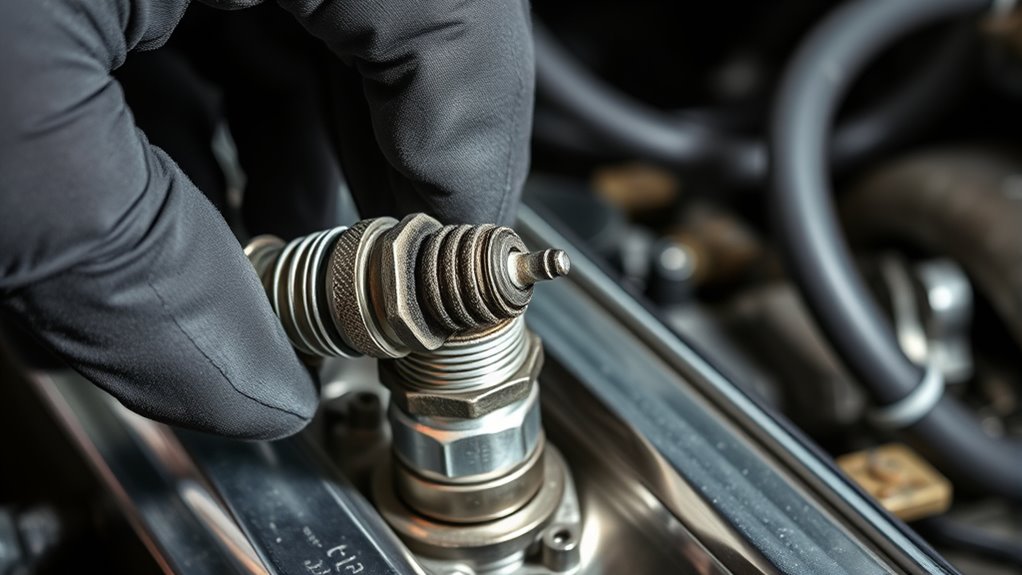
How to Fix Black Spark Plugs in Five Steps
Many car owners find themselves frustrated when their spark plugs turn black, causing hesitation or rough idling. If you’re struggling with black spark plugs, you’re not alone—this is a common issue that many people face and just as easily fixable.
To fix black spark plugs in five steps, start by inspecting them for carbon or oily deposits and identify the root cause, such as a rich fuel mixture or oil leaks.
Clean the plugs gently with a wire brush if deposits are light, or replace them if they’re worn or damaged.
Then, adjust your engine’s fuel mixture and ignition timing to prevent future fouling.
Regular maintenance and proper tools will keep your plugs in good shape—keep going to learn more details.
Key Takeaways
- Check your spark plugs for black deposits to see how severe the fouling is. A quick look can tell you if they just need cleaning or replacement.
- If the plugs are only lightly fouled, clean them with a wire brush or a cleaning solution. For heavily fouled or damaged plugs, it’s best to replace them.
- Make sure the spark plug gap is correct and check that the electrodes aren’t worn out before putting them back in. Proper gaps help with better ignition.
- Adjust your engine tuning, like the fuel mixture and ignition timing, to help prevent fouling from happening again.
- Regularly inspect, clean, or replace your spark plugs as part of your maintenance routine to keep them working clean and efficient.
Why Do Spark Plugs Turn Black? Causes and Meanings
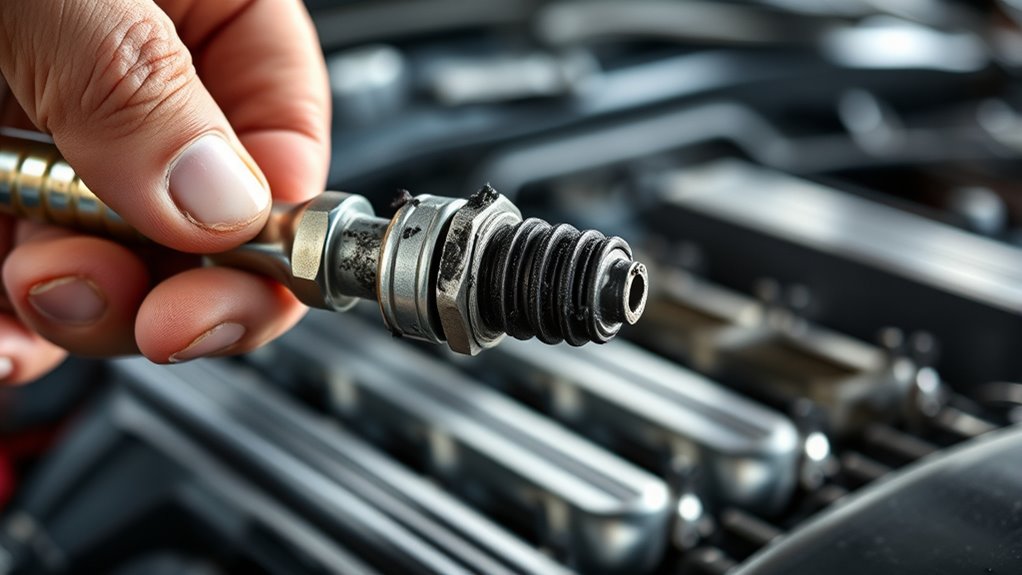
Ever wondered why your spark plugs turn black over time? The main reason is the buildup of carbon deposits, often called fouling. The material of the spark plug, usually nickel, platinum, or iridium, influences how quickly these deposits form.
Blackened spark plugs indicate carbon buildup; materials like nickel, platinum, or iridium affect fouling rate.
When your engine runs too rich, meaning there’s too much fuel, fouling causes carbon to build up on the spark plug’s electrodes. This black soot makes the spark less effective, leading to misfires, poor acceleration, or rough idling.
Oil leaks or incomplete combustion can also cause fouling. Instead of dry carbon, you get greasy or oily deposits. Temperature extremes, poor fuel quality, or miscalibrated injectors can speed up these issues.
Ultimately, the black color shows your spark plug is working hard to ignite an unbalanced mixture or handle contaminants. This signals you should check your engine to fix the underlying problems for better performance.
How to Inspect Spark Plugs for Black Deposits
To effectively inspect your spark plugs for black deposits, start by removing the plugs carefully using a spark plug socket and ratchet. Once out, examine the ceramic insulator and metal terminal for signs of black carbon buildup.
Black, oily deposits often suggest incomplete combustion or oil fouling. Pay attention to the spark plug’s material—copper, platinum, or iridium—as each influences how deposits form and how easy they are to clean or replace.
Notice how much and where the deposits are spread. Uneven coverage might point to specific engine problems. Also, consider the design features of the plug, like long insulators or erosion-resistant coatings, which can affect deposit buildup.
Proper inspection helps identify underlying issues so you can decide whether cleaning or replacing is needed. Carefully observing the layers of deposits will help you take the right steps to restore your spark plug’s performance.
Should You Clean or Replace Your Spark Plugs?
Deciding whether to clean or replace your spark plugs really depends on how they’re doing and how old they are. If they’re only a little dirty or fouled, giving them a good clean might be enough to get them back in shape. But if the plugs are worn out or damaged, it’s usually better to replace them entirely.
Also, think about the cost and how long each option will last. Cleaning can save you a bit of money upfront, but if the plugs are old or heavily worn, replacing them might actually be more cost-effective in the long run. Ultimately, it’s about finding the right balance for your vehicle’s health and your budget.
When to Clean
You might wonder if cleaning your spark plugs is enough to keep your engine running smoothly or if it’s time to replace them. Usually, you should clean your spark plugs when you see carbon buildup or light fouling, but only if they are in good shape and made with quality materials.
If the plugs are worn out or the electrode is eroded, cleaning won’t fix the problem. It’s important to check whether your spark plugs are still structurally sound and functioning properly. Regular cleaning is fine when the plugs are relatively new or made from durable materials that resist damage.
Ignoring signs of wear can lead to misfires or engine troubles. Always consider whether cleaning is enough or if a full replacement is the better option.
Signs You Need Replacement
Even if your spark plugs look relatively clean, ongoing issues like misfires, rough idle, or lower fuel efficiency can mean it’s time to replace them, not just clean them. Over time, materials like copper, platinum, or iridium wear down, which reduces their performance.
If you notice fouling or worn electrodes, cleaning won’t fix the core problem. Replacing your spark plugs boosts ignition, and it also helps prevent strain on your ignition coil, which can degrade from faulty plugs.
Plus, if your plugs have chipped or damaged insulators, that’s a clear sign to replace them. Ignoring these symptoms can lead to more engine trouble and lower efficiency. Trust your vehicle’s performance clues and replace your spark plugs when needed.
Cost Comparison Factors
When deciding whether to clean or replace your spark plugs, cost is an important factor to consider. Doing a quick cost analysis can help you figure out which option makes more financial sense.
Cleaning costs are usually quite low—just a few dollars for cleaning products or tools. Replacing spark plugs can range from $10 to $20 each, depending on your vehicle.
Labor costs vary, but replacing plugs generally takes longer, which can add to your expenses if you hire a mechanic. If your plugs are only slightly fouled, cleaning might save you some money.
However, if they’re worn out or damaged, replacing them could be a better deal in the long run.
Step-by-Step Guide to Cleaning Black Spark Plugs
Are black spark plugs hindering your engine’s performance? Cleaning them can restore proper combustion and improve fuel efficiency, ultimately supporting engine longevity.
First, carefully remove the spark plugs using a spark plug socket.
Begin by carefully unscrewing the spark plugs with a spark plug socket.
Next, inspect them for heavy black soot or carbon buildup. To clean, dip a wire brush or a spark plug cleaning brush into a spark plug cleaner or a mixture of baking soda and water.
Scrub the electrodes and insulator thoroughly to remove deposits.
For stubborn grime, soak the plugs in a cleaning solution for a few minutes before scrubbing. Once cleaned, rinse with water and dry completely to prevent moisture from causing corrosion.
Reinstall the plugs, ensuring they’re snug but not over-tightened.
Properly cleaned spark plugs improve combustion efficiency, which benefits your vehicle’s fuel efficiency and extends engine lifespan.
Regular maintenance like this keeps your engine running smoothly and reliably.
When and How to Replace Spark Plugs
Knowing the right time to replace your spark plugs is key to keeping your engine running smoothly. Worn spark plugs can cause misfires, less power, and worse fuel economy.
You should consider replacing them if they’re visibly cracked, damaged, or extremely fouled. Also, if your engine misfires or runs rough—especially when you’re accelerating—that’s a good sign.
If you notice your fuel economy drop even though you’re driving normally, it might be time to change the plugs. Usually, spark plugs last between 30,000 and 50,000 miles, but check your vehicle’s manual for specific advice.
When replacing them, make sure to use the correct type and set the gap properly for your engine. Carefully remove the old plugs, clean the area, and install the new ones, tightening to the torque specs in your manual.
This process helps restore top engine performance, improves fuel efficiency, and keeps your vehicle running smoothly—saving you money at the pump.
How to Adjust Fuel and Engine Settings to Prevent Fouling
To keep fouling at bay, it’s really important to fine-tune your air-fuel ratio and make sure your engine is running smoothly. When it comes to ignition timing, getting it just right can make a big difference in preventing excess fuel from building up on your plugs. Also, don’t forget to monitor your engine temperature—overheating can definitely contribute to fouling issues.
Optimize Air-Fuel Ratio
Adjusting the air-fuel ratio is key to preventing black spark plugs caused by fuel fouling. When the mixture is too rich, it lowers combustion efficiency and causes carbon buildup.
To optimize this, start by checking the air filter. A clogged filter restricts airflow and makes the fuel mixture too rich.
Next, adjust the carburetor or fuel injection system. Fine-tuning these settings helps create a leaner, more balanced mixture.
Finally, keep an eye on engine performance. If you notice misfires or rough idling, further refine the mixture to improve combustion.
Use Proper Ignition Timing
Ensuring proper ignition timing is crucial for preventing black spark plugs caused by fuel fouling. When your ignition timing is off, the air-fuel mixture might not ignite at the right moment, leading to incomplete combustion and carbon buildup.
Adjust your ignition timing so the spark occurs just before top dead center. This guarantees maximum power and efficiency. Be sure to check your vehicle’s specs and use a timing light to get it right.
Also, don’t forget to set your spark gap accurately. A gap that’s too wide can cause weak sparks, while one that’s too narrow reduces spark energy.
Proper ignition timing and the correct spark gap help ensure complete combustion, which reduces carbon fouling. This keeps your spark plugs clean and functioning properly.
Monitor Engine Temperatures
Have you checked your engine’s temperature lately? Keeping an eye on it helps prevent fouling and extends the life of your spark plugs. Proper cooling is key, and regular thermostat maintenance keeps temperatures steady.
To get the most out of your cooling system and prevent black spark plugs, try these steps:
- Keep an eye on your temperature gauge for signs of overheating or running too cool.
- Make sure your thermostat opens and closes properly to maintain the right engine temperature.
- Check your coolant levels and quality, adding or replacing fluid as needed to support cooling.
Tips to Maintain Spark Plugs for Long-Term Performance
To keep your spark plugs performing well over time, regular maintenance is key. Checking and cleaning them periodically helps prevent buildup and keeps them firing at their best.
If you use alternative fuel sources like ethanol blends or compressed natural gas, be aware that these can impact spark plug longevity. Using spark plug coatings can also extend their lifespan by protecting against deposits and corrosion.
Applying a suitable anti-corrosion coating helps maintain consistent spark performance, especially in tough conditions. Always ensure the gap is properly set according to your vehicle’s specifications to avoid misfires.
Don’t neglect these maintenance steps, as they can lead to fouling and reduced efficiency. Routine inspections and timely replacements will keep your engine running smoothly.
With proper care, your spark plugs will provide reliable ignition for the long run. Staying on top of these tips helps you get the most out of your spark plugs and keeps your vehicle running like new.
Tools and Materials Needed for Cleaning and Replacement
Before you start cleaning or replacing your spark plugs, gather the essential tools and materials to make the process smooth and effective. You’ll want items that help address spark plug corrosion and prevent engine misfires. Start with a spark plug socket and ratchet wrench, which ensure a secure grip to remove stubborn plugs without damaging the ceramic insulator.
A spark plug cleaner or wire brush is also important. They help remove carbon buildup and corrosion, restoring proper spark plug function. Additionally, use anti-seize lubricant and dielectric grease to prevent future corrosion and make future removal easier.
Having extra materials like gloves, safety goggles, and a torque wrench can come in handy. Having these tools ready saves time and reduces frustration when tackling blackened spark plugs. Proper tools help you avoid damaging the spark plug or threads, lowering the risk of engine misfires caused by fouling or corrosion. Stay prepared for a clean, efficient replacement process.
Preventing Spark Plug Fouling in Your Car
Regularly inspecting and maintaining your spark plugs can prevent them from fouling and keep your engine running smoothly. Keep an eye on how your vehicle performs and replace the spark plugs when needed. Using quality fuel and making sure your engine isn’t running too rich or too lean helps lower fouling risks.
Routine spark plug checks and quality fuel keep your engine smooth and fouling-free.
It’s also important to follow safety tips, like wearing gloves and disconnecting the battery before working on spark plugs. Proper maintenance includes checking for oil leaks, which can cause fouling, and fixing issues quickly.
Be aware of your warranty details—some warranties cover spark plug replacement if fouling happens due to manufacturing defects or early failure. By following these steps, you can extend the life of your spark plugs and improve your engine’s performance.
Regular care not only saves you money on replacements but also helps prevent unnecessary engine problems down the road. Consistent maintenance is the best way to keep your spark plugs working properly.
When to Seek Professional Help for Spark Plug Problems
While many spark plug issues can be handled at home, you should consider seeking professional help when problems persist despite your efforts or worsen over time. If you notice ongoing engine misfires or inconsistent acceleration, it’s time to call in an expert. Pay attention to these signs:
- Spark plug material deterioration: If the electrodes are excessively worn or melted, replacement might require specialized tools or knowledge.
- Persistent engine misfire: When cleaning or replacing spark plugs doesn’t fix misfires, it’s likely a deeper issue that needs diagnostic equipment.
- Problems worsening over time: If spark plug fouling or carbon buildup continues despite your efforts, a professional inspection can identify underlying causes like faulty fuel systems or more serious engine wear.
Ignoring these signs can lead to costly repairs later. When in doubt, consulting a mechanic guarantees proper diagnosis and prevents further damage.
Frequently Asked Questions
Can Black Spark Plugs Cause Engine Misfires?
Yes, black spark plugs can cause engine misfires because they often show a rich fuel mixture or oil fouling, which disrupts proper ignition.
When this happens, the ignition coil struggles to produce a strong spark, and the combustion chamber doesn’t ignite fuel efficiently.
This misfiring results in rough engine performance, lower fuel economy, and higher emissions.
Fixing the cause of black deposits helps restore proper spark plug function and prevents future misfires.
How Often Should Spark Plugs Be Checked for Fouling?
Think of your spark plugs as tiny gatekeepers that protect your engine’s health. You should check for fouling during scheduled maintenance, roughly every 30,000 miles or as recommended by your vehicle’s maintenance schedule.
Use inspection techniques like visual examination for carbon buildup or deposits. Regular checks catch issues early, preventing misfires and keeping your engine running smoothly.
Staying proactive guarantees your engine’s performance remains a well-oiled machine.
Are There Specific Fuel Types That Reduce Spark Plug Blackening?
Using high-quality fuel can significantly reduce spark plug blackening because better fuel burns more completely, leading to less carbon buildup.
Fuels formulated for optimal combustion temperatures also help prevent excessive fouling. Choosing fuels with the right octane rating and avoiding low-quality or high-alcohol blends can make a big difference.
Stick to good-quality fuels to keep your spark plugs cleaner and ensure they perform better over time. Proper fuel choice is a simple way to maintain your engine’s health and efficiency.
What Are Signs of Advanced Spark Plug Damage Besides Black Deposits?
When inspecting your spark plugs, look for signs of damage like worn electrodes, cracks, or excessive wear beyond black deposits. These indicate advanced damage.
During spark plug inspection, you might notice eroded tips or rounded electrodes. These are signs that the spark plug is past its prime and needs attention.
To address these issues, you can try deposit removal techniques like cleaning with a wire brush or a specialized spark plug cleaner. Just be gentle to avoid causing more damage.
If the damage is severe, replacing the spark plugs is the safest bet. This helps ensure your engine runs smoothly and prevents further problems.
Does Engine Age Affect Spark Plug Fouling Risk?
Like tuning a vintage radio, your engine’s age does affect spark plug fouling risk. As your engine gets older, wear and deposits can build up, making fouling more likely if you don’t stay on top of maintenance.
You should check and replace spark plugs more often in older vehicles. Regular maintenance keeps everything running smoothly, preventing black deposits and extending your engine’s life.
It’s a simple way to keep your engine performing at its best, even if it’s seen a few more miles. Proper care is key to avoiding fouling, no matter the age of your car.
Conclusion
Regularly inspecting your spark plugs can save you from costly engine issues down the line.
Imagine neglecting a fouled plug—your car might stutter or even refuse to start.
By following these simple steps to clean or replace your spark plugs, you help keep your engine running smoothly.
Don’t wait until you’re stranded—proactive maintenance guarantees reliable performance and extends your vehicle’s life.
Stay attentive, and your engine will thank you.
Keep an eye on your spark plugs to prevent black spark plugs from causing trouble and ensure your engine runs efficiently.