What Is the Cause When a Car Does Not Start and Could Faulty Spark Plugs Be the Issue
Having trouble starting your car? You’re not alone—many drivers face this frustrating problem, especially when it seems like nothing works.
One common cause could be faulty spark plugs, a tiny part with a big impact on your vehicle’s performance.
If your car doesn’t start, faulty spark plugs could be the culprit because they’re essential for igniting the fuel-air mixture. Worn or damaged plugs won’t produce the strong sparks needed to fire up the engine, causing starting issues, misfires, or rough idling.
But other factors like battery problems, fuel delivery issues, or wiring faults might also be at play. Keep exploring to uncover how to identify and fix these common causes effectively.
Key Takeaways
- A dead or weak battery can stop your car from starting, often because of corrosion or loose connections.
- Faulty spark plugs might not ignite the fuel-air mixture properly, leading to starting problems.
- Fuel system issues, like a failing fuel pump or clogged filter, can also prevent the engine from starting.
- Problems with the ignition switch or wiring can disrupt the electrical flow, stopping the engine from starting.
- Worn or damaged spark plugs can mess up the ignition timing, causing misfires and making the engine hard to start.
Why Won’t My Car Start? Common Causes Explained
If your car won’t start, the issue is often related to a simple mechanical or electrical problem. Check the ignition system first, including the key, ignition switch, and ignition coil.
If your car won’t start, check the ignition system first, including key, switch, and coil.
If any of these parts are faulty, the engine won’t get the spark it needs to start. Another common cause is fuel delivery failure. Make sure your fuel tank has enough gas, and the fuel pump is working properly.
A clogged fuel filter can also block fuel flow, stopping the engine from firing up. Sometimes, a dead battery can seem like electrical problems, so it’s important to test the battery’s charge.
Ignition issues can cause misfiring or no spark at all. Problems in fuel delivery prevent the engine from getting the necessary fuel. Troubleshooting these areas quickly helps you identify the root cause and get your vehicle back on the road.
The Role of Spark Plugs in Ignition and Engine Performance
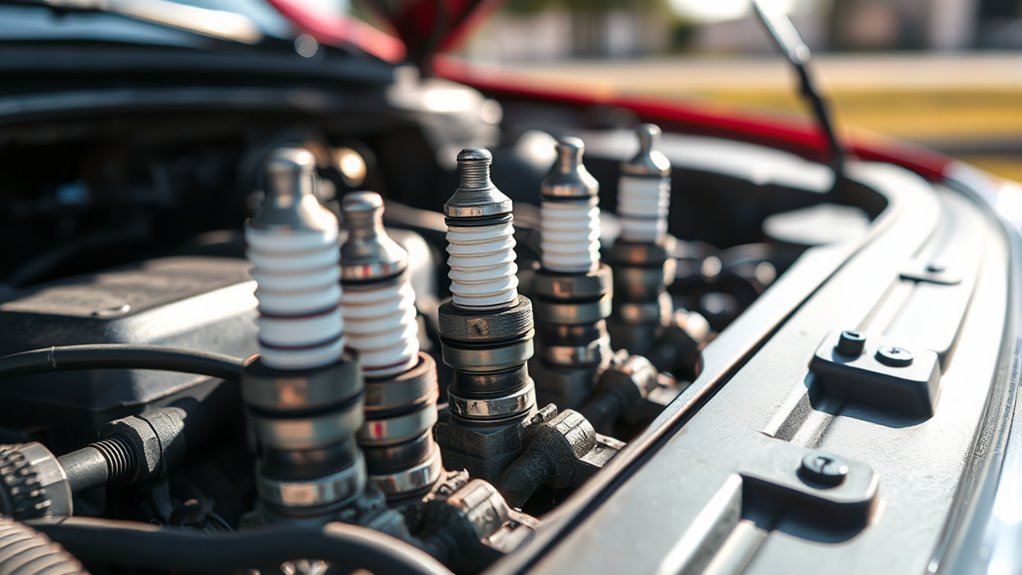
Spark plugs are pretty important when it comes to getting your engine to fire up. They do the job of igniting the fuel-air mixture inside the engine, which means they play a big part in how smoothly your car starts and runs.
If your spark plugs are worn out or not working right, you might notice your engine running rough, misfiring, or even having trouble starting at all. Keeping your spark plugs in good shape really helps your engine run smoothly and ensures you can rely on your car when you need it.
Spark Plug Functionality
Ever wonder what kicks your engine into gear? It’s the spark plug, which produces the spark needed for combustion. The materials used—like copper, platinum, or iridium—affect how well it conducts electricity and handles heat.
A good spark plug gives a strong, steady spark at just the right time, thanks to proper ignition timing. If the spark isn’t reliable or the materials wear out, your engine can have a hard time starting or may run poorly.
Spark plugs also make the combustion process more efficient, directly impacting engine performance. When they work properly, you get smooth ignition and maximum power.
On the flip side, faulty spark plugs can cause misfires, rough idling, and startup trouble. That shows just how important they really are to your engine’s health.
Impact on Ignition
Have you ever thought about how crucial the ignition process is to your engine’s performance? Your spark plugs play a key role in igniting the air-fuel mixture at just the right moment, known as ignition timing.
If the spark plugs fire too early or too late, your engine can sputter or fail to start altogether. Faulty spark plugs also make it harder for the ignition system to produce a strong spark, disrupting proper timing.
Poor fuel quality can cause incomplete combustion, which strains the spark plugs’ ability to ignite the mixture effectively. Both ignition timing and fuel quality directly impact smooth start-up and operation.
When these elements are off, your engine may struggle to turn over or run efficiently.
Engine Performance Effects
Did you know that your engine’s performance depends a lot on your spark plugs working properly? When they’re in good shape, they help the engine burn fuel smoothly, which boosts both power and fuel efficiency.
Faulty spark plugs can cause engine misfires, rough idling, and sluggish acceleration. This makes your engine work harder and uses more fuel, lowering your overall fuel economy.
Worn or bad spark plugs also lead to higher emissions, making it tougher for your vehicle to meet emission standards. Over time, they not only hurt your engine’s performance but also increase pollution and fuel costs.
Getting your spark plugs checked and replaced regularly helps keep your engine running smoothly. It improves efficiency and keeps your vehicle compliant with emission rules.
How Worn or Damaged Spark Plugs Stop Your Car From Starting
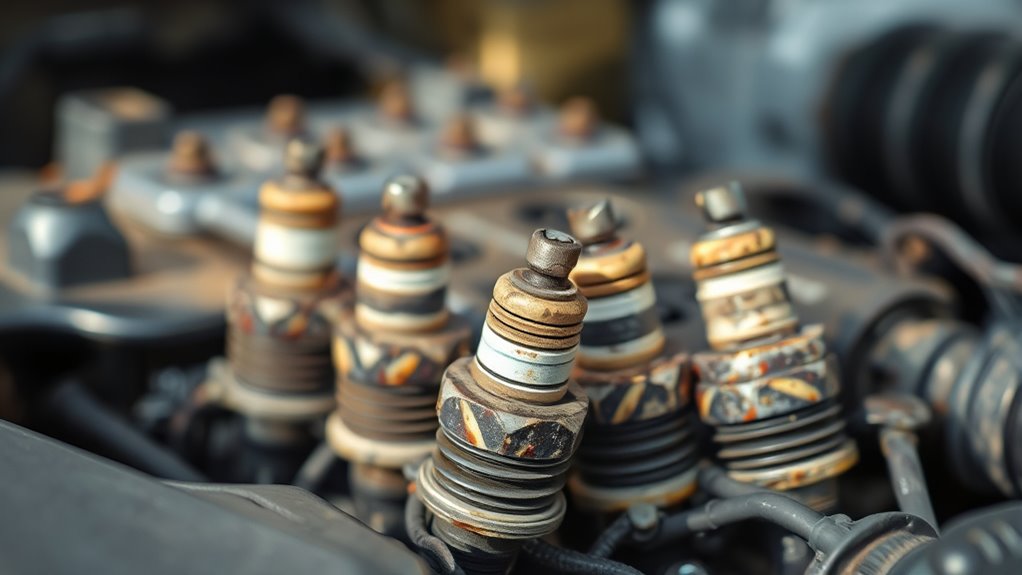
Worn or damaged spark plugs can stop your engine from starting because they don’t produce the necessary sparks to ignite the fuel-air mixture. Over time, materials like copper, platinum, or iridium break down, making it harder for the spark to be strong enough.
Worn spark plugs can prevent your engine from starting by failing to produce strong enough sparks.
If the electrodes become fouled or worn, the spark won’t be intense enough to ignite fuel properly. Damaged spark plugs can also mess with ignition timing, causing misfires or no spark at all.
Poorly maintained spark plugs might fire at the wrong moment, messing up the engine’s startup process. This mismatch keeps combustion from happening correctly, stopping the engine from turning over.
If your spark plugs are old, corroded, or damaged, they won’t give the reliable sparks your engine needs to start. Keeping your spark plugs in good shape and properly gapped can make a big difference in getting your car to start smoothly.
Signs Your Spark Plugs Are Worn Out or Need Replacement
If your engine’s running roughly while idling or feels shaky, and when you give it a quick press on the accelerator it responds harshly, there’s a good chance your spark plugs might be worn out. You might also find that starting the engine becomes harder than it used to be, or maybe you experience a sudden drop in power while driving.
Those signs are pretty common indicators that your spark plugs could be causing some problems. It’s best to get them checked out before your car ends up refusing to start altogether.
Rough Idle Performance
A rough idle is often a sign that your spark plugs are worn out or need replacing. You might notice your engine feels uneven or shaky when idling, which can affect your overall drive.
Worn spark plugs can cause inefficient combustion, leading to poor fuel efficiency and inconsistent engine performance. Sometimes, issues like low tire pressure or poor fuel quality make rough idling worse, but faulty spark plugs are a common culprit.
| Issue | Effect | Solution |
|---|---|---|
| Worn or fouled spark plugs | Misfiring, rough engine sound | Replace spark plugs |
| Low tire pressure | Reduced power, vibration | Inflate tires properly |
| Fuel quality | Engine hesitation | Use quality fuel |
Difficulty Starting Engine
Your engine’s reluctance to start can often point to worn or failing spark plugs. If your car struggles to ignite, it might be time to check those plugs. Worn spark plugs can cause misfires, making starting difficult or inconsistent.
Aside from performance issues, neglecting spark plug replacement can hurt fuel efficiency, leading to higher fuel costs over time. While aesthetic modifications might make your car look good, they don’t fix underlying problems like poor ignition.
Regular maintenance ensures your spark plugs are in good shape, helping your engine start smoothly and run efficiently. If you notice difficulty starting your car, consider inspecting your spark plugs and replacing them if needed to restore reliable starting and maximize fuel economy.
Other Electrical or Mechanical Causes That Can Prevent Your Car From Starting
Electrical and mechanical problems beyond the battery and starter can also stop your car from starting. For instance, battery corrosion can block the flow of electricity, making it impossible for the engine to turn over.
A failing fuel pump can cut off the fuel supply, leaving your engine starved and unable to start. These issues can be frustrating and confusing, especially when you’ve already checked the obvious causes.
| Cause | Impact |
|---|---|
| Battery corrosion | Interrupts electrical connection, preventing start |
| Faulty fuel pump | Stops fuel delivery, starving the engine |
| Loose or damaged wiring | Causes inconsistent power flow |
| Mechanical failure | Wears parts down, leading to engine hesitation |
Knowing about these problems helps you act quickly and avoid getting stranded. Recognizing the signs can mean the difference between a quick fix and a costly repair.
How to Check Your Spark Plugs for Wear and Damage
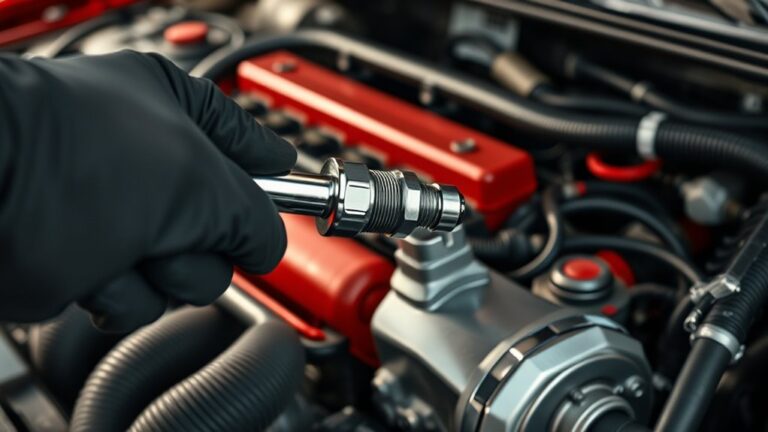
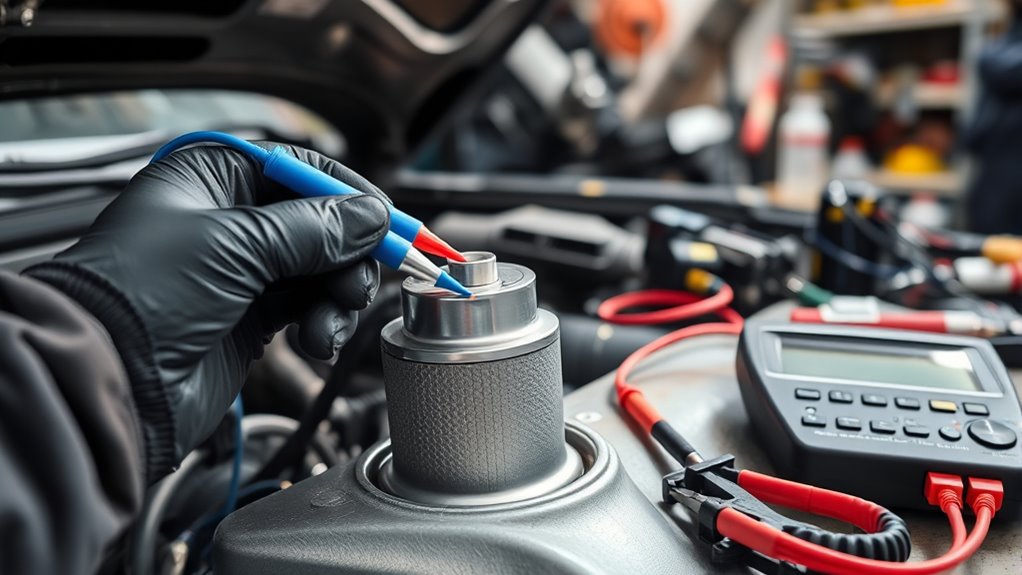
Since spark plugs are key to igniting the fuel-air mixture in your engine, it’s important to check them regularly for proper functioning. To do this, first remove the spark plug with a spark socket.
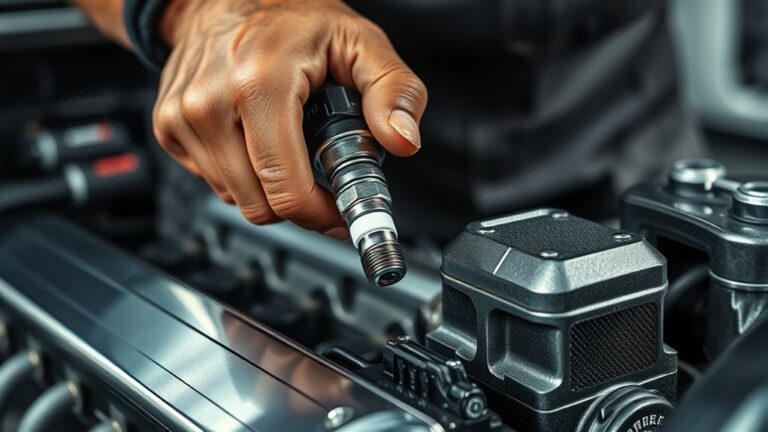
Look at the spark plug materials—most are made of copper, platinum, or iridium—and check for signs of wear. Look for excessive carbon buildup, oil fouling, or electrode erosion. These can affect performance.
Inspect the insulator for cracks or chips, which indicate damage. Also, examine the electrical connectors at the top. Loose or corroded connectors can lead to misfires.
Check that the center and ground electrodes aren’t worn down or rounded, as this impacts spark quality. If you notice any of these issues, it’s time to replace the spark plug.
Regular inspections help catch problems early, preventing engine misfires and ensuring your vehicle starts smoothly every time.
A Step-by-Step Guide to Replacing Your Spark Plugs
Replacing spark plugs might seem intimidating, but with the right tools and clear steps, it’s a manageable task that can improve your engine’s performance. First, gather a spark plug socket, ratchet, extension, and a gap gauge.
Ensure your engine is cool, then disconnect the negative battery terminal to avoid shocks. Locate your spark plugs, usually along the engine block or cylinder head.
Remove the spark plug wires carefully, noting their positions. Use the socket and ratchet to unscrew each spark plug. Check the gap on new spark plugs with a gauge, adjusting if necessary.
Install the new spark plugs by hand first, then tighten with a ratchet. Avoid over-tightening. Reconnect the spark plug wires or ignition coil.
Replacing the spark plugs can boost fuel efficiency and ensure your brake system responds at its best. Regular maintenance like this keeps your engine running smoothly and prevents starting issues.
When and Why to Seek Professional Help for Starting Problems
If your car keeps having trouble starting or if it’s making weird noises, it’s probably a good idea to see a professional. Those strange engine sounds or warning lights shouldn’t be taken lightly—they can be signs of bigger problems under the hood.
And if you notice anything that feels unsafe, like the car stalling unexpectedly, don’t wait around—get help right away. It’s better to be safe than sorry when it comes to your vehicle’s health and your safety on the road.
Persistent Starting Difficulties
These problems can come from overlooked battery maintenance, which impacts your car’s ability to provide enough power, or issues in the fuel system that prevent proper fuel delivery. Ignoring these signs can lead to bigger damage or breakdowns down the road.
If you keep having trouble starting your car, don’t just keep trying to start it. Instead, have a mechanic diagnose the root cause. Addressing these problems early can save you money and stop your vehicle from becoming completely unusable.
Seek professional help promptly to keep your car running smoothly and safely. Taking care of these issues early is the best way to avoid bigger headaches later.
Unusual Engine Behavior
You might also notice decreased fuel efficiency, suggesting your fuel system or spark plugs aren’t working properly. Ignoring these symptoms can lead to more damage and higher repair costs.
If your engine revs inconsistently, makes strange noises, or stalls unexpectedly, it’s time to see a mechanic. Catching these issues early can restore your vehicle’s reliability and make sure it starts safely and smoothly every time.
Don’t wait—getting a professional diagnosis can help prevent bigger problems down the road.
Safety Concerns Arising
When your car struggles to start despite multiple tries, it’s a clear warning sign that you should get professional help right away. Ignoring this can be risky, especially if your vehicle stalls suddenly, putting you and others in danger.
Faulty spark plugs or electrical problems might seem small, but they can also affect your comfort inside the car. Unusual smells or vibrations could be signs that something’s wrong and needs fixing.
Starting issues can also hurt your fuel efficiency, making your car use more fuel and produce more emissions over time. Trying to fix these problems yourself might make things worse or cause additional damage.
If you’re unsure what’s causing the trouble or it keeps happening, don’t delay. Seek professional help promptly to stay safe, keep your interior comfortable, and protect your vehicle’s performance.
Tips to Keep Spark Plugs Healthy and Prevent Starting Issues
To keep your car starting reliably, it’s important to maintain your spark plugs regularly. Start by choosing the right spark plug materials—copper, platinum, or iridium—as each offers different durability and performance.
Regular inspections can help prevent buildup and fouling that can block ignition. Make sure your ignition timing is spot-on; incorrect timing can cause misfires and starting troubles.
Replacing worn-out spark plugs at the intervals suggested in your vehicle manual is key. When installing new plugs, tighten them properly to avoid leaks or damage.
Also, keep your engine’s ignition system in good shape because faulty wiring can reduce spark efficiency. Using high-quality fuel and maintaining clean air filters will support optimal combustion.
Common Mistakes to Avoid When Troubleshooting Car Starting Problems
While maintaining spark plugs is important, many people make common mistakes when troubleshooting car starting issues that can complicate the process or cause further damage. First, jumping to conclusions without checking basic issues like battery health can waste a lot of time.
Second, neglecting fuel efficiency and tire maintenance can lead to overlooked problems that impact engine performance, making it harder for the car to start. Third, you might try complex repairs without understanding the root cause, risking damage to critical components.
Avoid these pitfalls by starting with simple diagnostics, like inspecting spark plugs and testing the battery. Keep in mind that proper tire maintenance ensures stability and good traction, which can affect starter performance.
Also, verify that your fuel system is clean and functioning well to prevent starting issues. Staying patient and systematic helps you troubleshoot effectively without causing unnecessary damage or confusion.
Frequently Asked Questions
Can a Bad Fuel Pump Cause My Car Not to Start?
Yes, a bad fuel pump can cause your car not to start because it fails to send fuel to the fuel injectors properly. Without enough fuel, your engine can’t get the mixture it needs to run.
If the fuel isn’t reaching the engine, the ignition coil can’t create the spark needed to ignite the mixture. This can make your car struggle to start or even prevent it from starting at all.
Sometimes, it might seem like a spark plug problem, but early signs often include sputtering or difficulty starting. Getting the fuel pump checked out is a good idea if you’re experiencing these issues.
Replacing a faulty fuel pump could fix the starting problem and get your car back on the road.
How Does the Car’s Battery Affect Starting Issues?
Your car’s battery has a big impact on starting issues. If there’s corrosion on the terminals, it can block the electrical flow, making it harder for your engine to turn over.
A weak or dead battery can cause power fluctuations that prevent the starter from working properly. Keeping your battery clean, secure, and fully charged helps your car start more smoothly.
Regular maintenance can prevent these problems and keep your vehicle running reliably.
Can Airflow Problems Prevent My Car From Starting?
Airflow problems can definitely prevent your car from starting. If there’s a blockage or a leak in the intake system, the engine may not get enough air.
This affects fuel quality and ignition timing, which disrupts proper combustion. As a result, starting your car can become difficult or even impossible.
Make sure the air filter is clean and check for leaks or obstructions in the intake system. Good airflow, combined with quality fuel and correct ignition timing, helps keep your engine running smoothly.
What Role Do Fuses Play in Engine Starting?
Fuses play a vital role in your engine’s electrical system by protecting sensitive components from power surges. If a fuse blows, it can prevent your car from starting because essential circuits like fuel or ignition systems aren’t getting power.
Conducting sensor diagnosis helps identify if a faulty fuse is the culprit. Replacing blown fuses restores the electrical connection and enables the engine to start, as long as other systems are working correctly.
Is It Possible Wiring Issues Cause Starting Failures?
Yes, wiring issues can cause starting failures. If the wiring to the ignition switch or starter relay is damaged or loose, it keeps the proper electrical flow from happening needed to start your car.
You should check these components for corrosion, wear, or disconnections. Faulty wiring can interrupt the signal from the ignition switch to the starter relay, which then stops the engine from turning over.
Making sure the connections are solid and clean can often resolve starting problems.
Conclusion
Don’t overlook your spark plugs—they’re the heartbeat of ignition. If your car refuses to start, faulty spark plugs might be the culprit, blocking your way forward.
Remember, regular checks and replacements help keep your engine running smoothly. Think of your car as a trusted buddy; ignoring small issues can turn into bigger problems later on.
Stay proactive about car care, and your vehicle will be ready to go whenever you are. When spark plugs fail, they’re often the reason your car won’t start, so keep an eye on them.