10 Steps for Installing a Fiberglass Tonneau Cover
Many truck owners want a fiberglass tonneau cover for a sleek look and added protection, but the installation process can feel overwhelming. You’re not alone—getting everything just right takes some effort, and it’s easy to make mistakes without guidance.
To install a fiberglass tonneau cover, start by gathering all necessary tools and materials. Then, prepare your truck bed by removing debris and checking for any damage.
Carefully position the cover, making sure it’s centered and aligned with your bed rails. Secure the cover with weather-resistant hardware, tightening bolts evenly and checking the alignment often.
Troubleshoot any gaps or misalignments to ensure a perfect fit. Finish by inspecting everything closely and tightening all hardware securely.
Keep everything maintained for long-lasting durability. Follow these steps, and you’ll have your fiberglass tonneau cover installed in no time.
Key Takeaways
- Gather all your tools and materials, like a drill, screwdriver, brackets, and the fiberglass cover, so everything’s ready to go.
- Next, clear out any debris and check the truck bed to make sure it’s clean and free of rust. You want a smooth surface for the installation.
- Carefully place the cover onto the truck bed, making sure the side rails are aligned properly and the gaps are even so it fits well.
- Secure the cover using weather-resistant hardware, tightening the bolts evenly to avoid misalignment or leaks.
- Finally, check the alignment, adjust the latch and seals if needed, and tighten all fasteners. This will give you a sturdy, weatherproof fit.
Benefits of Installing a Fiberglass Tonneau Cover
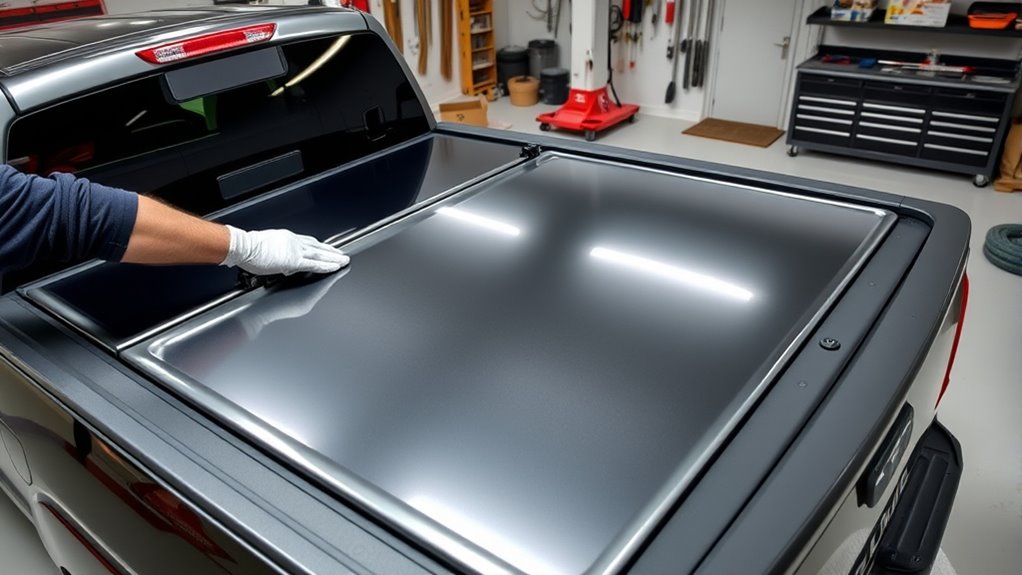
Installing a fiberglass tonneau cover offers several advantages that can improve both the functionality and appearance of your truck. One major benefit is its weather resistance, protecting your cargo from rain, snow, and harsh sun, keeping everything dry and secure. This feature makes it easier to carry valuables without worry.
Furthermore, fiberglass covers provide a sleek look that enhances your truck’s overall style. To keep it looking its best, follow simple cleaning tips like using mild soap and a soft cloth to maintain its shine and prevent dirt buildup. Regular cleaning also prolongs the cover’s life and maintains its weather resistance.
The durable fiberglass material resists dents and corrosion, ensuring your truck stays protected and looks great for years. Overall, a fiberglass tonneau cover adds safe, weatherproof storage and boosts your truck’s aesthetic. It’s a smart investment for both practicality and style.
Gather All Tools and Materials You’ll Need
Before you dive in, it’s a good idea to gather up all the tools and materials you’ll need. Having everything ready before you start will make the process go much smoother. Make sure to have an essential tools checklist handy, along with any materials required to prep your truck bed and the cover.
And don’t forget about safety — grab some gloves and eye protection so you can stay safe throughout the installation. Once you have everything in place, you’ll be all set to get started confidently!
Essential Tools Checklist
To ensure a smooth installation process, gather all the necessary tools and materials beforehand. Make sure you have a drill, screwdrivers, measuring tape, and a socket set to handle mounting hardware.
You’ll also need the fiberglass tonneau cover itself, along with any brackets and clamps specified by the manufacturer. Check the available color options to match your truck’s look, and review the warranty details just in case you need coverage for defects.
Keep a level handy to make sure everything lines up correctly. A pencil or marker will help you mark the mounting points. Having everything within reach saves time and prevents interruptions during the process.
Make sure you’ve got all these tools ready for a seamless, efficient installation from start to finish.
Material Preparation Tips
Having all your tools and materials ready before starting can save you time and frustration.
First, gather your fiberglass tonneau cover and make sure you pick the right color options to match your vehicle.
Second, check the cover’s weight so you know how to handle it properly during installation.
Third, prepare extra materials like cleaning supplies, weatherstripping, and mounting hardware.
Make sure you have all the necessary tools, such as screwdrivers, a drill, and measuring tape.
Double-check that your workspace can fit the cover’s size and weight.
Organizing everything beforehand makes the process smoother and prevents unnecessary pauses.
With all your items at hand, you’re ready for a quick and efficient installation.
Safety Equipment Needed
Gathering your safety gear before you start guarantees you can work confidently and avoid accidents during installation. Make sure your garage is well-organized so tools and safety equipment are easy to access.
Wear safety glasses to protect your eyes from dust and debris, especially if you’re working with weatherproofing techniques on the truck bed or cover. Use gloves to prevent cuts or scrapes when handling fiberglass or sharp tools.
A dust mask helps you avoid inhaling particles, and hearing protection is essential if you’re using power tools. Keeping all safety equipment handy ensures you stay safe and efficient throughout the process.
Proper garage organization minimizes interruptions, letting you focus on the task and complete it smoothly, with safety always a priority.
Prepare Your Truck Bed for the Cover
Before installing your fiberglass tonneau cover, it’s important to get your truck bed ready.
Start by removing any debris like leaves, dirt, or old bedding. This way, nothing will get in the way of the cover’s alignment.
Next, check your interior lighting. Make sure it’s clean and working properly so you can see during installation and avoid any mishaps.
Also, look for rust or damage on the bed’s surface. A smooth, healthy base helps improve fuel efficiency and makes sure everything fits perfectly.
Finally, secure or remove any loose items that could shift while you’re driving. Proper prep protects your cargo space and helps your tonneau cover function smoothly.
Position Your Fiberglass Tonneau Cover Correctly
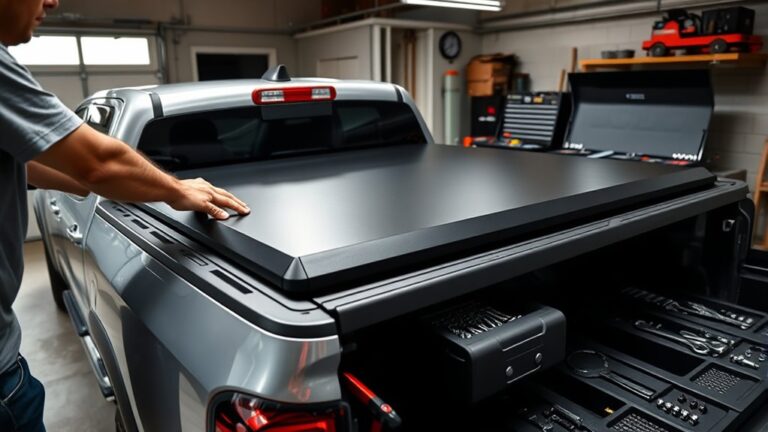
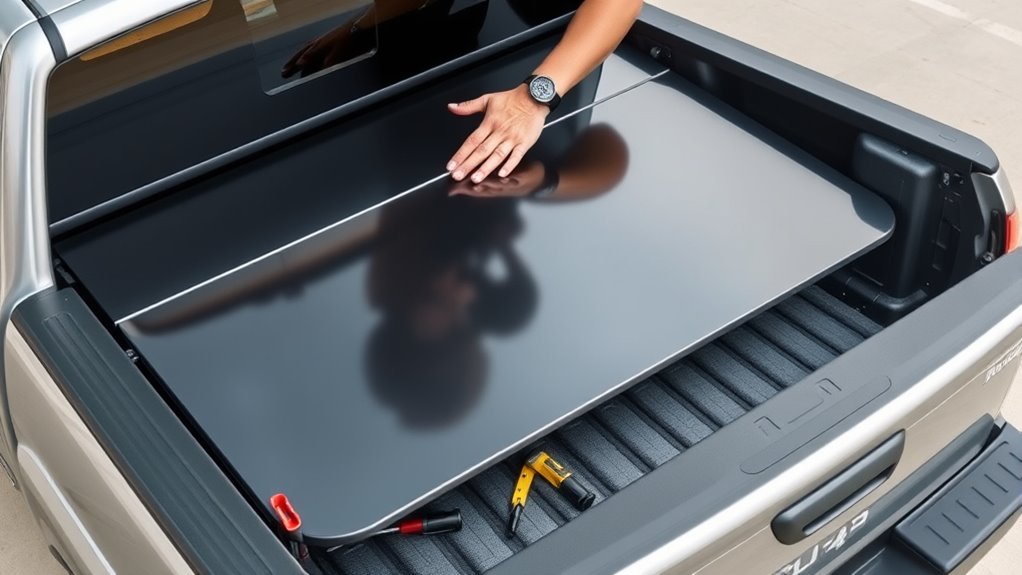
To guarantee a secure fit, start by carefully placing the fiberglass tonneau cover onto your truck bed, aligning it with the side rails. Make sure the cover is straight and evenly positioned across the bed to avoid gaps or overlaps.
Proper placement is key to keeping the cover looking good and lasting longer. Take your time to check the alignment from different angles. Once you think it’s right, do a visual check to make sure it’s centered and flush with the edges.
Keeping the cover properly positioned also helps maintain your truck’s sleek look. For ongoing care, regularly clean it with mild soap and water to prevent dirt build-up, which can affect its appearance and function.
Getting the placement right from the start ensures your cover stays secure and boosts your truck’s overall look. It’ll help your vehicle look polished and well-maintained.
Secure the Cover to Your Truck Bed With Hardware
First, pick out the right hardware that fits your truck bed and cover. It’s important to make sure everything lines up properly before you start tightening any bolts. Once you’ve got it aligned just right, go ahead and tighten the bolts securely so the cover stays firmly in place.
Choose Appropriate Hardware
How do you guarantee your fiberglass tonneau cover stays securely in place? By choosing the right hardware. First, pick weather-resistant fasteners that can handle rain, snow, and sun to keep them durable over time.
Next, go for sleek, rust-proof clamps and bolts that also look good on your truck. These little touches make a big difference in style.
Finally, think about hardware made from corrosion-resistant materials like stainless steel or aluminum. They hold up better and keep your cover secure for the long haul.
Using quality, weatherproof, and attractive hardware not only keeps your cover intact but also protects your truck and keeps it looking sharp.
Align Cover Properly
Once you’ve selected the right hardware, the next step is making sure your fiberglass tonneau cover is aligned properly. Proper alignment keeps the cover’s material sitting flush and helps prevent leaks.
Check that the cover is centered over the truck bed and that both sides are even. Using a level can help verify that everything is straight and aligned.
To stay organized, follow this quick guide:
| Step | Tip |
|---|---|
| Position the cover | Make sure it’s aligned with the truck bed sides |
| Check both sides | Ensure gaps are equal for symmetry |
| Verify front and rear | Keep even spacing to prevent leaks |
| Adjust as needed | Slightly reposition for a perfect fit |
Proper alignment not only improves weather resistance but also helps extend the life of your cover.
Tighten Bolts Securely
To make sure your fiberglass tonneau cover stays securely in place, it’s important to tighten all the bolts properly. This helps with weather resistance and looks better too. First, double-check each bolt and give it a firm turn with a wrench to prevent any from coming loose. Next, follow these simple steps:
- Make sure all the bolts are evenly tightened so there are no gaps that could let water or dirt in.
- Check that the cover sits flush against the truck bed for a seamless and attractive appearance.
- After using your truck for a few hours or days, recheck each bolt because vibrations can loosen them over time.
Securing the hardware correctly not only keeps your truck protected from the elements but also keeps it looking sharp. Tightening the bolts properly ensures your cover stays durable and good-looking for the long haul.
Adjust the Fit for a Leak-Proof Seal and Smooth Operation
Ensuring a proper fit is essential for a fiberglass tonneau cover to work effectively. To get a leak-proof seal and smooth operation, start by adjusting the latch and side panels.
Proper fit ensures your fiberglass tonneau cover seals tightly and operates smoothly.
Check for any gaps or misalignments, then tighten or reposition parts as needed. Keep in mind that extreme temperatures can cause materials to expand or contract, affecting the fit.
Regularly cleaning the cover helps prevent debris from interfering with the seal. Dust or dirt buildup can stop the cover from closing tightly, so make sure to keep it clean.
Be sure to check and tighten sealing points periodically. Adjust fittings if temperature changes affect the fit or cause gaps.
Lubricate hinges for easier opening and closing, making the operation smoother over time. Staying on top of these steps helps ensure your cover stays leak-proof and functioning perfectly.
Check That the Cover Is Secure and Properly Aligned
Before using your fiberglass tonneau cover regularly, make sure it’s securely attached and properly aligned. This ensures the locking mechanism works smoothly and keeps out the weather.
Start by checking that the cover sits flush with the bed rails, with no gaps that could let water in. Next, verify that the locking mechanism opens and closes easily and stays secure.
Make sure the cover’s edges are aligned evenly along the truck to provide the best weather resistance. Proper alignment and secure attachment help prevent leaks and keep the cover stable while you’re on the move.
If anything feels loose or out of place, make adjustments before using it. This quick check keeps your cover in good shape and ensures it performs reliably wherever you go.
Troubleshoot Common Installation Issues
Even after carefully installing your fiberglass tonneau cover, you might encounter some common issues that can affect its performance. One frequent problem is fitting the cover properly after fender modifications, which might cause alignment or clearance issues. Double-check that your fender modifications haven’t changed the original measurements, and adjust the mounting brackets if needed.
Another issue is paint matching; if the cover’s color doesn’t blend seamlessly with your truck, it could be due to inconsistent paint application or fading. Reassess your paint finish and consider touch-ups or repainting to improve the look.
If the cover feels loose or rattles, make sure all fasteners and seals are tight and sealed correctly. Finally, check for gaps or misalignments that could let water or debris get in. Troubleshooting these common issues helps your fiberglass tonneau cover perform well and look great on your truck.
Maintain Your Fiberglass Tonneau Cover for Longevity
Regular maintenance is key to keeping your fiberglass tonneau cover looking good and performing well over time. Proper fiberglass upkeep helps ensure your cover stays durable and lasts longer.
Regular upkeep ensures your fiberglass tonneau cover remains durable, attractive, and long-lasting.
Here are three essential tips:
- Clean regularly with a mild soap and water to remove dirt and debris that can scratch the surface.
- Apply a high-quality fiberglass polish or wax every few months to protect the finish and keep it shiny.
- Check for cracks or chips and fix any damage quickly to prevent it from getting worse.
Avoid harsh chemicals or abrasive tools, as they can damage the finish and weaken the cover. Keep the surface dry and avoid too much sun exposure, which can cause fading or warping.
Final Tips for a Hassle-Free Installation
To make sure your fiberglass tonneau cover installation goes smoothly, take some time to gather all the necessary tools and materials beforehand. Being prepared helps you avoid delays and potential mishaps.
Before you start installing, focus on cleaning the truck bed surface. Make sure it’s free of dirt, grease, and debris so the cover fits securely. Also, check that your paint color matches your vehicle to avoid disappointment later.
Here’s a quick list of essential items you’ll need:
| Tools & Materials | Purpose |
|---|---|
| Screwdriver & Wrench | Tightening bolts and securing the cover |
| Cleaning Cloth & Solution | Preparing the surface for installation |
| Sealant (if needed) | Ensuring a weatherproof seal |
| Level & Tape Measure | Making sure everything lines up correctly |
Double-check the instructions before you begin and take your time. Using the right cleaning techniques and confirming the color match will help ensure a hassle-free installation.
Frequently Asked Questions
Can I Install a Fiberglass Tonneau Cover Myself Without Professional Help?
Yes, you can install a fiberglass tonneau cover yourself if you’re handy and follow the instructions carefully. It’s a doable project for many DIY enthusiasts.
Fiberglass offers excellent durability and weather resistance, making it a solid choice for your truck bed cover. Just make sure you have the right tools on hand.
Take your time and read the manual thoroughly before you start. With patience, you’ll be able to install it securely and enjoy protection from the weather.
If you follow these steps, you’ll get a professional-looking result that lasts for years. No need for professional help unless you prefer it!
How Long Does the Installation Process Usually Take?
The installation process usually takes about two to four hours. Keep in mind, common delays like misaligned mounting holes or missing hardware can add to that time.
As you get started, you might feel a bit excited or anxious, wondering how smoothly everything will go.
If you’re prepared and patient, the whole process can be pretty straightforward.
When it’s finished, you’ll be happy you took the time, especially when your new fiberglass tonneau cover is all secure and in place.
Do I Need to Modify My Truck Bed for Installation?
You typically don’t need to modify your truck bed when installing a fiberglass tonneau cover.
However, to ensure a perfect fit, check for a snug seal and think about adding weather sealing options.
If your truck has a custom paint job, be extra careful during installation to avoid damaging the finish.
No major modifications are required, but making a few adjustments like sealing gaps can improve weather resistance and keep your cover secure.
Are Special Tools Required for Adjusting the Fit?
A stitch in time saves nine, so you don’t want to overlook proper fit adjustment.
For your fiberglass tonneau cover, no special tools are usually needed. Just having basic hand tools can help you fine-tune the fit.
You might need a wrench or screwdriver to tighten the mounting hardware. Using the right tools ensures a secure fit and a sleek appearance.
It also helps prevent leaks or damage over time, keeping your cover in top shape.
What Is the Recommended Maintenance Schedule for a Fiberglass Tonneau Cover?
You should perform regular maintenance on your fiberglass tonneau cover every 3 to 6 months. Start by cleaning it with gentle soap and water, avoiding harsh chemicals.
Then, apply a quality sealant to protect the finish and improve water resistance. For paint care, regularly check for chips or scratches and touch up as needed.
This proper maintenance helps extend the cover’s lifespan and keeps it looking great.
Conclusion
Installing your fiberglass tonneau cover might seem intimidating at first, but think of it like putting together a puzzle—you just need patience and the right pieces. When I installed mine, taking the time to carefully align everything saved me a lot of headaches later.
Make sure all your tools and parts are ready before you start. Follow the steps closely to ensure everything fits perfectly. This way, you’ll end up with a sleek, secure cover that’s not just a barrier but a shield for your truck bed.
By taking your time and paying attention to details, you’ll turn a simple task into a confident handshake with your vehicle’s new look. Installing a fiberglass tonneau cover might be easier than you think when you stick to these steps.