How to Do Long Bilstein Shock Maintenance for Lasting Performance
Feeling confident on the road often comes down to reliable suspension, and many people struggle with maintaining their Bilstein shocks over time. You’re not alone—keeping these shocks in top shape is key to smooth, responsive driving.
To maintain your Bilstein shocks for lasting performance, regularly inspect for leaks, dents, or corrosion, and clean them to prevent dirt buildup.
Use proper tools to safely lift and support your vehicle, then carefully remove the shocks, checking for worn seals or damaged components.
Replace any worn parts and re-install with the correct torque.
Stay diligent about visual checks and proper procedures. Continuing with these steps will help you keep your shocks in top shape and ensure they perform at their best mile after mile.
Key Takeaways
- Regularly check your shocks for leaks, damage, or corrosion. Clean the surfaces so you can see what’s going on clearly.
- Inspect mounting points, bushings, and fasteners for any cracks, wear, or looseness. Tighten or replace parts as needed.
- Make sure to use the right tools, like torque wrenches and shock-specific tools, when removing or reinstalling. This helps prevent damage.
- Keep an eye on how your vehicle handles and rides. If you notice things feeling off, don’t wait—address the issues quickly.
- Always follow the manufacturer’s guidelines for maintenance. Avoid shortcuts to keep your shocks performing their best for a long time.
Why Regular Maintenance Extends Your Bilstein Shock Life
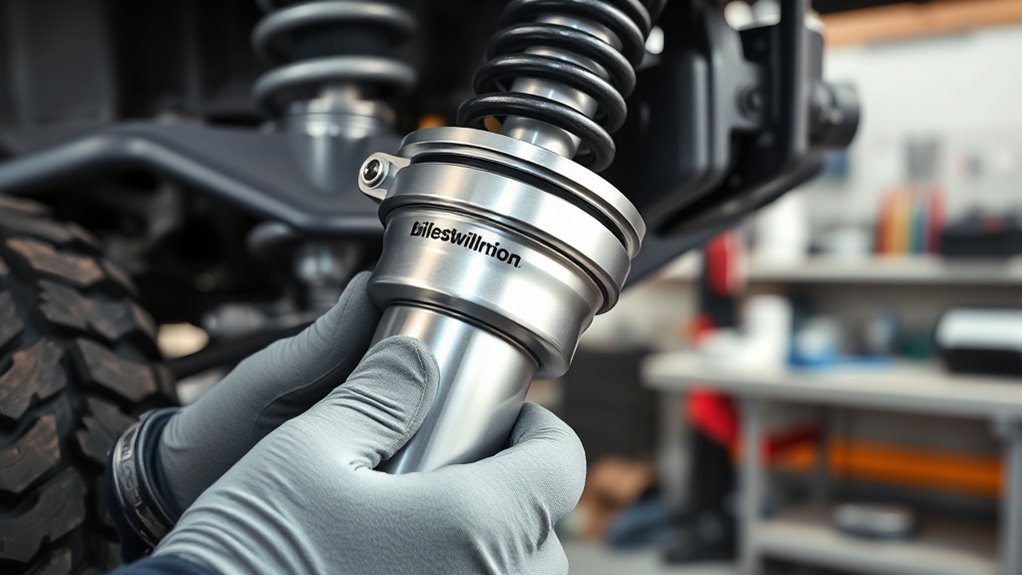
Have you ever wondered why your Bilstein shocks perform better and last longer when properly maintained? Regular maintenance is key because it preserves the integrity of your shocks’ internal components and keeps them working at peak levels. Proper upkeep also helps you spot early signs of wear, preventing costly repairs later on.
Even though Bilstein is known for high-quality manufacturing, all shocks need proper care to reach their full lifespan. Upgrading to trusted aftermarket parts like new bushings or protective seals can also boost your shocks’ durability. Maintenance ensures your shocks keep providing a smooth, controlled ride and great handling.
Neglecting these tasks can lead to early wear, leaks, or reduced damping performance. By sticking to a regular maintenance schedule, you get the most out of your investment and enjoy consistent performance. Ultimately, this extends the life of your Bilstein shocks and keeps your vehicle safe and comfortable.
How to Tell When Your Bilstein Shocks Need Service
You’ll start to notice your vehicle handling differently when your Bilstein shocks need some attention. Maybe it feels a bit shaky or less stable than usual when you’re driving—that’s usually a sign something’s up.
Also, just take a quick look at the shocks themselves. If you spot any visible damage or leaks, that’s a clear indicator they’re worn out and probably need to be looked at.
If you see these signs, it’s a good idea to check your shocks and think about getting them serviced. Staying on top of this will keep your ride smooth and your driving safe.
Unusual Handling Feelings
These sensations usually point to declining shock durability, which affects your vehicle’s stability and control. When shocks wear out, they don’t absorb bumps and uneven surfaces well anymore, causing unpredictable handling.
You might notice a rougher ride or increased body roll. Trust your senses—if your steering feels less precise or the vehicle reacts differently than usual, it’s time to check your Bilstein shocks.
Dealing with unusual handling early helps preserve shock durability and keeps your vehicle performing safely on the road.
Visible Shock Damage
Are visible signs of damage the clearest indicators that your Bilstein shocks need attention? Check for dents, bends, or leaks on the shock body. These are good clues that something isn’t right.
Shock corrosion is common, especially in tough environments. Rust or deterioration on the coil or housing can signal trouble ahead. Scratched or chipped paint can also expose the metal to elements that cause faster corrosion.
If you notice oily leaks, it’s a sign the shock’s seals are compromised and need replacing. Visible damage weakens shock performance and safety. Don’t ignore these signs.
Regular visual inspections help catch issues early. They ensure your shocks stay effective and last longer. Staying alert to visible damage is key for maintaining a smooth ride.
Tools You Need to Service Your Bilstein Shocks
To give your Bilstein shocks the best care, you’ll want to have a good set of tools ready. Think wrenches, sockets, and screwdrivers — those are the basics. But sometimes, especially with certain shock models, you’ll need some specialty Bilstein tools made just for them.
Having these tools on hand makes the whole maintenance process much easier and quicker. It helps ensure everything gets done correctly without any hassle.
Essential Toolkit Components
Having the right tools on hand is essential for efficiently servicing your Bilstein shocks. A basic socket set is key for removing and reinstalling mounting bolts, while a wrench set helps with adjusting or loosening components.
A torque wrench ensures you’re tightening bolts to the manufacturer’s specifications. This is critical for suspension tuning and keeping your vehicle off-road ready.
A screwdriver set comes in handy for smaller screws or clamps. Plus, a pneumatic or hydraulic jack with jack stands will support the vehicle safely during work.
To prevent damage, include rubber mallets and a cleaning brush in your toolkit. These components help you perform thorough maintenance, optimize shock performance, and tailor your suspension for your driving needs—whether on the street or off-road adventures.
Specialty Bilstein Tools
| Tool Purpose | Key Benefit |
|---|---|
| Coil Spring Compressor | Ensures safe compression during removal and installation. |
| Bump Stop Removal Tool | Protects bump stops from damage. |
| Shock Absorber Wrench | Allows for precise disassembly. |
| Needle Nose Pliers | Great for gripping small parts. |
| Readjustment Tool | Helps fine-tune shock settings. |
Safely Lift and Support Your Vehicle for Shock Maintenance
Ensuring your vehicle is safely lifted and supported is key before starting shock maintenance. Begin by parking on a flat surface, engaging the parking brake, and placing wheel chocks around the tires.
Next, use a reliable jack to lift the vehicle, then support it with sturdy jack stands placed under the manufacturer’s recommended lift points. This prevents accidental falls and helps keep everything stable.
Once the vehicle is lifted, check that your suspension alignment is correct, since misalignment can impact shock performance after the work. Also, make sure your tire pressure matches the vehicle’s specifications for proper weight distribution and handling during the process.
Never rely only on a jack—always use jack stands to support the vehicle safely. These precautions reduce risks and make sure your working environment is safe.
After your vehicle is properly lifted and supported, you can confidently proceed with shock removal and maintenance, knowing everything is stable and secure.
Remove Your Bilstein Shocks Correctly
To remove your Bilstein shocks properly, start by locating them on your vehicle and gathering the necessary tools, like wrenches or socket sets. Before loosening any bolts, make sure the suspension is securely supported.
Carefully remove the mounting bolts, keeping track of where they go for reinstallation. As you detach the shocks, be mindful of components that could affect suspension alignment if disturbed improperly.
Removing the shocks correctly helps maintain proper suspension alignment, which is essential for even tire wear and predictable handling. Handling the shocks with care also prevents damage that could impact brake performance because a compromised suspension can change braking dynamics.
Take your time, avoid forcing parts out, and keep everything organized. Once removed, inspect the shocks for wear or damage before you clean or replace them.
Proper removal ensures your suspension stays aligned and your vehicle’s brake performance remains optimal.
Clean and Inspect Your Shocks for Wear and Damage
First, take a good look at your shocks and see if there’s any visible damage like dents or cracks. It’s also important to check for leaks around the shaft and seals — if you notice any fluid around there, it could mean the shock is on its way out.
Don’t forget to inspect the mounts too. Look for rust, signs of wear, or any loose parts. Making sure everything is secure can help keep your suspension working smoothly and prevent bigger problems down the road.
Visual Damage Indicators
Regularly cleaning and inspecting your shocks is key to catching early signs of wear or damage.
Visual damage indicators, like color coding, help you identify issues quickly. Many shocks have paint or markings that reveal cracks, scratches, or peeling, signaling potential problems.
When inspecting, look for any surface damage or corrosion, which could affect performance. Check how the shock moves and feel for unusual stiffness or looseness.
If you notice chipping or fading of color coding, it’s a sign to examine further. Keeping an eye on these visual indicators helps you catch problems early, extend shock life, and maintain vehicle stability.
Proper inspection can prevent sudden failure and ensure maximum performance.
Check for Leaks
When inspecting your shocks for leaks, it’s important to look for signs of fluid escaping from the seal areas. Carefully check around the shock body and piston rod for puddles, wet spots, or oil stains.
During your inspection, note if there’s any loss of shock fluid, which could mean seals are damaged or there’s internal trouble. Even small leaks can impact how well your shocks perform, so don’t overlook minor signs.
Start by wiping down the shock surface with a clean cloth, then keep an eye out for any fluid reappearing over time. Spotting leaks early helps prevent further damage and keeps your shocks in good shape.
Fixing leaks early extends the life of your Bilstein shocks and helps you enjoy a smooth, safe ride.
Assess Shock Mounts
Before inspecting your shock mounts, it’s a good idea to clean off any dirt or debris so you can get a clear look. During the inspection, check for signs of wear, cracks, or corrosion around where the shock absorber attaches.
Take a close look at the rubber bushings for cracks, tears, or signs of deterioration, as these can impact shock performance. Make sure all loose bolts or fasteners securing the shock mounts are tightened.
If you find any loose mounts, it can cause uneven wear or damage. When testing the mount’s stability, listen for any unusual movement or squeaking sounds.
Damaged mounts can lead to poor shock absorption and an uneven ride quality. Regularly inspecting your shock mounts helps keep your Bilstein shocks securely in place.
This not only improves performance but also extends the life of your shock absorber system.
Replace Worn Seals and Components to Prolong Shock Life
To keep your Bilstein shocks performing smoothly, replacing worn seals and damaged parts is key. Worn seals can leak fluid, which decreases shock absorber lubrication and hurts damping ability.
Inspect carefully for cracks, tears, or signs of seepage. Replace any compromised seals right away to prevent further issues. Damaged parts like bushings or mounting hardware can misalign the suspension, affecting ride quality and tire wear.
When swapping out seals, make sure they’re compatible and installed correctly to avoid future leaks. Also, check all other parts for wear and replace them if needed. Doing this helps maintain optimal shock function.
Maintaining these parts properly can extend your shock’s lifespan and keep your vehicle handling smoothly. Regular inspections are especially important after off-road adventures or heavy-duty driving.
Staying proactive with replacements ensures your Bilstein shocks keep working their best for years to come.
Properly Reinstall and Torque Your Bilstein Shocks
Once you’ve replaced the seals and damaged components, the next step is properly reinstalling your Bilstein shocks. Understanding shock absorber physics helps you torque each component to the correct specifications, preventing poor performance or premature failure. Bilstein’s history as a pioneer in shock technology emphasizes precision and quality. So, be sure to follow the recommended torque settings to maximize performance and longevity.
When reinstalling, make sure the shock is aligned correctly within the mounting points. This helps avoid uneven wear and ensures a smooth ride. Use a torque wrench to tighten the bolts evenly, securing each according to the manufacturer’s guidelines. Proper torque prevents bearing loosening or damage, helping maintain the shock’s integrity and your vehicle’s stability.
Take your time during reinstallation and double-check every connection. Being careful helps preserve the design intent rooted in Bilstein’s legacy of durability and performance. This attention to detail will ensure your shocks deliver that smooth, controlled ride you’re expecting.
Top Tips to Keep Your Bilstein Shocks in Top Condition
Keeping your Bilstein shocks in top shape means paying attention regularly and taking good care of them. One of the best ways to make sure they last longer is through consistent maintenance and mindful driving.
If you’re thinking about suspension upgrades, go with Bilstein for proven durability and great performance tuning. Make a habit of inspecting your shocks for leaks, dents, or corrosion, and keep them clean to prevent dirt buildup that can cause early wear.
Try to avoid aggressive driving over rough terrain, as this puts extra stress on the shocks and can shorten their lifespan. When installing suspension upgrades, ensure all parts are correctly aligned and securely mounted to prevent uneven wear.
Also, keep your vehicle’s weight balanced and avoid overloads, which can strain your shocks. If your Bilstein setup offers calibration options, consider routine shock adjustments to keep things running smoothly.
Staying proactive with these tips helps your shocks perform at their best, keeps their integrity intact, and makes sure your vehicle handles safely and smoothly over time.
Common Mistakes to Avoid During Shock Maintenance
While regular maintenance helps extend the life of your Bilstein shocks, simple mistakes during inspections or repairs can do more harm than good. One common error is rushing the process, which can make you overlook issues or lead to improper reassembly.
Avoid modifying shock absorber customization options without proper knowledge, as this might compromise performance or void your Bilstein shock history. Not following the manufacturer’s guidelines can cause damage; always use the specified tools and procedures.
Improperly cleaning components can introduce dirt and debris, affecting how the shock operates. Also, neglecting to check for leaks or signs of wear can result in costly repairs down the road.
Remember, understanding your Bilstein shock history can help you spot known problems early and avoid unnecessary repairs. Focus on a methodical approach, respecting the shock’s design and specifications.
Frequently Asked Questions
How Often Should I Perform Long Bilstein Shock Maintenance?
You should perform long Bilstein shock maintenance every 12,000 to 15,000 miles. It’s a good idea to regularly check your shock fluid levels and inspect the spring suspension for wear or leaks.
If you notice decreased ride quality or unusual noises, it’s time for maintenance sooner. Keeping these components in top condition ensures the shock performs well, lasts longer, and keeps your vehicle handling smoothly.
Always follow the manufacturer’s guidelines for the best results.
Can I Upgrade My Shocks During Routine Maintenance?
Yes, you can upgrade your shocks during routine maintenance. It’s a great time to explore aftermarket options and boost your vehicle’s performance.
When upgrading shocks, make sure they are compatible with your vehicle and match your driving style. Upgrading can improve ride comfort, handling, and durability.
Just remember to follow proper installation procedures. It’s a good idea to consult a professional if you’re unsure, so you get the most benefit from your new shocks.
What Are Signs of Internal Shock Damage Not Visible Externally?
You might notice internal shock damage through signs like a bumpy, uncomfortable ride or excessive bouncing, which indicate internal wear.
Hydraulic issues, such as delayed response or inconsistent damping, also signal damage that isn’t visible externally.
If your shocks feel less responsive or you hear unusual noises, it’s time to check for internal wear and hydraulic problems.
These issues can severely affect your vehicle’s handling and safety.
Is It Necessary to Replace Shocks if Only Seals Are Worn?
Imagine your ride smoothly gliding over bumps; worn seals can threaten that comfort. You don’t always need to replace shocks if only seals are worn—just inspect them carefully.
Conduct a seals inspection regularly to guarantee shock durability isn’t compromised. If seals are the only issue, replacing just them preserves shock performance.
But if internal damage is suspected, like reduced damping, you’ll need a full shock replacement to restore your ride’s quality.
How Do Climate Conditions Affect Shock Maintenance Frequency?
Climate conditions directly influence your shock maintenance needs. In harsh weather, it’s important to focus on climate adaptation to prevent shock corrosion caused by moisture, salt, or extreme temperatures.
Regularly inspect for rust and seal integrity, especially if you’re near coasts or in winter areas. Staying proactive can help you extend the shock’s lifespan and keep it performing at its best.
If you don’t adapt to these climate factors, your shocks can wear out faster and need more frequent repairs. This way, you save both time and money in the long run.
Conclusion
So, there you have it—master the art of shock maintenance and turn your Bilstein shocks into lasting legends.
Neglect them, and they’ll give up on you faster than your resolve at a buffet. With just a little effort, you’ll keep your ride smooth and your wallet happy.
Who needs riding comfort when you can chase the thrill of costly repairs?
Keep up with your shocks, and they’ll keep up with you—probably.