How Do You Dispose of an Oil Filter in Three Essential Steps
Dealing with used oil filters is something many car owners find confusing and frustrating. You’re not alone— figuring out the right way to dispose of them can feel overwhelming, especially with local regulations to consider.
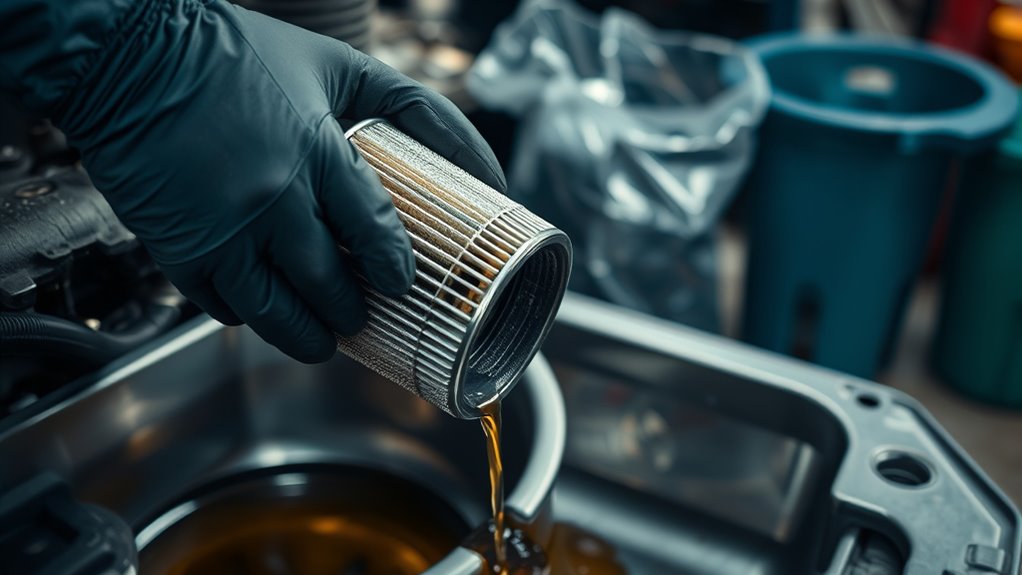
To properly dispose of an oil filter, start by wearing gloves and draining the remaining oil into a designated container for at least 12-24 hours.
Next, rinse the filter if needed, then place it in a certified recycling container or drop-off location that accepts used filters.
Finally, verify with local regulations or recycling centers that you’re following legal procedures.
Continuing with these steps guarantees you handle waste responsibly and protect the environment.
Key Takeaways
- Drain the used oil from the filter completely by positioning it upright over a leak-proof container for 12 to 24 hours.
- Rinse the filter if necessary, then wipe away residual oil with a rag and let it dry.
- Place the drained and cleaned filter into a certified recycling container labeled for hazardous waste.
- Check your local regulations and take the filter to an approved recycling center or waste facility.
- Make sure the disposal container is sealed, labeled, and transported securely to prevent leaks during transit.
Why Do You Need to Properly Dispose of Oil Filters?
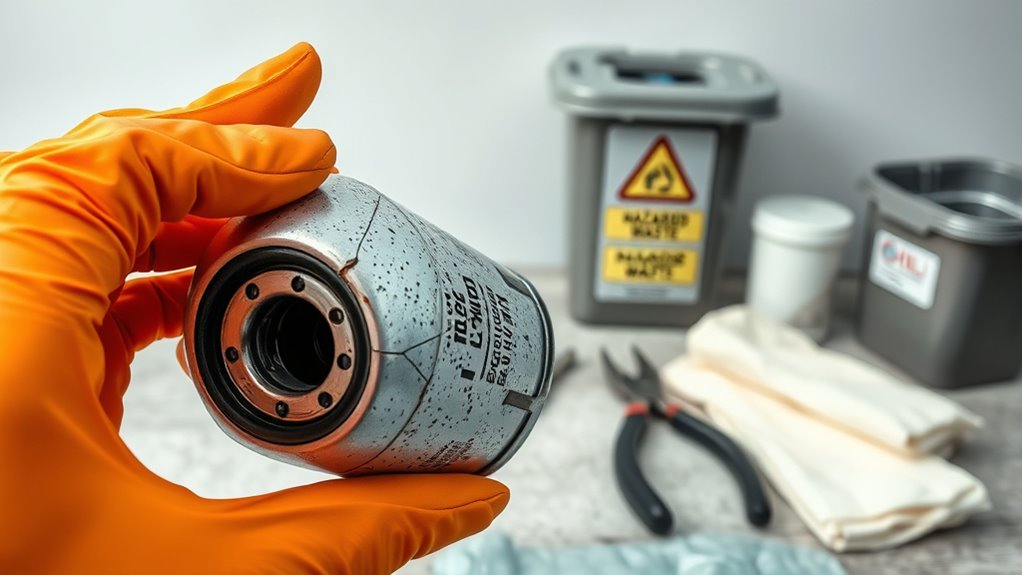
Properly disposing of oil filters is essential because they contain leftover oil that can harm the environment if not handled correctly. If discarded improperly, this oil can leak into soil and water, polluting ecosystems and threatening wildlife.
The environmental impact of improper disposal is serious. It can cause contamination that’s costly and difficult to clean up. Recycling benefits extend beyond protecting the environment; they also help conserve natural resources.
By recycling oil filters, you help recover valuable materials like steel. This reduces the need for mining and manufacturing new metal. Proper disposal also prevents hazardous residues from ending up in landfills.
This helps avoid soil and water pollution. Many recycling centers have facilities to safely extract remaining oil from filters, making the process safer for everyone.
Ultimately, taking the time to dispose of oil filters correctly shows responsible environmental stewardship. It helps ensure a cleaner, healthier planet for future generations.
Gather the Proper Tools and Materials
Before you start disposing of oil filters, make sure you’ve gathered all the tools and materials you’ll need. This helps ensure the process is safe, quick, and mess-free.
Gather necessary tools and materials first to ensure a safe, quick, and mess-free oil filter disposal process.
You’ll want gloves to protect your skin from leftover oil, a container or drip pan to catch any drips, and a wrench or filter removal tool to loosen the filter safely. Having paper towels or rags nearby makes cleaning up spills easier and reduces environmental impact.
If you’re doing proper maintenance, having a recycling bag or container for the used filter is a good idea. Being prepared helps prevent oil leaks, minimizes messes, and makes disposal more environmentally friendly.
Using the right tools speeds things up and helps prevent damage to the filter or other parts of your vehicle. Being organized from the start supports responsible disposal and helps reduce waste, protecting the environment.
Drain the Oil From the Filter Safely
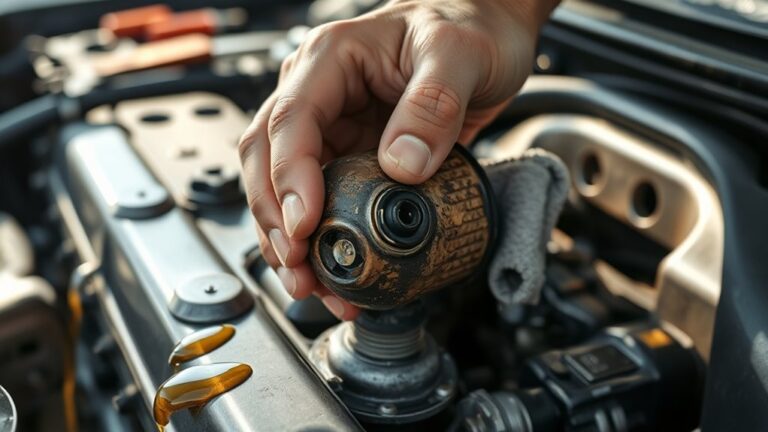
To drain the oil safely, grab a proper container to catch all the leftover fluid. It’s best to keep your work area tidy to prevent any spills or accidents. After removing the filter, be sure to let it drain completely before handling or disposing of it—this helps avoid messes and makes the process safer.
Use Proper Container
When draining oil from the filter, it’s important to use a container designed for catching used oil. This helps ensure safe handling and prevents leaks or spills.
Choose a sturdy, leak-proof container made of materials compatible with oil to avoid any chemical reactions. Once the oil has drained, label it clearly with “Used Oil” to prevent accidental misuse.
Proper labeling helps others recognize the contents and handle the container safely. Make sure the container has a tight-fitting lid to prevent spills during transport.
Never overfill or squeeze the container, as that can cause leaks. Using the right container with proper handling and labeling keeps things safe, clean, and in line with disposal rules.
Keep Work Area Clean
As you drain the oil from the filter, keeping your work area clean is key to avoiding messes and hazards. A tidy space makes car maintenance safer and helps prevent oil spills on the floor.
Use paper towels or absorbent pads to catch drips, and place the filter upright over your container. This helps minimize messes and keeps your environment safe. Protect nearby surfaces with old rags or plastic sheets to avoid stains.
Proper cleanup not only keeps your workspace clean but also supports environmental safety by preventing oil from contaminating soil or water. Staying organized and attentive during this step makes disposal easier and reduces hazards.
Allow Complete Drainage
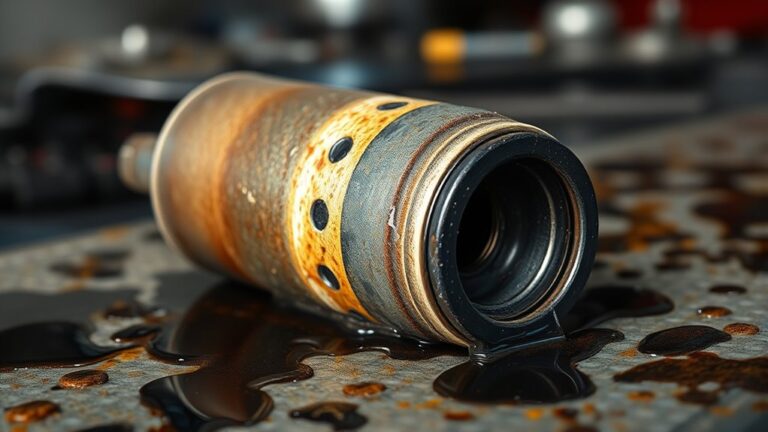
Why is it important to allow the oil to drain completely from the filter before disposal? Proper oil filter maintenance involves removing as much residual oil as possible to prevent leaks and reduce environmental impact.
When you let the oil drain, you minimize the risk of spills that can contaminate soil and waterways. To guarantee thorough drainage, find a stable position for the filter and give it time to empty fully.
Consider these steps: place the filter on a catch pan or newspaper. Wait at least 12–24 hours for complete drainage. Tap or gently shake to loosen remaining oil. And make sure to dispose of the drained oil safely before discarding the filter.
This process helps protect the environment and makes oil filter disposal safer and more responsible.
Prepare Your Oil Filter for Recycling
Before you recycle your oil filter, it’s a good idea to drain out any leftover oil. This helps prevent any leaks and keeps things tidy. Next, give the filter a rinse with water to wash away dirt and residue, making sure it’s nice and clean. Doing these simple steps not only protects the environment but also makes the recycling process much easier.
Drain Excess Oil
Have you drained the excess oil from your filter yet? Properly removing leftover oil is a key step in maintaining your filter and helping the environment. To get the most out of this process, you can:
Tilt the filter to let the oil drain completely.
Use a drain pan or container to catch all residual oil.
Gently tap or pound the filter to loosen trapped oil.
Wipe it with a rag for any remaining drops.
Taking these steps ensures no oil spills during disposal, protecting the environment and following disposal rules. Draining excess oil makes recycling easier and reduces pollution and fire hazards. Remember, a little extra effort now can prevent bigger environmental problems later. Proper drainage keeps the process safe, efficient, and eco-friendly.
Rinse the Filter
After you’ve drained the excess oil, rinsing the filter helps remove leftover contaminants and prepares it for recycling. Use water to gently rinse the filter, making sure you avoid spreading oil or debris.
This step minimizes the environmental impact by preventing residual oil from leaking during handling or disposal. Remember to wear safety precautions, like gloves, to protect your skin from any leftover contaminants.
Proper rinsing reduces the risk of pollutants leaking into the environment and makes recycling more efficient. Be careful not to use harsh chemicals that could harm the environment or make disposal harder.
Once you’ve rinsed the filter thoroughly, place it in a designated recycling container. Effective rinsing not only keeps you safe but also supports eco-friendly disposal practices.
Choose the Right Disposal or Recycling Facility
How can you guarantee your used oil filters are disposed of properly? The key is choosing the right disposal or recycling facility that knows about oil filter hazards. Not all centers handle used filters correctly, which can risk environmental contamination. Look for certified recycling centers that follow proper recycling procedures to ensure your filter is processed safely.
Make sure the facility specifically accepts oil filters, as some might refuse them because of their hazardous nature. Ask whether they recycle or simply dispose of the filters to prevent leaks and pollution. Keep these points in mind:
- Confirm they are certified for hazardous waste handling
- Ensure they follow environmentally safe recycling procedures
- Check if they take used oil filters regularly
- Inquire about their compliance with local disposal rules
Choosing the right facility makes sure your used oil filters are disposed of responsibly, stopping leaks into the environment and lowering health risks linked to oil filter hazards.
Transport Your Oil Filter Safely
Did you know that improper transportation of used oil filters can cause leaks and environmental contamination? To keep things safe, focus on transport safety and choosing the right container.
Use a sturdy, leak-proof container designed for oil filters to prevent spills on the road. Make sure it’s clearly labeled and sealed tightly before moving. Proper containers help reduce the risk of leaks during transit, protecting ecosystems and public health.
When transporting multiple filters, consider these factors:
| Container Material | Size & Capacity | Sealing Mechanism |
|---|---|---|
| Heavy-duty plastic | Fits multiple filters | Screw-on lid |
| Metal container | Larger volume | Tight clamp seal |
| Reinforced barrels | Bulk transport | Secure lid locking |
| Spill-proof bags | Small quantities | Zipper seal |
| Approved spill kits | Emergency spills | Leak-proof closure |
Verify That Your Disposal Method Is Legal
Before disposing of used oil filters, you need to make sure your disposal method follows local, state, and federal regulations. Staying compliant helps you avoid fines and environmental penalties.
Ensure your oil filter disposal complies with all regulations to protect the environment and avoid penalties.
Check if you understand the specific disposal rules in your area since they vary a lot. Reach out to your local waste management agency to see if they have guidelines for oil filter disposal.
Some places require used filters to be recycled, while others might have designated special disposal sites. Improper disposal can lead to contamination of water supplies or soil, so it’s important to get it right.
Confirm if recycling programs accept used oil filters. Verify whether any special handling is needed for contaminated filters.
Make sure your collection and disposal methods meet environmental standards. Also, follow any labeling or packaging instructions required by regulations.
Avoid Common Mistakes When Disposing of Oil Filters
Avoiding common mistakes is crucial when disposing of oil filters because improper handling can lead to environmental contamination and legal issues.
One mistake is not draining the oil properly, which can cause leaks and spills that harm the environment. Always let the filter drain completely before disposal to reduce this impact.
Ignoring recycling guidelines can mean missing chances to properly recycle the filter and residual oil. Many areas have specific disposal rules, so check local regulations to avoid fines.
Never throw oil filters in the regular trash or drains, as this can lead to soil and water pollution. Store used filters securely until disposal, using designated containers.
Staying informed about proper disposal procedures helps protect the environment and makes sure you’re following legal standards.
Avoiding these mistakes keeps your community safe and promotes responsible waste management.
Recycle Oil Filters and Used Oil Responsibly
Make sure you recycle your used oil filters and oil the right way. It’s really important to follow your local guidelines so that harmful chemicals don’t end up polluting the land or water. Recycling properly helps protect our environment and keeps everything safe.
Plus, when you do it right, you’re also helping to conserve resources for the future. It’s a simple step that makes a big difference!
Proper Oil Filter Recycling
Recycling oil filters and used oil responsibly is so important for protecting our environment and saving resources. Just make sure to follow your local environmental rules and look for recycling certifications that show safe handling standards.
Proper recycling stops harmful contaminants from getting into the environment and helps us recover valuable materials. When you’re recycling, keep these simple steps in mind:
- Find certified recycling centers that accept oil filters
- Drain filters thoroughly to remove any leftover oil
- Use designated bins for hazardous waste
- Make sure your recycler follows environmental standards
Choosing certified facilities means you’re sticking to the law and reducing environmental risks. Recycling certifications also ensure the process meets safety and eco-friendly practices. This way, we prevent pollutants from ending up in landfills or water sources.
Doing it the right way is a responsible and sustainable choice for disposing of oil filters.
Safe Disposal Practices
To guarantee safe disposal of oil filters and used oil, it’s essential to handle these materials properly from the start. You should always store used oil and filters in designated, leak-proof containers to prevent spills.
Recycling facilities are equipped to manage these materials safely, reducing environmental impact. By following local regulations, you ensure regulatory compliance and avoid fines.
Never pour used oil down drains or onto the ground, as this contaminates water sources and harms ecosystems. Label your collections clearly and transport them only to authorized disposal centers.
Proper disposal practices protect your community, wildlife, and the environment, while also maintaining compliance with laws that govern hazardous waste management. Staying responsible means embracing safe, environmentally friendly disposal methods at every step.
Tips to Minimize Waste and Maintain Your Vehicle’s Oil System
Maintaining your vehicle’s oil system efficiently can *especially* reduce waste and extend your engine’s lifespan. Proper engine care and regular oil recycling are really important.
To cut down on waste, always check your oil levels and top off when needed instead of doing unnecessary oil changes. Using high-quality oil filters that last longer can also help reduce debris and waste.
When changing oil, make sure to collect used oil and filters responsibly to support recycling efforts. *Furthermore*, switching to synthetic oil can last longer and mean fewer oil changes overall.
- Perform regular engine maintenance to prevent excessive oil use
- Opt for longer-lasting, high-quality oil filters
- Recycle used oil and filters properly to reduce environmental impact
- Use synthetic oil to extend oil change intervals and minimize waste
Frequently Asked Questions
Can Used Oil Filters Be Disposed of With Regular Household Waste?
Used oil filters shouldn’t go in household waste because they contain residual oil, which can be harmful to the environment. Instead, you should follow recycling guidelines, which usually involve draining the oil completely.
Then, take the filter to a designated recycling center. Never throw used oil filters in regular trash, as improper disposal can lead to contamination and pollution.
Always dispose of them responsibly to protect your community and the environment.
How Can I Identify an Authorized Recycling Facility Near Me?
Imagine a signal guiding you through a maze, leading you to an authorized recycling facility. To find one nearby, try searching online with terms like “urban recycling” or “hazardous waste,” or check out your city’s waste management website.
Local recycling centers are safe havens that turn hazardous waste into new beginnings. It’s a good idea to call ahead and get details about what they accept. Doing so ensures your oil filter’s journey ends responsibly, helping protect your community and the environment.
Are There Specific Regulations for Disposing of Oil Filters in Different States?
State-specific regulations vary when disposing of oil filters, so you should check your local laws first. Some states require filters to be drained and recycled at authorized facilities, while others have strict disposal rules.
Disposal cost differences also depend on where you live and the method used. Always follow your state’s guidelines to ensure proper disposal, avoid fines, and help protect the environment.
It’s a good idea to research your state’s requirements before you proceed. That way, you’re doing things the right way and staying compliant.
What Safety Precautions Should I Take When Handling Used Oil Filters?
Imagine you’re in a sci-fi movie, but safety’s no act. When handling used oil filters, always wear personal protective gear—gloves, goggles, and a mask—to shield against harmful oils.
Use spill containment methods like drip pans and absorbent pads to prevent leaks. Keep the filter upright and handle it carefully.
And don’t forget to wash your hands thoroughly afterward. These precautions protect you and the environment from potential hazards.
How Often Should I Replace and Dispose of My Vehicle’s Oil Filter?
You should replace and dispose of your vehicle’s oil filter during each oil change, which usually happens every 3,000 to 7,500 miles. The exact interval depends on your vehicle and the type of oil you use.
Keeping up with oil filter maintenance is really important for your engine’s health. Proper disposal timing also ensures you’re being environmentally responsible.
Always check your vehicle’s owner’s manual for specific recommendations. And don’t forget to get rid of used filters at designated recycling centers or authorized disposal facilities to prevent pollution.
Conclusion
Did you know that over 300 million oil filters are discarded annually in the U.S.? Proper disposal not only protects the environment but also conserves resources.
By following these three essential steps—draining, preparing, and recycling—you’re making a positive impact. It’s easier than you think to do your part.
Just remember, responsible disposal helps prevent soil and water contamination and ensures a cleaner planet for everyone.
So, stay vigilant and recycle your oil filters properly to protect the environment and keep our planet healthy.