How to Use Regular Gas in Flex Fuel Cars
Many flex fuel vehicle owners often worry about choosing the right fuel and whether they can safely use regular gasoline. You’re not alone—navigating fuel options can feel confusing, especially with so many blended fuels on the market.
You can safely use regular gasoline in your flex fuel vehicle, as it’s designed to handle gasoline and ethanol-blended fuels like E85. To confirm proper performance, choose reputable stations, avoid overfilling, and monitor fuel quality.
Regular use of high-quality fuel with additives helps maintain engine health and efficiency.
By following proper fueling practices and understanding how your vehicle works, you can keep it running smoothly. More tips and details are available if you continue exploring.
Key Takeaways
- Flex fuel vehicles are compatible with regular gasoline, and you can use it safely without worrying about damaging your engine.
- Always choose reputable fuel stations and check the quality of the fuel. This helps ensure you’re getting a proper gasoline blend and avoids engine problems.
- When fueling up, do so when the engine is cool and avoid overfilling. This keeps your vehicle safe and in good working order.
- Opt for high-quality regular gas that has detergents and additives. These help protect your engine components and keep your vehicle running smoothly.
- Keep up with regular maintenance like fuel system cleaning and checks. Doing this supports your engine’s health when using regular gasoline.
Can I Use Regular Gas Safely in My Flex Fuel Vehicle?
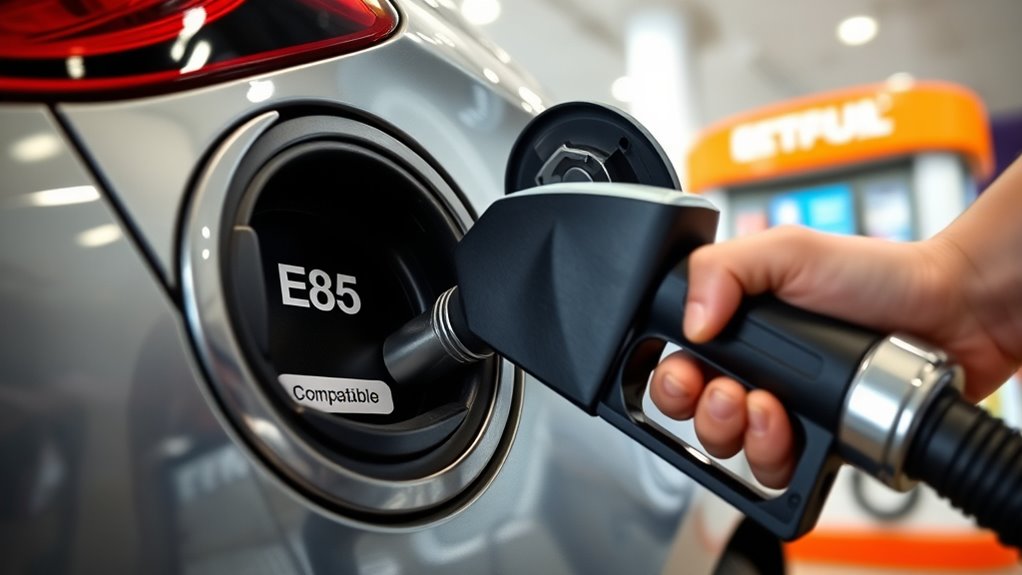
If you own a flex fuel vehicle, you might wonder whether it’s safe to use regular gasoline instead of E85. The good news is, yes—you can drive on regular gas without damaging your car. Flex fuel vehicles are designed to switch between E85 and gasoline, so they’re built with versatile fuel systems.
However, keep in mind that using regular gas frequently may impact emissions and performance. Fuel additives can help maintain fuel quality, preventing deposits and ensuring your engine runs smoothly.
Also, adhering to emission regulations is important, especially because gasoline typically produces more emissions than E85. While your vehicle can handle regular fuel, occasional use won’t harm it, but regularly using it might lead to reduced fuel efficiency and higher emissions over time.
To maximize performance and stay compliant with emission standards, consider using the recommended fuel and consulting your vehicle’s manual.
How Do Flex Fuel Vehicles Work and What Makes Them Versatile?
Ever wonder what makes flex fuel vehicles truly versatile? It’s their engine design, which lets them run on both gasoline and ethanol blends like E85.
These vehicles have sensors and flexible fuel engines that detect the type of fuel you’re using. They then adjust the combustion process to keep things running smoothly.
This means they optimize fuel efficiency no matter the blend. Ethanol can produce more energy per gallon, so using it can actually improve mileage.
Plus, the engines are built to handle higher alcohol content without damage, thanks to special materials and fuel system parts. They also have specialized fuel injectors that manage different fuels seamlessly.
Unlike traditional engines, flex fuel vehicles are designed for versatility—giving you the choice of fuel based on availability and cost while still delivering reliable performance.
All of this together is what makes flex fuel cars practical and flexible, perfect for drivers wanting options without sacrificing engine durability.
Will Using Regular Gas Damage My Flex Fuel Car?
Many drivers worry about whether using regular gasoline in a flex fuel vehicle might cause damage, but most of the time, it doesn’t. Flex fuel vehicles are built to run on different fuel qualities, and their advanced engines can handle regular gas without any issues.
Concerns about fuel additives are valid, but most regular gas includes detergents and stabilizers that help prevent engine deposits and corrosion. Using standard fuel doesn’t harm your vehicle’s performance or its long-term durability.
From an environmental perspective, regular gas with cleaner-burning properties helps reduce emissions compared to older, more polluting fuels. If you stick to the recommended fuel type, your flex fuel car stays protected from damage.
That said, consistently using poor-quality gas over time might cause clogged injectors or minor engine problems. Overall, regular gas isn’t likely to damage your vehicle, especially if you choose reputable brands with proper additives.
How to Properly Fill Your Flex Fuel Vehicle With Regular Gas
When filling your flex fuel vehicle with regular gas, start by making sure the engine is cool. This helps prevent vapor leaks and keeps safety first.
Next, locate your vehicle’s fuel door, usually on the driver’s side. Then, find a pump with clear signage indicating it’s suitable for gasoline—this is important.
Use the correct nozzle to avoid spills, and don’t overfill. The pump will shut off automatically when the tank is full.
Here’s a quick guide:
| Step | Action | Tip |
|---|---|---|
| Check engine | Wait until it cools down | Helps prevent vapor leaks |
| Open fuel door | Find the fuel compartment | Usually on the driver’s side |
| Choose pump | Look for gasoline signage | Ensures you pick the right pump |
| Fill tank | Insert and fill with nozzle | Stop when it clicks |
Always follow safety precautions, and double-check your fuel door before you start to make sure you’re at the right spot.
Does Regular Gas Impact My Vehicle’s Performance?
Using regular gas can sometimes affect how your car runs. You might notice a bit less power or your engine idling roughly. It’s not always a big deal, but if you keep using lower-octane fuel regularly, it could lead to knocking or even cause more wear on your engine over time.
Performance Variations Noticed
Your vehicle’s performance can vary when you fill up with regular gasoline instead of the recommended ethanol-blended fuel. Using regular gas may cause slight power dips and engine hesitation, especially if your engine isn’t tuned for it.
Incorporating fuel additives can help improve combustion and reduce knocking. The effects of switching fuels depend on factors like engine tuning and fuel quality.
Here’s a quick comparison:
| Aspect | Regular Gas | Ethanol Blend |
|---|---|---|
| Power | Slightly decreased, depending on tuning | Ideal for flex fuel engines |
| Engine Response | Possible hesitation or slower acceleration | Smoother, more responsive performance |
| Fuel Efficiency | May decrease slightly | Usually maximized |
| Long-term Impact | Minimal if engine is tuned accordingly | Designed for ethanol compatibility |
Adjusting engine tuning and using fuel additives can help mitigate these performance variations.
Long-Term Engine Effects
Switching to regular gasoline instead of the recommended ethanol-blended fuel can have subtle but significant effects on your engine’s long-term health. Regular gas may lack the fuel additives designed to protect engine parts, leading to potential buildup and corrosion over time.
Without proper additives, you might experience reduced fuel efficiency and engine performance declines. Over the years, this can hinder engine upgrades or maintenance plans.
Furthermore, using regular gas frequently can cause deposits that affect combustibility and emissions. To mitigate these issues, consider using fuel additives tailored for your vehicle.
Some owners also opt for engine upgrades or modifications that help adapt older engines to regular gas, but long-term, sticking to the recommended fuel mix is the safest choice for durability.
- Fuel additives prevent deposits and corrosion
- Regular gas may reduce engine longevity
- Engine upgrades can compensate for fuel differences
- Long-term use impacts performance and emissions
How to Choose the Right Gasoline for Your Flex Fuel Car
Choosing the right gasoline for your flex fuel car isn’t complicated, but it’s important to pay attention to the fuel labels and your vehicle’s specifications. Look for gas that clearly states it’s suitable for flex fuel vehicles, especially when using ethanol-blended gas.
When selecting a gas station, consider those with good reviews for fuel quality and cleanliness because contaminants can affect engine performance. Some stations also offer fuel with specific additives that help stabilize ethanol, prevent corrosion, and improve engine efficiency.
Keep in mind that cheaper gas isn’t always better. Familiar brands often maintain better quality standards. Check if the station provides information about ethanol levels and additives.
Tips for Managing Ethanol Levels When Using Regular Gas
Managing ethanol levels in regular gasoline is key to keeping your flex fuel vehicle running smoothly and lasting longer. Ethanol concealment and fuel blend differences can affect how your car performs, especially if the ethanol content isn’t what your engine expects.
To stay on top of things, it’s helpful to know where your fuel comes from and how much ethanol it contains. Here are some tips:
- Look for gas stations that are transparent about their fuel blends to avoid surprises with ethanol levels.
- Check fuel labels for ethanol percentages, especially when seasons change and blends might differ.
- If you’re unsure about the fuel quality, consider using an ethanol tester to verify the blend.
- Keep an eye on engine performance; a rough idle or reduced efficiency might be signs of ethanol-related issues.
Debunking Common Myths About Regular Gas and Flex Fuel Vehicles
Many people believe there are strict rules about what kind of gas their flex fuel vehicle can use, which can lead to unnecessary misconceptions.
Many assume strict fuel rules for flex fuel vehicles, causing unfounded fears and misconceptions.
In reality, flex fuel vehicles are designed to handle various ethanol blends, typically up to E85. They’re not limited to only premium or high-octane fuels.
Some think regular gas without ethanol is better, but ethanol-blended fuels are common and safe for your vehicle. Fuel additives often get a bad reputation, but they’re used to improve fuel stability and engine performance.
Using regular gas with appropriate ethanol blends won’t harm your engine if you follow the manufacturer’s recommendations. The myth that ethanol blends damage engines is false—modern flex fuel vehicles are built to adapt.
Understanding these facts can help you make better fuel choices without fear, saving money and avoiding unnecessary worries.
Maintenance Tips to Keep Your Flex Fuel Vehicle Running Smoothly
To keep your flex fuel vehicle running smoothly, regular maintenance is essential. Proper care helps your engine handle different fuel types and prevents issues from regular gas use. Start with using fuel additives designed to clean the fuel system and improve combustion. These additives keep injectors and valves clear, guaranteeing peak engine performance.
Regular engine tuning is also critical; it ensures your engine remains calibrated for maximum efficiency and can adapt to varying fuel qualities. You should also:
- Use fuel additives periodically to prevent deposits and maintain fuel system health
- Check and replace spark plugs regularly for smooth combustion
- Keep an eye on your fuel filter, replacing it as needed
- Perform routine engine tuning to optimize performance and efficiency
Sticking to these maintenance tips supports your vehicle’s longevity and helps you get the most from regular gas in your flex fuel car.
Troubleshooting Noises or Performance Issues After Using Regular Gas
If you notice strange noises or a drop in performance after switching to regular gas, it’s important to troubleshoot right away to avoid more serious damage. Engine knocking, or pinging, is common when lower-octane fuel is used in a vehicle that needs higher-grade fuel.
Try adding fuel additives designed to improve combustion and reduce knocking. Also, check that your engine’s timing is correct since incorrect timing can cause performance problems.
Inspect your fuel injectors and air filter—clogged injectors or a dirty filter can make your engine run less smoothly. If knocking keeps happening, consider refueling with a higher-octane or the recommended fuel grade.
Using fuel additives regularly can also help keep your engine running smoothly. If the noise or performance issues don’t improve, it’s best to see a mechanic to rule out more serious engine trouble. Acting quickly can help keep your vehicle running well and last longer.
Frequently Asked Questions
Can Regular Gasoline Affect Fuel Efficiency in a Flex Fuel Vehicle?
Using regular gasoline in your flex fuel vehicle can slightly impact fuel efficiency because it may not be designed for the fuel blends used in E85 or other ethanol mixes.
Regular gas can also affect gas stability over time, especially if kept in your tank longer.
While your vehicle can run on regular gas, for the best efficiency, stick to the recommended fuel.
That way, you’ll ensure maximum performance and fuel economy.
Are There Long-Term Effects of Using Regular Gas in Flex Fuel Cars?
Using regular gas long-term in your flex fuel car can cause engine corrosion, especially if the fuel has impurities. Over time, contaminants can build up in your fuel system, leading to performance issues.
This buildup may require cleaning to keep everything running smoothly. Regular gas could also reduce the lifespan of some vehicle components, making fuel system maintenance more important.
To protect your engine, think about switching to high-quality fuel or using additives. These can help prevent corrosion and keep your parts clean.
Does Ethanol Content in Regular Gas Vary by Region?
Yes, ethanol content in regular gas varies by region because of local fuel standards and different blending percentages. You’ll find some areas offering higher blends like E15 or E85, while others stick with lower percentages such as E10.
These differences depend on local regulations, climate, and the infrastructure available. It’s a good idea to check local fuel labels or use apps to find fuels that are compatible with your flex fuel vehicle.
How Often Should I Switch Between Ethanol and Non-Ethanol Fuel?
Think of fuel blending like changing gears smoothly; you don’t need to switch often. With ethanol mandates, you can usually fill up with E10 without worry.
If your vehicle runs fine on regular gas, switch between ethanol and non-ethanol fuel every few tanks—say, every 1,000 miles—to prevent potential buildup.
Regular use of ethanol fuel isn’t necessary, but alternating helps keep your engine clean and running well.
Can Using Regular Gas Void My Vehicle’s Warranty?
Using regular gas in your flex-fuel vehicle usually won’t void your warranty if your engine is compatible. Just keep that in mind and follow the recommendations.
But it’s important to think about fuel additives. Some fuels contain additives that might impact how your engine performs or lasts over time.
To avoid any issues, stick to what’s outlined in your owner’s manual and check with your dealer. Choosing the right fuel helps protect your warranty and keeps your vehicle running smoothly.
Conclusion
So, you’ve mastered the art of fueling your flex fuel car with regular gas—who knew it could be so simple? Ironically, the versatility that protects your engine might tempt you to think regular gas is the magic fix for everything.
Remember, while it’s safe and convenient, overusing regular gas can subtly impact your vehicle’s efficiency. Enjoy the flexibility, but don’t let convenience fool you into ignoring proper maintenance.
Using regular gas occasionally is fine, but relying on it too often can lead to potential performance issues over time. Stay mindful of your fuel choices, especially with a flex fuel vehicle.