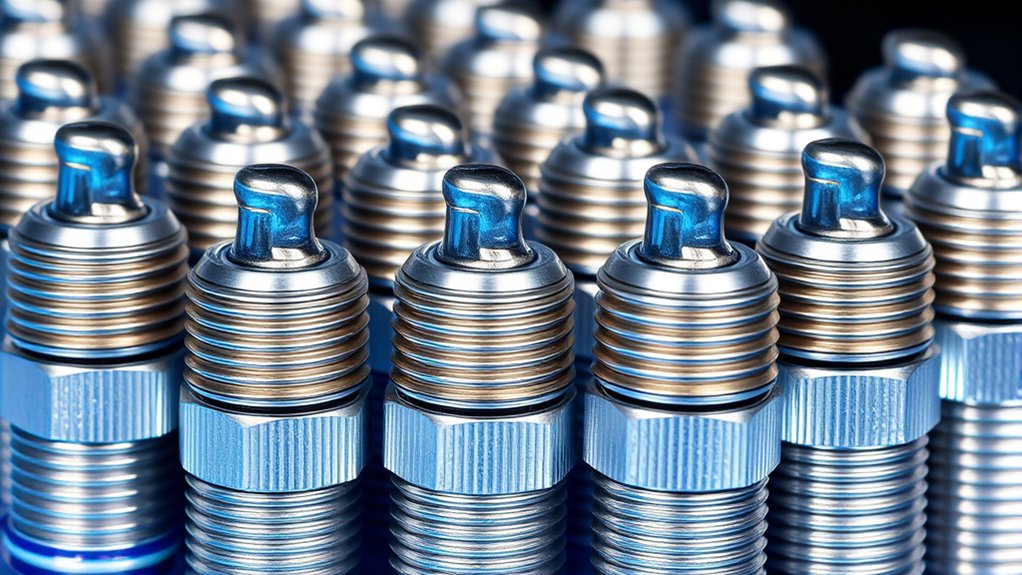
Best Spark Plugs for Optimal Performance
Struggling to get your car running smoothly? You’re not alone—many drivers find themselves frustrated by inconsistent performance or unexpected stalls.
One key fix is choosing the right spark plugs, which can make a huge difference in how your vehicle runs day to day.
To get the best performance, choose spark plugs with iridium or platinum tips for durability and efficient combustion.
Make sure they fit your vehicle’s make and model, and pay attention to the heat range to prevent fouling or misfires.
Brands like NGK, Denso, and Bosch are known for reliability.
Proper installation and maintenance are key to maximizing their benefits.
Want to know how to select, install, and maintain the perfect spark plug? Keep exploring for expert tips.
Key Takeaways
- Choose high-quality spark plugs with iridium or platinum cores for durability and efficient combustion.
- Match spark plug specs like heat range, electrode material, and gap to your vehicle’s manual.
- Stick to well-known brands like NGK, Denso, or Bosch for reliable performance and longer lifespan.
- Make sure to install them correctly with the right torque, proper gap adjustment, and anti-seize compound if needed.
- Regularly check and replace worn or fouled plugs to keep your engine running smoothly and efficiently.
Why Choosing the Right Spark Plug Matters for Your Engine’s Performance
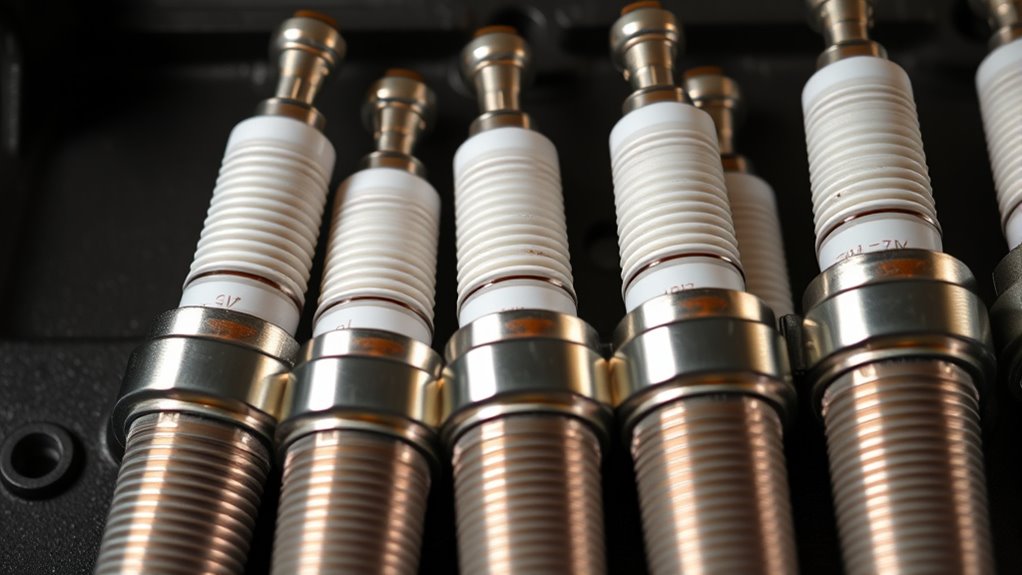
Choosing the right spark plug is crucial because it directly impacts your engine’s efficiency and power. Throughout history, spark plug technology has evolved to improve combustion, performance, and fuel economy.
Using the correct plug guarantees your engine runs smoothly with efficient ignitions that maximize power output. It also helps control emissions by promoting cleaner fuel burning, reducing environmental impact.
Historically, better spark plug designs have made engines more reliable and eco-friendly. When you select a spark plug suited for your vehicle, you support this progress by maintaining excellent combustion, which means fewer harmful emissions and less pollution.
Ultimately, choosing the right spark plug isn’t just about performance; it’s about embracing advancements that benefit the environment and help your engine last longer. Your choice directly affects how well your engine performs, conserves energy, and minimizes its ecological footprint.
What Factors Should You Consider When Picking Spark Plugs?
When choosing spark plugs, there are several key factors you should consider to guarantee peak engine performance.
First, evaluate the spark plug technology. Advances like iridium or platinum tips can improve durability and efficiency.
Enhance durability and efficiency with advanced iridium or platinum spark plug technology.
Second, think about the environmental impact. Selecting plugs that promote better combustion can help reduce emissions and fuel consumption.
Third, consider your vehicle’s specific requirements, including heat range and gap size. These factors affect ignition quality and how smoothly your engine runs.
To make an informed choice, keep these in mind:
- Compatibility with your vehicle’s make and model
- The type of electrode material for longevity and performance
- The spark plug’s heat range and resistance to fouling
The Best Types of Spark Plugs for Your Vehicle
Different types of spark plugs are designed to suit various driving needs and vehicle specs, so choosing the right one is important. The best spark plugs for your car depend on factors like performance, longevity, and how much maintenance they need.
Iridium and platinum spark plugs last longer and can run thousands of miles before needing a change. Copper spark plugs offer quick ignition but might need frequent cleaning and replacements. For high-performance driving, iridium plugs help maximize efficiency and last longer.
Check your vehicle’s manual to match the correct spark plug type with your engine. Picking the right spark plug reduces misfires and can improve fuel economy. Here’s a quick comparison:
| Spark Plug Type | Longevity | Ideal Use |
|---|---|---|
| Copper | Short | Budget, older cars |
| Platinum | Moderate | Daily driving |
| Iridium | Long | Performance, long-lasting |
Choosing the right type can *boost* your vehicle’s performance and make maintenance easier.
How to Match Spark Plugs to Your Car’s Make and Model
Before you pick out spark plugs for your car, it’s a good idea to double-check your vehicle’s manufacturer specifications. This way, you know you’re getting the right fit and ensuring everything works smoothly.
You’ll also want to consider your engine’s specific needs, like the heat range and the gap size. Getting these details right can really make a difference in how well your car runs. When you match these factors properly, you’ll help your engine run more efficiently and last longer.
Verify Manufacturer Specifications
To guarantee you choose the right spark plug, start by checking your vehicle’s owner’s manual or manufacturer’s specifications. This *ensures* compatibility with factors like spark plug heat range, electrode material, and gap size.
Pay attention to specifications related to ignition timing and spark plug longevity, which impact performance and durability. To verify these details, look for:
- Correct heat range to prevent fouling or pre-ignition
- Electrode material recommended for your engine type
- Proper gap size for ideal ignition timing
Matching these specifications helps maintain engine efficiency, *maximize* ignition timing, and extend spark plug longevity. Ignoring them could lead to misfires or reduced performance.
Always cross-reference official documentation to *confirm* you select the right spark plug for your vehicle’s unique requirements.
Consider Engine Requirements
Matching spark plugs to your car’s engine requirements means understanding the specific make and model to ensure perfect compatibility. Different engines need various spark plug types, sizes, and heat ranges for optimal performance.
Engine tuning is also important, as some vehicles benefit from plugs designed for high performance or better fuel efficiency. Check your owner’s manual or manufacturer specs to find the right gap, thread size, and heat range for your engine.
Using the correct spark plug helps ensure efficient combustion, which boosts fuel economy and overall power. Ignoring these details can lead to misfires, poor fuel economy, or even engine damage.
Always match spark plugs precisely to your car’s requirements for the best performance and longer engine life.
How Heat Range Affects Spark Plug Performance
Understanding how heat range influences spark plug performance is key to keeping your engine running smoothly and efficiently. The heat range is about how well the spark plug can get rid of heat from the combustion chamber. Choosing the right one helps your spark work better and avoids problems like fouling or pre-ignition.
If you pick a spark plug that’s too cold, it won’t get rid of heat fast enough. That can cause carbon buildup and fouling. On the other hand, a too-hot plug might lead to pre-ignition and engine knocking.
Things to consider include your engine type and how you drive. High-performance engines usually need a hotter plug. City driving and highway or towing might need different choices. Also, poor-quality fuel or additives can affect how the spark plug handles heat.
Getting the correct heat range makes sure your spark plugs work well, helping your engine stay smooth and reliable.
When and Why You Should Replace Your Spark Plugs
Spark plugs need replacement when they show signs of wear or reduced performance. Ignoring this can cause engine misfires, lower fuel efficiency, and starting problems. Over time, spark plugs wear out because of carbon buildup or electrode erosion. Regular inspections can help you decide if cleaning is enough or if they need replacing.
Cleaning a spark plug can temporarily extend its life, but if the electrodes are worn or the insulator is damaged, it’s best to replace them to restore top performance.
Picture this in your mind:
| Condition | Effect |
|---|---|
| Black soot buildup | Poor ignition and lower efficiency |
| Worn or eroded electrodes | Weak or missed sparks |
| Excessive carbon deposits | Misfires and rough idling |
| Cracked insulator | Difficult starting or engine failure |
| Fouled spark plug | Reduced power and acceleration |
Replace your spark plugs when these signs appear or follow the intervals in your vehicle’s manual. Regular maintenance keeps your engine running smoothly and can save you from costly repairs.
Top Brands for Durable and High-Performing Spark Plugs
Choosing the right brand of spark plugs can make a big difference in your vehicle’s performance and how long they last. Top brands are known for their durable coatings that protect against corrosion and help with heat retention.
Selecting quality spark plugs enhances performance and longevity with corrosion-resistant, heat-retentive coatings from trusted brands like NGK, Denso, and Bosch.
These coatings keep the ignition timing on point, leading to smoother acceleration and better fuel efficiency. When picking a brand, go for those with a solid reputation for quality and consistency.
Some of the best options include NGK, Denso, and Bosch. NGK is famous for reliable spark plugs with excellent coatings that support steady ignition timing.
Denso uses advanced materials to boost both lifespan and performance, especially in demanding conditions. Bosch offers a variety of durable plugs made with precise manufacturing to improve ignition timing and fuel economy.
Focusing on these brands can help you get better engine performance, fewer misfires, and longer-lasting spark plugs for your vehicle.
Tips for Installing Spark Plugs Correctly and Safely
Installing spark plugs correctly and safely is essential to make sure your vehicle runs smoothly and to prevent any damage.
Start by ensuring the engine is cool before removing old plugs so you don’t burn yourself. Use a torque wrench to tighten the new spark plugs to your vehicle’s specified torque. Over-tightening can strip threads, while under-tightening risks misfire.
Check the gap on the new plugs with a gap gauge, making sure it lines up with what the manufacturer recommends. Proper gap helps deliver a consistent spark, which affects both spark plug life and engine performance.
When installing, apply a small amount of anti-seize compound to the threads. This prevents seizing and makes future replacements easier.
Always ensure the plugs are seated properly to avoid compression leaks. Proper installation helps with efficient combustion and keeps your ignition timing on point.
Following these tips helps your vehicle run reliably and extends the lifespan of your spark plugs.
Common Spark Plug Problems and How to Fix Them
Sure! Here’s a more conversational version of the text:
—
Worn-out electrodes, fouling, and oil buildup are pretty common problems with spark plugs. When these issues pop up, they can really mess with your engine’s performance. You might notice your engine misfiring, using more fuel than usual, or having a tough time starting up.
It’s handy to know how to spot these problems early on and what you can do to fix them. That way, you can keep your engine running smoothly without a lot of hassle.
Worn Out Electrodes
When electrodes wear down, spark quality drops, affecting your engine’s performance and fuel efficiency. This can lead to misfires, rough idling, or difficulty starting your vehicle.
Look for signs like excessive carbon deposits at the electrode or visible damage or thinning of the electrode material. Keeping an eye on the condition of your electrodes can help catch problems early.
Replacing worn electrodes quickly ensures good ignition and keeps your engine running smoothly. Regular inspections can help you avoid breakdowns and extend the life of your spark plugs.
Fouling and Oil Buildup
Oil buildup around the spark plug indicates oil fouling, often caused by worn piston rings, valve seals, or issues with the PCV system. This oil coating makes it harder for the spark to ignite properly, leading to decreased power and fuel efficiency.
To fix these issues, start by inspecting your engine for leaks or worn seals and get them addressed as soon as possible. Regularly check and replace your spark plugs with high-quality, fouling-resistant types.
Keeping your engine well-maintained helps prevent excessive oil buildup, so your spark plugs stay cleaner and your engine runs more smoothly.
How to Choose Spark Plugs That Fit Your Budget and Performance Needs
Choosing the right spark plugs depends on balancing your budget with your vehicle’s performance needs. If you want to maximize fuel efficiency, look for plugs designed for better combustion and smooth operation.
Selecting spark plugs involves balancing cost with optimal engine performance and fuel efficiency.
To reduce noise, pick spark plugs that deliver cleaner ignitions with minimal vibrations. Your budget helps decide whether to go for premium options or reliable, affordable replacements.
Think about these factors:
- Fuel efficiency: Upgraded plugs can improve burning efficiency, which can save you money over time.
- Noise reduction: Choose plugs that promote quieter engine operation with stable sparks.
- Cost vs. longevity: Cheaper plugs might need replacing sooner, while higher-quality ones tend to last longer and perform better.
Frequently Asked Questions
How Do Different Spark Plug Materials Affect Engine Performance and Longevity?
Different spark plug materials influence engine performance and longevity through their electrode design and insulator materials. For instance, iridium electrodes are more durable and provide better ignition and longer life.
Platinum offers a good balance between cost and performance, making it a popular choice for many drivers. The insulator material also plays a role in heat transfer and resistance to corrosion.
Choosing the right combination ensures efficient combustion, smoother engine operation, and longer-lasting spark plugs. Overall, this enhances your engine’s performance and reliability.
Can Upgrading Spark Plugs Improve Fuel Efficiency Significantly?
Upgrading your spark plugs can give your fuel economy a noticeable boost, like adding a turbo to a bicycle. Better quality plugs ignite fuel more efficiently, helping your engine burn less gas overall.
However, to keep this advantage, you need to stay on top of spark plug maintenance—making sure they’re clean and properly gapped.
While upgrades help, consistent maintenance is key to maintaining improved performance and saving money on fuel.
What Are the Signs of a Failing Spark Plug in Real-Time Driving?
You’ll notice a failing spark plug during real-time driving if your engine misfires, which can feel like hesitation or jerking.
You might also see rough idling, increased fuel consumption, or sluggish acceleration.
Poor ignition timing caused by worn plugs can lead to misfires, while compression issues may result in a loss of power.
Pay attention to these signs to catch problems early and keep your engine running smoothly and efficiently.
Are There Differences Between Single and Double Platinum Spark Plugs?
Single and double platinum spark plugs mostly differ in their design, especially in the platinum layer. Double platinum plugs have platinum on both the electrode and ground strap, which makes them last longer and be more durable.
This is especially noticeable when comparing iridium and platinum plugs. Double platinum is a great choice if you want longevity.
On the other hand, single platinum plugs are usually more affordable and still offer decent performance.
How Does Altitude Influence the Choice of Spark Plugs?
Altitude influences your choice of spark plugs because lower atmospheric pressure at high elevations affects combustion.
You should consider spark plugs designed for altitude adjustments, which ensure reliable ignition even in thinner air. These plugs usually deliver a stronger spark and better performance to compensate for altitude-related changes.
Choosing the right spark plugs helps your engine run smoothly, prevents misfires, and keeps things running efficiently even when you’re at higher elevations.
Conclusion
Choosing the right spark plug is like finding the perfect key to your engine’s heart—unlocking smooth, powerful performance. When you consider factors like heat range, brand, and fit, you’re tuning your ride for excellence.
Remember, proper installation and maintenance keep this key working flawlessly. Don’t settle for less. Equip your vehicle with the best spark plugs and let your engine purr like a finely tuned symphony.
Accelerate confidently knowing your spark plugs are the secret behind your ride’s ideal performance.