Where to Jack Up a Jeep Wrangler JL in Three Essential Steps
Many Jeep Wrangler JL owners have faced the challenge of safely lifting their vehicle, whether for maintenance or upgrades. It can be intimidating trying to figure out the right spots to lift from without risking damage or injury. You’re not alone—getting it right is a common concern among enthusiasts looking for a safe, effective way to work on their Jeep.
To safely jack up your Jeep Wrangler JL, start by locating the manufacturer-recommended lifting points, usually reinforced areas near the tires—avoid fuel tanks and plastic panels. Use a sturdy, rated jack and place it on a flat, stable surface, lining it up with the designated points.
Support the vehicle with jack stands for stability before working underneath. For more detailed steps and safety tips, keep exploring how to lift your Jeep the right way.
Key Takeaways
- Check your owner’s manual for specific lifting points near the tires or frame that are reinforced for jacking.
- Use a weight-rated jack on these designated jacking points, making sure to avoid fuel tanks and plastic areas.
- Place jack stands securely under solid frame or axle points to keep everything stable.
- Before lifting, secure the vehicle with wheel chocks and make sure you’re on a level, flat surface.
- Always double-check stability and safety measures before you start working underneath the vehicle.
How to Safely Identify Jacking Points on Your Jeep Wrangler JL
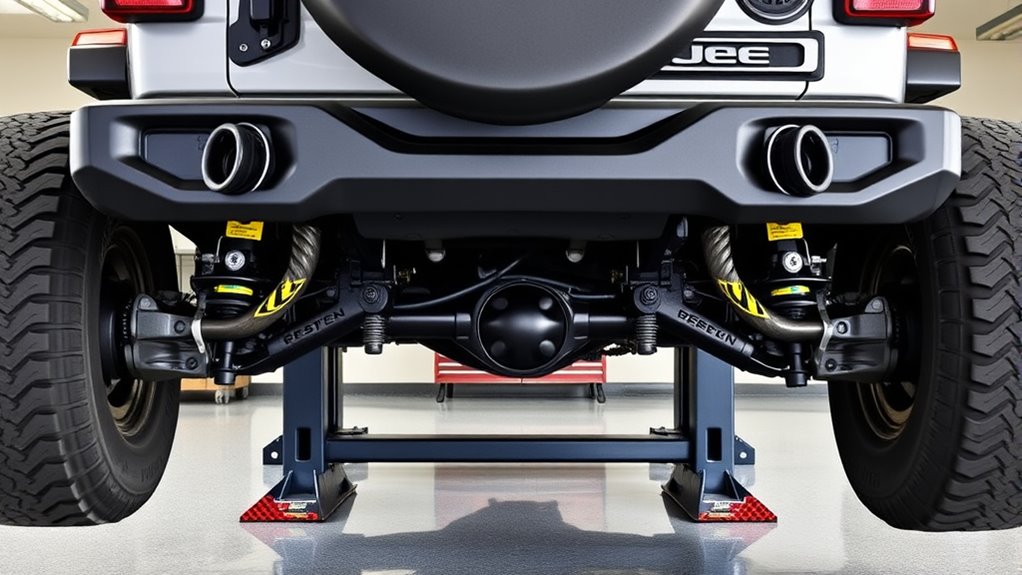
Before you lift your Jeep Wrangler JL, it’s important to find the right jacking points to stay safe and avoid any damage. Your owner’s manual is the best guide, showing you the designated lifting spots on your vehicle. These points are reinforced areas built to support the weight safely.
When lifting for tasks like wheel alignment or exhaust removal, focus on applying pressure only to these sturdy spots. This helps prevent damaging the frame or suspension components. Stay away from areas near the fuel tank or plastic panels, as they aren’t meant to handle heavy loads.
Using the correct jacking points ensures your wheels stay properly aligned after you lower the vehicle. It’s also a key step in preventing accidental damage to delicate parts or the body panels. Always double-check your lifting points before jacking up your Jeep.
If you’re ever unsure, consult a workshop manual or ask a professional for help. Knowing exactly where to place your jack keeps your vehicle safe and damage-free, making any maintenance or repairs much easier.
Which Tools and Safety Gear Do You Need for Lifting Your Jeep?
To safely lift your Jeep Wrangler JL, you’ll need the right tools and safety gear to prevent accidents and protect both yourself and the vehicle. A sturdy jack rated for your Jeep’s weight is essential, along with jack stands to securely hold the vehicle once lifted.
Always wear gloves and safety glasses to shield yourself from debris and accidental slips. Keep a work light handy to improve visibility, especially if you’re working in low-light conditions.
It’s also wise to have a wheel chock or blocks to prevent rolling. Proper safety gear minimizes risks during maintenance, which can include engine or drive system work that requires lifting.
When practicing driving techniques, make sure you’re calm and methodical to avoid mishaps. Remember, thorough engine maintenance can demand precise lifting to access components safely.
Using the right tools and gear shields you from injury and guarantees your Jeep remains stable during the process.
Choosing the Right Jack and Lifting Equipment for Your Jeep
Selecting the right jack and lifting equipment is crucial for safely and easily raising your Jeep Wrangler JL. Since it’s built for off-road adventures, you want gear that suits trail conditions and recovery situations.
A high-lift jack is versatile and perfect for uneven terrain and off-road recoveries. It allows you to lift your vehicle safely on tricky trails. On the other hand, a floor jack or portable hydraulic jack can make routine maintenance or tire changes quicker and easier.
Make sure your jack can handle the weight of your Jeep, typically at least 3 tons. It’s also a good idea to use jack stands designed for off-road use to support your vehicle securely.
Check that your equipment is compatible with your Jeep’s lift points. This helps prevent damage and makes sure your vehicle is supported properly.
Choosing the right gear keeps you safe during trail adventures or recovery efforts. It helps prevent accidents and makes your off-road experience more reliable and enjoyable.
How to Prepare Your Jeep for Safe Lifting
Making certain your Jeep is properly prepared before lifting starts with a few simple but essential steps. First, remove any interior modifications or loose items that could shift or get damaged during the lift. Clear out the cabin and secure loose tools or accessories.
Before lifting, remove loose items and interior modifications to ensure safety and prevent damage.
Next, check that off-road accessories like roof racks or bumpers are properly tightened. These can affect weight distribution and stability, so it’s good to verify they’re secure.
It’s also a smart idea to review your owner’s manual for specific lifting instructions and weight limits. If you’ve added aftermarket modifications that change your Jeep’s structure or weight, make sure they’re secure and won’t interfere with the lifting process.
By taking these precautions, you reduce the risk of accidents or damage. Properly preparing your Jeep not only keeps you safe but also makes the lifting process smoother and more efficient.
Always double-check that the vehicle is stable before moving on to the next step.
Properly Positioning the Jack Under Your Jeep
Before placing the jack, find a solid, unpainted part of the vehicle’s frame or undercarriage that can support the weight safely. This helps ensure stability during your tire rotation and prevents slips or damage.
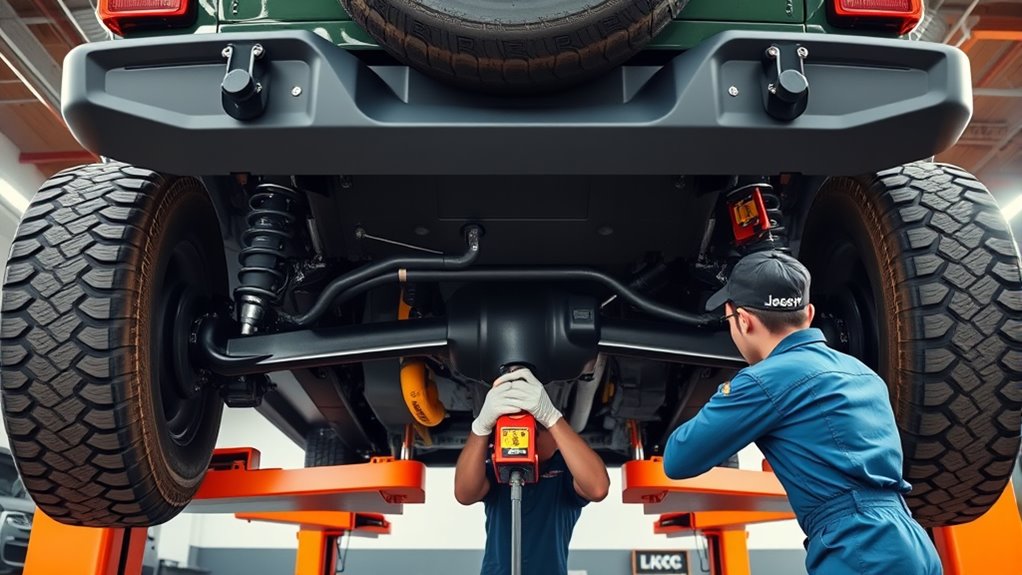
Positioning the jack correctly is key for safety and effective lifting. Usually, the jacking points are reinforced areas near the tires, often marked with small notches or markings.
Make sure the surface is flat and stable to avoid wobbling. When lifting the vehicle, stay clear of brake lines, fuel lines, and suspension components.
Proper placement also makes it easier to check fluids since it gives you good access to the undercarriage without risking damage. Take your time to confirm the jack is centered under the right mounting point.
This careful positioning guarantees a secure, balanced lift. It makes your tire rotation or fluid check safer and smoother.
Using Jack Stands to Support Your Vehicle Securely
Once you’ve lifted your Jeep Wrangler JL with a jack, it’s crucial to support it securely with jack stands before working underneath. Proper placement of the stand is key for safe weight distribution.
Position the stand under a solid jacking point, like the frame or axle, making sure it contacts the vehicle’s reinforced areas. Always place the stand directly under these points to evenly distribute the weight and prevent shifting.
Use multiple stands if needed, especially when lifting one side or the entire vehicle. Adjust the height of the stand so it matches the jacking point, providing stable support.
How to Confirm Your Jeep Is Stable Before Working Underneath
After you’ve placed your jack stands, take a moment to double-check that the Jeep is stable before working underneath. Make sure the vehicle doesn’t wobble or shift when you gently press on it.
Check that the tires are firmly on the ground and that the suspension isn’t sagging unevenly. Verify the jack stands are evenly positioned and locked securely.
If you’ve recently done engine modifications or interior upgrades, ensure nothing shifts unexpectedly once the vehicle is elevated. Double-check that it’s level for safety and ease of work.
For added stability, bounce lightly on the vehicle to see if it moves. Also, inspect for any signs of instability around the supports.
Common Mistakes to Avoid When Lifting Your Jeep Wrangler JL
When you’re lifting your Jeep Wrangler JL, it’s really important to use the right spots for your jack. Placing it in the wrong places can cause damage or even lead to accidents, so always stick to the manufacturer’s recommended lifting points.
Also, be careful not to overload your jack or push it beyond what it can handle. Doing so increases the risk of slips or falls, which can be pretty dangerous. Before you get underneath, double-check that your vehicle is stable. Use proper support stands and wheel chocks to make sure everything stays put and safe.
Incorrect Jack Placement Risks
Lifting your Jeep Wrangler JL incorrectly can lead to serious safety hazards and vehicle damage. Wrong jack placement can make the lift unsafe and increase the risk of slipping or toppling over. Placing the jack on non-reinforced areas or uneven surfaces can cause it to shift suddenly. Always make sure you’re using the designated lift points and avoid cutting corners.
Common mistakes include placing the jack outside the recommended lift points or using just one jack stand instead of two for stability. Raising the vehicle too high without proper support, jacking on weak or damaged areas, and failing to secure the vehicle after lifting all pose serious risks.
These errors compromise safety and can cause injury or damage to your vehicle. Always double-check your jack placement to ensure a safe and effective lift. This helps prevent accidents and keeps you safe during maintenance.
Overloading Jack Points
Overloading can weaken the jack point itself, causing cracks or bending that threaten your vehicle’s structural safety. Always use a jack that matches your vehicle’s rated weight capacity and distribute your lifting forces evenly.
Avoid piling tools or heavy objects on or near the jack, as this adds extra stress on the jack points. Respecting weight limits helps keep you safe and preserves the longevity of your Jeep’s jack points.
Neglecting Stability Measures
- Use wheel chocks to prevent the vehicle from rolling.
- Place jack stands on solid, flat surfaces for stability.
- Always select the correct jacking points recommended by the manufacturer.
- Secure the vehicle before lifting it further to keep everything in place.
- Double-check that the jack and stands are stable before working underneath.
Ignoring these safety measures puts you at risk of accidents. Proper stability support is key to lifting safely and confidently. Always prioritize stability to stay safe and create a safe working environment.
Tips for Lifting Higher: Installing Larger Tires and Suspension Upgrades
Ever wondered how to give your Jeep Wrangler JL a taller, more aggressive stance? Upgrading your tires and suspension is the way to go. Larger tires not only improve off-road capabilities but also give your vehicle a more commanding look.
Upgrade your Jeep JL with bigger tires and suspension for a commanding, off-road-ready look.
When choosing tires, focus on durability for daily driving while still providing traction and clearance for tough terrain. Suspension upgrades like lift kits help fit these bigger tires safely.
Keep in mind, lifting higher can affect your vehicle’s stability. Make sure to pick quality components made for your specific model. Also, check that your shocks and steering parts work well with the new height.
Proper installation is key to avoiding uneven wear and making sure your Jeep stays reliable as a daily driver. With the right tires and suspension upgrades, your Jeep will handle off-road adventures confidently and look tough on the streets.
A balanced upgrade maximizes performance without sacrificing everyday drivability.
Troubleshooting Common Lifting Issues and Ensuring a Safe Lift
As you upgrade your Jeep Wrangler JL with lift kits and bigger tires, it’s common to run into issues that affect both performance and safety. Addressing these problems quickly helps ensure safe off-road adventures and protects your interior and vehicle integrity.
Some common issues are uneven tire wear, steering problems, and suspension noises. To fix these, start by checking the alignment after lifting your Jeep. Regularly inspect suspension parts for wear or damage.
Make sure all bolts and fittings are tight and secure. Verify that your tires are balanced, properly inflated, and wearing evenly. Keep an eye on steering responsiveness and how your Jeep handles on different terrains.
Fixing these issues not only prevents unsafe driving conditions but also reduces strain on your vehicle. Remember, a safe lift isn’t just about height—it’s about proper, secure installation. Regular maintenance keeps your Jeep running smoothly off-road.
Staying vigilant with these checks will make sure your upgraded Jeep is ready for any adventure with confidence.
Frequently Asked Questions
Can I Jack up a Jeep Wrangler JL on Uneven Ground?
It’s not safe to jack up your Jeep Wrangler JL on uneven ground. Doing so increases the risk of slipping or damaging the vehicle during tire rotation or engine work.
Always look for a flat, stable surface before lifting your Jeep. Use a proper jack and jack stands, making sure they’re positioned correctly under the manufacturer’s specified lift points.
This helps keep your vehicle stable and prevents accidents while you’re working on it.
How Often Should I Inspect Jack Points for Damage?
Ever wonder how often you should inspect your jack points? It’s a good idea to check them every few months or if you notice things like uneven tire pressure or oil leaks. These could be signs of underlying issues.
Regular inspections help prevent damage and make sure your vehicle is safe. Look carefully for cracks, rust, or wear, especially after off-road trips.
Keeping your jack points in good shape ensures a smooth, safe ride every time.
What Is the Maximum Weight Capacity of My Jack?
Your jack’s maximum weight capacity depends on its model and type, so always check the manufacturer’s specifications.
When considering jack stand safety, make sure your lifting equipment weight doesn’t exceed the jack’s limit to prevent accidents.
Using a jack with the right weight capacity for your Jeep Wrangler JL makes lifting safer and more stable.
Always double-check the weight rating before you lift, and never rely solely on a jack. Make sure to use proper jack stands too.
Are Hydraulic Jacks Suitable for Lifting a Jeep?
Hydraulic jacks are suitable for lifting your Jeep, but only if you have hydraulic proficiency and take proper safety precautions. Make sure the jack’s weight capacity matches or exceeds your Jeep’s weight.
Use jack stands for added safety. Always work on a flat, stable surface, keep your hands clear during lifts, and never rely solely on the hydraulic jack.
Following these safety precautions guarantees a secure, efficient lift.
How Do I Prevent My Jeep From Rolling After Lifting?
Ever wondered if your Jeep could roll away while you’re working on it? To prevent that, always chock the wheels diagonally opposite your lifted side.
Check your tire pressure too — properly inflated tires help improve stability.
After lifting your Jeep, it’s a good idea to get your wheel alignment checked. This helps ensure your vehicle stays straight and safe.
Remember, secure your Jeep with wheel chocks and never rely solely on the jack for stability.
Safety first for peace of mind!
Conclusion
Remember, safely jacking up your Jeep Wrangler JL isn’t just about reaching higher; it’s about trusting your process like a skilled explorer with a map.
With the right tools, proper technique, and a cautious mindset, you’ll avoid pitfalls and open new adventures.
So, take your time, stay vigilant, and treat your Jeep with the care it deserves.
Because in the end, a safe lift is the foundation of every great journey.
Happy lifting!