10 Steps to Install a Tonneau Cover on Your Vehicle
Many truck owners want a tonneau cover to protect their cargo and improve fuel efficiency, but the idea of installing one can feel overwhelming. You’re not alone—lots of people struggle with figuring out the right steps to get it just right.
Luckily, with a little patience, you can master the process easily and enjoy a secure, sleek truck bed.
To install a tonneau cover, start by cleaning and inspecting your truck bed, then measure to make certain of a proper fit. Choose a cover suited to your needs, gather your tools, and organize hardware.
Mount the rails or clamps securely, align the cover carefully, and tighten all fasteners.
Adjust the tension to prevent leaks and ensure a snug fit.
Finally, check for water resistance and troubleshoot any issues—you’ll find all the key steps to a successful install.
Key Takeaways
- Measure and double-check the truck bed dimensions to ensure a perfect fit, and mark the mounting points accurately.
- Gather all the tools and hardware you need, making sure they’re corrosion-resistant so they hold up outside.
- Install the mounting rails or clamps, making sure they’re aligned evenly and securely attached to the truck bed.
- Attach the tonneau cover, checking that it sits flush and is tensioned properly for a snug, secure fit.
- Finally, inspect the seals and hardware, then test waterproofing by spraying water to see if there are any leaks.
Prepare Your Truck for Tonneau Cover Installation
Before you start installing your tonneau cover, it’s a good idea to prepare your truck first. Begin by giving the vehicle exterior a thorough clean, removing dirt, dust, and debris from the bed and around it. A clean surface helps the cover fit snugly and keeps dirt from getting trapped underneath.
Next, check the truck bed for any damage or rust that could interfere with the installation. If you find any issues, take care of them before moving forward. Also, make sure the bed rails are straight and free of dents or warping, since uneven surfaces can affect weather protection.
Don’t forget to ensure your truck’s drainage holes are clear. This prevents water from building up inside the bed. Proper preparation helps your tonneau cover fit properly, offering better protection against rain, snow, or wind.
Choose the Right Tonneau Cover for Your Vehicle
How do you guarantee your tonneau cover fits your needs perfectly? Start by thinking about what you actually need from it. Consider how often you’ll be using your truck and what you’ll be carrying.
Material durability is key. You want a cover made from sturdy materials that resist tearing and cracking. Weather resistance is just as important. Your cover should protect your cargo from rain, snow, and UV rays.
Choose a cover made from tough, weather-resistant materials to keep your cargo safe from tears, cracks, and the elements.
Look for options like aluminum, hard plastic, or waterproof fabrics. These tend to last longer and handle weather better than soft fabric covers. Also, think about the type of cover that fits your lifestyle—roll-up, fold-up, or retractable.
Make sure the design complements your truck’s make and model. Take your time to evaluate these factors. This way, you’ll pick a tonneau cover that fits just right and keeps your cargo protected in all kinds of weather.
Gather Tools and Materials Needed
Before you kick things off, it’s a good idea to gather all the tools and materials you’ll need for the installation. Just make a quick checklist—things like screwdrivers, wrenches, and all the parts of your tonneau cover. This way, you won’t have to stop halfway to hunt something down.
And don’t forget safety gear! Gloves and eye protection are super important, so you stay safe while working. Once you’ve got everything ready, you’ll be all set to get started smoothly.
Essential Tools Checklist
To guarantee a smooth installation process, you’ll need to gather all the necessary tools and materials beforehand. Having basic hand tools like a screwdriver, socket set, and wrench is important for removing and tightening bolts.
A measuring tape is essential to ensure proper alignment, and a marker helps with precise placements. Consider using a drill if you need to make new holes.
Prioritize materials with good durability to withstand regular use. For outdoor exposure, choose tools and accessories that resist weather elements like rust and corrosion.
Organizing these tools ahead of time will streamline the process and help avoid interruptions. Double-check that your materials match your vehicle’s specifications to prevent delays.
Preparing the right tools and materials sets the foundation for a successful tonneau cover installation.
Required Material Overview
Successfully installing a tonneau cover starts with gathering the right tools and materials. You’ll need basic items like a drill, screwdrivers, and measuring tape, along with the specific mounting hardware for your cover.
When choosing cover materials, consider options like vinyl, aluminum, or fiberglass—each offering different levels of material durability and resistance to weather. Depending on your vehicle and cover type, you might also need clamps, sealant, or latches.
It’s important to review the manufacturer’s instructions beforehand to guarantee you have all necessary components. Having everything ready ahead of time helps streamline your installation process and prevents interruptions.
Carefully selecting proven materials and tools will make the installation smoother and assure your tonneau cover stays securely in place.
Safety Equipment Tips
Since safety should always be a priority when working on your vehicle, start by gathering the necessary safety equipment before handling tools and materials. Using proper safety gear guarantees you protect yourself from potential injuries and keeps your vehicle looking good.
Always wear gloves and safety glasses to prevent injuries from sharp edges or debris. A dust mask can help keep your lungs clear when working around dust or fumes. To secure cargo safely, consider using reflective tape or signs for better visibility.
Wear appropriate footwear to prevent slips and injuries. With the right safety equipment, you’ll be prepared and protected during your vehicle maintenance or repair tasks.
Measure and Align Your Tonneau Cover
How do you guarantee your tonneau cover fits perfectly and functions smoothly? The key is precise measurement and alignment before tightening any brackets.
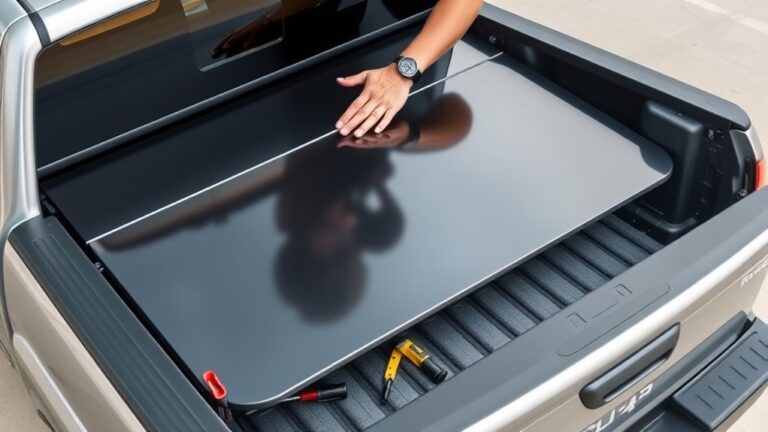
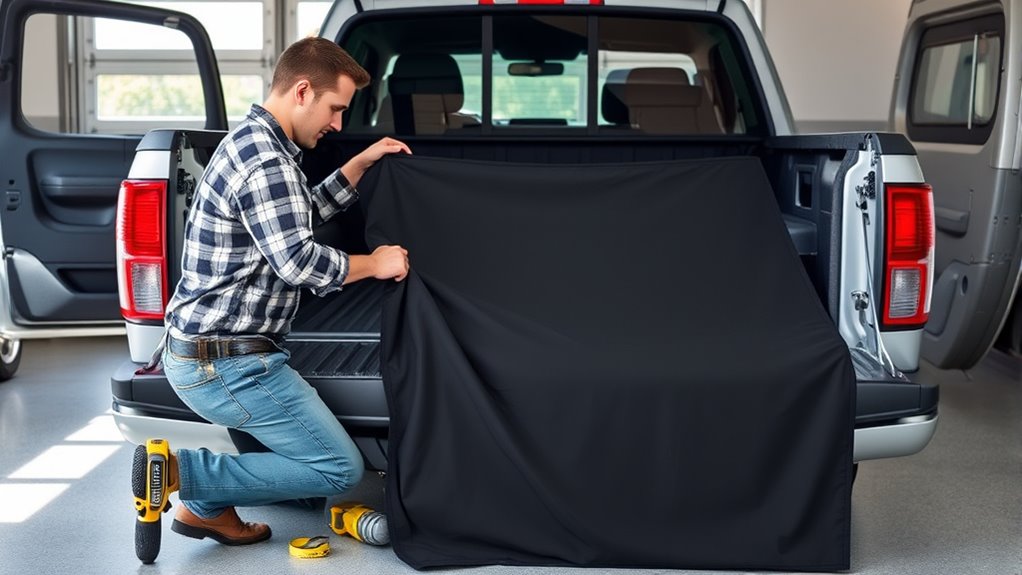
Begin by measuring the length and width of your truck bed, making sure your cover will fully cover the area. Double-check the alignment by laying the cover flat across your bed to ensure it sits evenly on all sides.
Proper measurement helps with weatherproofing because a well-fitted cover prevents water seepage and debris entry. Take extra care to align the cover for a sleek, professional look.
Use a level or straightedge to verify the cover’s position. Once everything lines up, mark any mounting points or screw holes for easy installation.
Ensuring accurate measurements and proper alignment now will save you time and frustration later. It results in a secure, weather-resistant, and visually appealing tonneau cover.
Install Mounting Rails or Clamps
Before you start installing the mounting rails or clamps, just double-check that they’re compatible with your truck bed and fit properly. It’s a good idea to take some measurements first to make sure everything lines up.
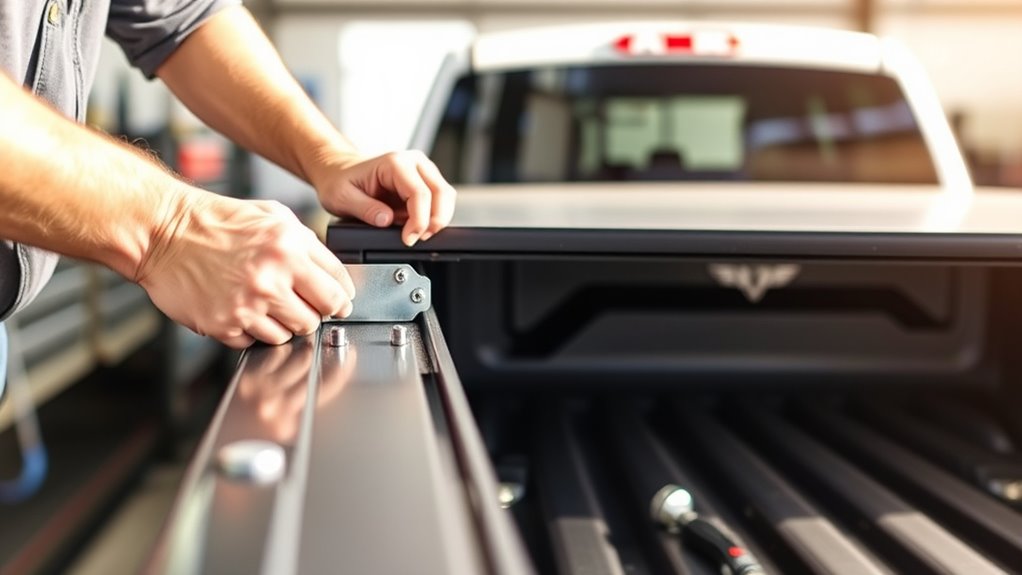
Once you’ve confirmed they’ll fit, place the rails in the right spot, aligning them according to your measurements. Take your time to make sure they’re positioned correctly before tightening the clamps securely. This will give you a solid and stable foundation for attaching your tonneau cover.
Verify Compatibility and Fit
To guarantee your tonneau cover fits properly, start by verifying its compatibility with your vehicle’s make and model. This step helps prevent future issues and ensures a smooth installation. Confirm that your truck bed dimensions match the cover specifications.
Next, check if the mounting hardware fits your vehicle’s features. Avoid problems by inspecting for any pre-existing vehicle customizations like bed liners or additional accessories. Also, make sure the clamps or rails are suitable for your truck’s bed rails.
After installation, keep your tonneau cover clean to maintain a proper seal and appearance. Regular cleaning prolongs its lifespan and keeps it looking sleek.
Follow these checks to avoid fit issues and enjoy a seamless, secure fit.
Steps to verify compatibility and fit:
- Confirm vehicle make and model compatibility.
- Measure truck bed dimensions.
- Inspect existing vehicle features or customizations.
- Match mounting hardware specifications.
Position Mounting Rails Correctly
Once you’ve confirmed that your tonneau cover works with your vehicle, the next step is to position the mounting rails or clamps correctly. Proper placement ensures a good look and the best weather protection.
Measure and align the rails based on the manufacturer’s guidelines. Make sure they’re parallel and evenly spaced. Taking your time here is key to a professional-looking finish.
Correct positioning not only makes your vehicle look better but also helps prevent leaks and debris from getting inside. Double-check the alignment before tightening any bolts or clamps.
This is a crucial step to keep your cover functional and looking sharp. Properly positioned mounting rails lay the foundation for a weather-resistant, long-lasting installation.
Secure Clamps Firmly
After positioning the mounting rails, it’s important to secure the clamps tightly to prevent any movement or shifting. Properly secured clamps keep your tonneau cover in place and working correctly.
To do this, follow these steps:
- Tighten each clamp evenly to apply consistent pressure.
- Check that they’re flush with the rails and bed surface to ensure proper alignment.
- Use a level if needed to verify even positioning across all clamps.
- Re-tighten after the initial install to prevent any loosening over time.
Firmly securing the clamps and making sure they’re aligned helps avoid gaps or wobbling. This not only extends the life of your tonneau cover but also guarantees a tight, weatherproof seal.
Secure the Cover to Your Truck Bed
Have you already aligned your cover properly? Now, it’s time to guarantee it to your truck bed. Depending on your Tonneau cover material, the installation process may vary slightly, but the goal remains the same: a tight, secure fit.
Start by fastening the clamps or buckles, making sure they grip the truck bed rails firmly. If your cover offers aesthetic options like sleek profiles or color-matched hardware, make sure these elements are aligned for a clean look.
Double-check that the cover sits flush with the bed sides, avoiding gaps that could let in dirt or water. Tighten all clamps evenly to distribute pressure and prevent warping.
For covers with rails or rails with integrated fasteners, ensure these are securely attached and don’t wobble. This step guarantees your cover won’t shift during transit, keeping your cargo protected and maintaining your vehicle’s polished look.
Adjust Tension for a Proper Fit
To guarantee your Tonneau cover provides a secure and leak-proof fit, it’s essential to adjust the tension properly. Proper tension prevents sagging, leaks, and wind noise. Start by loosening the cover slightly, then gradually tighten the tension rods or straps using the provided accessories. Check the fit after each adjustment, making sure the cover lays flat without gaps.
Here are some quick tips: use the correct Tonneau cover accessories for precise tightening. Check tension levels regularly as part of your maintenance routine. Avoid overtightening, which can warp the cover or damage parts.
Ensure even tension across all sides to keep the fit uniform. Adjusting tension helps your cover work well and lasts longer. Regular maintenance and quality accessories will help you get the perfect fit and protect your truck bed effectively.
Check the Seal and Water Resistance
Before securing the cover completely, it’s essential to check the seal around the edges to make sure water won’t leak into the truck bed. Start with a thorough seal inspection, looking for gaps, tears, or misalignments that could compromise water resistance.
Once the seal looks intact, do a waterproof test by gently hosing down the cover and surrounding areas. Keep an eye out for water seepage or drips along the seal.
If you notice any leaks, adjust the cover or reseal those areas to improve waterproofing. Ensuring a tight, secure seal prevents water from entering and keeps your cargo dry.
Take your time during this process because a proper seal is vital for long-term water resistance. Remember, a well-checked seal not only guards against leaks but also helps prolong the life of your tonneau cover.
Inspect Your Installation and Troubleshoot Issues
Once you’ve checked the seal and water resistance, it’s important to verify that the tonneau cover is installed correctly. Start by inspecting the cover material for any tears or signs of damage that could void your warranty coverage. A faulty installation might lead to leaks or looseness.
Next, make sure all clamps and fasteners are tight and properly aligned. If you notice any movement or uneven gaps, adjust them accordingly. Also, check that the cover sits flush with the bed rails for a neat appearance and a secure fit.
Ensure all clamps are secure and aligned for a proper, flush fit with your bed rails.
Finally, review the manufacturer’s instructions for troubleshooting tips. If issues persist, contact customer support or a professional installer. Doing this helps ensure your installation meets standards and keeps your warranty valid.
Proper troubleshooting keeps your tonneau cover working well and protected, preventing further damage and costly repairs.
Maintain Your Tonneau Cover Over Time
Maintaining your tonneau cover regularly is key to keeping it in good shape and working properly. Whether you’ve got a soft, hard, or roll-up cover, taking care of it helps your vehicle look great and keeps your cargo protected.
Clean your cover with mild soap and water, and skip harsh chemicals that could damage the material. It’s also important to check the seals, latches, and rails for any signs of wear, rust, or looseness. Lubricate moving parts so everything stays smooth and functional.
If your cover has a waterproof membrane, look for tears or leaks and repair them quickly. Proper maintenance saves you money by preventing the need for early replacement and helps your vehicle look sharp.
Frequently Asked Questions
Can I Install a Tonneau Cover on Any Truck Model?
You can’t install a tonneau cover on any truck model without checking vehicle compatibility first. Many aftermarket options are designed for specific makes and models, so it’s essential to verify compatibility before purchasing.
Some covers are universal, but they might not fit perfectly or offer the same security. Always measure your truck and consult the manufacturer’s guidelines to guarantee a proper fit and maximum protection.
Is It Necessary to Remove the Truck Bed Liner Before Installation?
Don’t burn your bridges; you usually don’t need to remove the truck bed liner to install a tonneau cover. Most covers work with bed liners that aren’t permanently removed.
However, check your bed liner’s compatibility first. If it’s a permanent removal type, you might need to take it out for a proper fit.
Always follow the manufacturer’s guidelines to avoid any hiccups during installation.
How Long Does a Typical Tonneau Cover Installation Take?
A typical tonneau cover installation takes about 30 minutes to an hour. The exact time depends on the type of cover—hard, soft, roll-up, or fold-up—and how familiar you are with installation tools.
You’ll usually need basic tools like screwdrivers and wrenches, along with the instructions provided.
Make sure your truck bed is clean and free of debris before you start. Follow the manufacturer’s guidelines for a smooth and quick setup.
Can I Install a Tonneau Cover by Myself Without Professional Help?
Yes, you can install a tonneau cover yourself by following a DIY guide and some simple installation tips. Make sure you have the right tools and read the instructions carefully.
Start by securing the brackets, aligning the cover properly, and tightening all bolts securely. Taking your time and following step-by-step guidance helps ensure a smooth installation process.
With patience, you’ll have your tonneau cover installed confidently without needing professional help.
Are Some Tonneau Covers Compatible With Truck Accessories Like Bed Extenders?
Did you know nearly 80% of truck owners say weather resistance and security are top priorities?
Yes, some tonneau covers are compatible with truck accessories like bed extenders. Look for covers with adjustable mounts and flexible fit options—these often work well alongside extenders.
Make sure the cover has weather resistance and strong security features so your gear stays safe and dry, even when you’re using accessories like bed extenders.
Conclusion
Now that you’ve mastered the art of installing your tonneau cover, you’ll enjoy the perfect blend of style and protection.
But then, one rainy day shows it wasn’t quite waterproof enough. Irony strikes as your careful installation becomes your first line of defense against the very elements you wanted to keep out.
Don’t worry—regular maintenance will keep your cover performing at its best.
Your tonneau cover will continue to showcase its utility, proving installation is worth every effort.