Quick Repair Steps for Tonneau Cover
Struggling with your tonneau cover can be really frustrating, especially when it’s not functioning properly when you need it most. Whether it’s leaks, loose parts, or torn fabric, many people find themselves wishing for quick, easy fixes to keep their cover in top shape. You’re not alone in this—small repairs can make a big difference and save you time and money.
Quick Repair Steps for Tonneau Cover
If your tonneau cover needs a quick fix, start by inspecting for dirt, debris, or damage around the seals, latches, and support straps.
Tighten loose screws on broken latches or replace damaged ones, and repair tears with waterproof adhesive or patches.
Check and realign the rail system if the cover is misaligned, and seal any gaps to prevent leaks.
For more tips on fast repairs and long-term care, consider the full guide below.
Key Takeaways
- Clean all components and check for any visible damage or loose hardware before starting repairs.
- Tighten or replace broken or loose latches and locks to make sure everything stays securely closed.
- Adjust support straps to remove slack and ensure the cover has proper tension.
- Inspect and realign rails or tracks if the cover is stuck or not lining up properly.
- Apply lubrication to hinges, locks, and other moving parts to keep everything operating smoothly.
Diagnose Common Tonneau Cover Problems
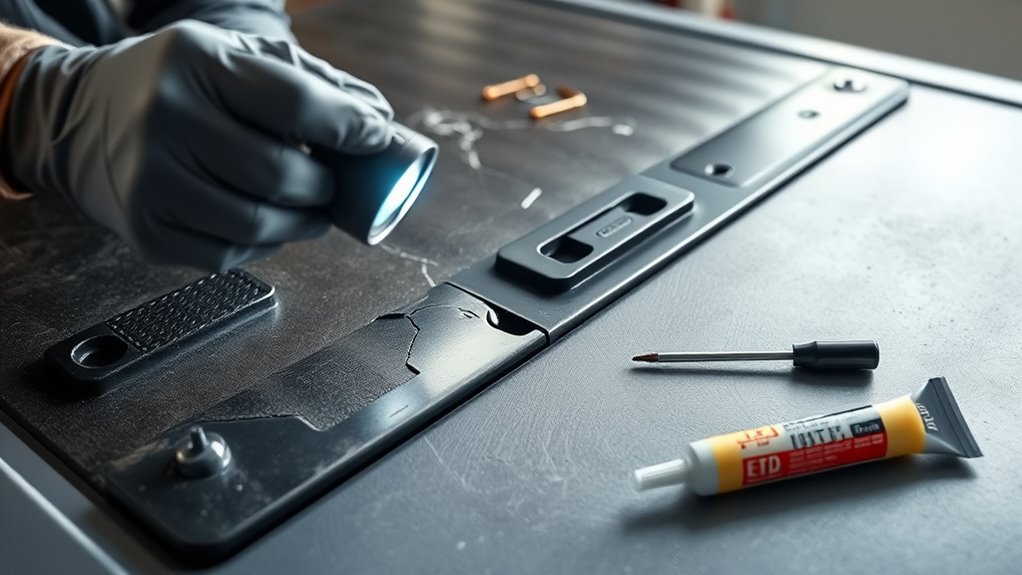
Have you noticed that your tonneau cover isn’t sealing properly or is making strange noises? First, check the material for dirt, debris, or stubborn grime that might cause leaks or hinder smooth operation. Clean the cover with a gentle cleaner suitable for its material, making sure no dirt gets stuck in the seals.
Check for dirt or grime on your tonneau cover to prevent leaks and improve smooth operation.
Inspect the latches and locks, as these often cause issues if neglected. Regular lock maintenance involves lubricating moving parts and tightening any loose screws. Look for signs of rust or corrosion, which can weaken the locking mechanisms.
If your cover feels uneven or resists opening, it might be due to material buildup or a worn lock. Addressing these issues can help restore its functionality. Diagnosing common problems involves paying attention to these areas.
Promptly cleaning or maintaining the material and lock components can prevent more serious damage down the line.
How to Fix Loose or Broken Latches
Loose or broken latches are common issues that can compromise your tonneau cover’s security and functionality. To fix this, first inspect the latches to see if they’re simply loose or if the mechanism is damaged.
If they’re loose, tighten the latch screws with a screwdriver. Make sure the latch lines up properly with its catch so the cover stays secure.
If tightening doesn’t do the trick or the latch is broken, it’s time to replace it. Remove the damaged latch by unscrewing it from its mounting point.
Pick a compatible, sturdy latch replacement to ensure a proper fit and smooth operation. Install the new latch by aligning it correctly and tightening the screws securely.
Test the latch multiple times to make sure it keeps the cover tightly closed without slipping. Properly working, secure latches will keep your tonneau cover in place, protecting your cargo and giving you peace of mind on the road.
Repair Torn or Damaged Cover Material
First things first, take a good look at your cover and see if there are any tears or damage. Once you spot what’s wrong, you can go ahead and patch up the area to stop it from getting worse. Fixing the damaged spot not only helps keep your tonneau cover working properly but also makes it look neat and tidy.
Identifying Material Damage
Before trying any repairs, it’s important to carefully check your tonneau cover for signs of material damage. Look for tears, fraying, or holes that could weaken the cover’s strength.
Next, examine the overall condition of the material. Consider its durability to figure out how much longer it can keep your truck protected. Damaged spots can also make your truck look worn out and less appealing.
To spot damage effectively, keep these things in mind:
- Look for visible tears or punctures.
- Check for frayed edges or worn spots.
- Feel for stiffness or brittleness in the material.
- Watch out for discoloration or warping.
A thorough inspection like this will help you understand how serious the damage is and guide your repair decisions. This way, your cover stays functional and looks good.
Patch and Reinforce Repair
When repairing torn or damaged cover material, applying a sturdy patch is key to restoring its strength. Choose a patch that matches your cover’s color options for a seamless look.
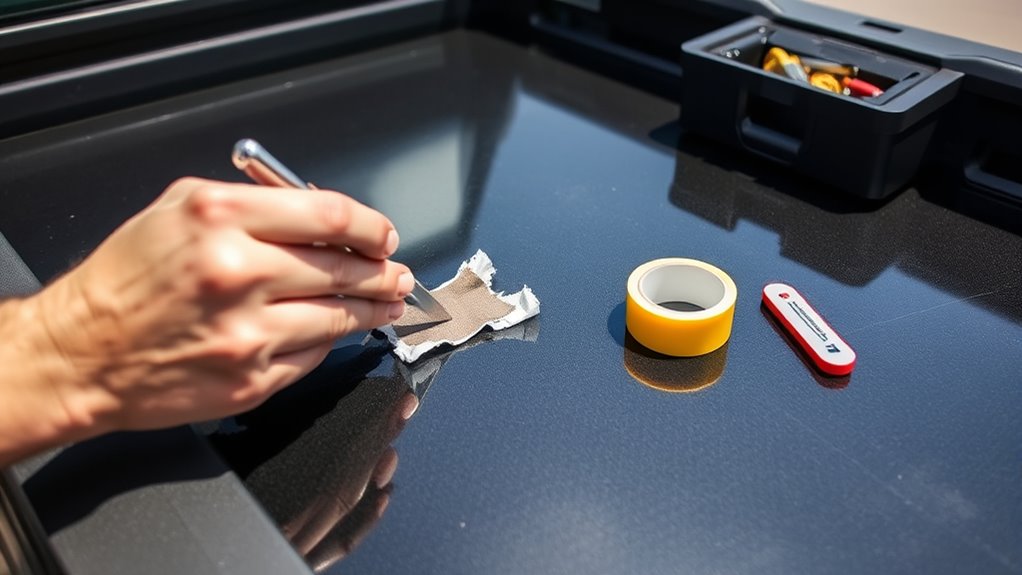
Make sure to clean the area thoroughly before attaching the patch with waterproof adhesive or heat-activated tools. Reinforcing the repair can help prevent future tears and extend the cover’s lifespan.
Keep in mind that some manufacturers’ warranty coverage may be nullified if repairs aren’t done properly. Use quality materials to avoid issues.
| Color Options | Warranty Coverage |
|---|---|
| Match existing color | Confirm with manufacturer |
| Contrasting colors | Check repair guidelines |
| Custom color choices | Verify warranty policies |
| UV-resistant finishes | Professional repair recommended |
| Matte or glossy finishes | Ensure repair method complies |
Adjust Your Rail System for a Better Fit
First things first, take a look at your rail system and check whether it’s straight and properly aligned. It’s a good idea to make sure everything runs smooth and square to avoid any issues down the line.
Once you’ve got that sorted, go ahead and tighten up any loose bolts you find. Keeping everything nice and secure will make a big difference. When your rails are properly adjusted, your cover will fit better, and you’ll also reduce the chances of leaks or damage happening.
Check Rail Alignment
Is your tonneau cover not fitting snugly? Check the rail alignment to verify proper customization, which affects how the cover looks and functions.
Start by loosening the rail bolts slightly, then carefully adjust the rails along the bed of your truck. Make sure the rails stay parallel and straight, avoiding any bends or misalignment.
Tighten the bolts gradually while checking the fit. This ensures the cover opens and closes smoothly and fits well. Remember, a well-aligned rail system improves both looks and durability.
Inspect the rails for any warps or bends, and use a level or straight edge to be accurate. Make small adjustments and test often to get everything just right. Keep the bolts loose until you’re satisfied with the alignment.
Taking these simple steps can really boost how your cover fits and looks, plus prevent early wear.
Tighten Rail Bolts
Have you noticed gaps or looseness in your tonneau cover? Tightening the rail bolts is a quick way to improve the fit and customize the cover.
Start by locating the bolts along the rail system. Use a wrench to snug them evenly, but be careful not to overtighten, as that can cause damage.
Properly tightened bolts keep your tonneau cover sleek and secure. Here’s a quick visual to guide you:
| Bolt Position | Loose or Tight | Adjustment Needed |
|---|---|---|
| Front Rail | Loosened | Tighten |
| Middle Rail | Proper | No change |
| Rear Rail | Loose | Tighten |
| Side Bolts | Slightly loose | Tighten |
| Corner Bolts | Tight | Leave as is |
Regularly tightening these bolts will keep your cover secure and improve its overall look.
Seal Gaps to Prevent Water Leaks
Even small gaps in your tonneau cover can cause big water leaks during rainstorms. To keep your truck bed dry, sealing these gaps is a must.
Start by inspecting the edges where the cover meets the bed. Look for any openings around seams or along the perimeter. Use weatherproof sealing strips or sealing tapes to fill these gaps.
This not only stops water from getting in but also boosts your cover’s security, making it less easy to tamper with. Just make sure that if you have custom graphics, the sealant won’t damage the design.
Proper sealing improves your cover’s performance and helps it last longer. Remember, a well-sealed cover keeps your belongings dry and safe from weather damage.
Check for gaps where water might seep in, especially around seams. Use weatherproof sealing strips compatible with your tonneau cover.
Adjust or tighten existing seals for a snug fit. Lastly, verify that the seals don’t interfere with your custom graphics or security features.
Replace Faulty Straps and Supports
First off, take a good look at your straps and supports to see if there’s any wear or damage. It’s always better to catch any issues early before they get worse. Once you’ve checked them out, carefully remove the old supports and straps. Just remember to pay attention to how they were originally installed—that way, you’ll know exactly how to put the new ones in place.
After you’ve taken the old parts out, grab your replacement supports and straps. Make sure to install everything securely so your tonneau cover works like new again. Double-check that everything is snug and in the right spot, and you’ll be all set!
Identifying Worn Straps
To make sure your tonneau cover works properly, it’s important to check the straps regularly for signs of wear. Take a close look at the strap tension—if they’re slack or too tight, the cover might not stay secure.
Check the strap material for fraying, cracking, or weakening threads, which can show it’s wearing out. Worn straps can make the cover sag or flap in the wind, which you definitely want to avoid.
Keep an eye out for frayed edges or unraveling straps. Also, look for cracks or brittleness in the strap material that could lead to failure.
Make sure the buckles aren’t broken or loosened. Excess slack despite proper tension is another sign that it’s time for a replacement.
Replacing worn straps promptly keeps your cover tight, secure, and protected from the elements. Regular inspections help keep your truck bed cover in great shape.
Removing Old Supports
When replacing worn straps, the first step is to carefully remove the old supports. Support removal involves loosening any clips, bolts, or fasteners holding the supports in place. Use a screwdriver or pliers if needed, and be gentle to avoid damaging the tonneau cover or bed rails.
Take note of how the supports are attached so you can replicate the setup during support replacement. Once the supports are free, remove them from the cover and bed.
Check for any rust or wear that could interfere with installing new supports later. Proper support removal guarantees a seamless progression to support replacement, preventing issues like sagging or instability once your new supports are in place.
Keep all hardware in a safe spot for reinstallation.
Installing New Components
Ready to boost your tonneau cover’s stability? Installing new components like faulty straps and supports can really improve both how it works and how it looks. When swapping out parts, pick straps and supports that match your cover’s style for a more customized look.
Here’s what to do:
- Carefully remove old, worn-out straps and supports, making sure to keep the fastening points intact.
- Attach the new supports firmly, ensuring they’re aligned for even tension.
- Secure the straps tightly, so they don’t sag or warp over time.
- Finally, check the overall fit to improve the cover’s appearance and prevent future issues.
Restore a Misaligned or Stuck Cover
A misaligned or stuck tonneau cover can be a common issue, but you can often fix it yourself with a few simple steps. First, give the cover a thorough clean, removing dirt and debris that might cause sticking or misalignment. Use mild soap and water, then dry it completely.
Next, think about temperature effects. If the cover is stuck because it’s cold outside, gently warming it with a hairdryer can help. Alternatively, waiting until it’s warmer might make the repair easier. For misalignment, check the tracks and rails for obstructions or damage.
Then, try realigning the cover by loosening and adjusting the mounting hardware. Make small adjustments gradually and ensure the cover slides smoothly. Avoid forcing it, as that could cause more damage.
Regular cleaning and paying attention to temperature changes will keep your tonneau cover working properly. This will help prevent future sticking or misalignment problems.
Tools You Need for Fast Repairs
Having the right tools on hand makes quick repairs to your tonneau cover simple and efficient. Being prepared saves you time and frustration during minor fixes.
Having the right tools ready makes quick tonneau cover repairs easy and hassle-free.
Essentials include a screwdriver set for tightening loose bolts, replacing broken straps, or adjusting hardware. A clean cloth and some mild cleaning tips will help you wipe away dirt and debris that could interfere with repairs.
A spray lubricant can loosen stiff moving parts or hinges, ensuring everything works smoothly. Finally, having some storage solutions like a small toolbox or dedicated bag keeps your tools organized and ready for emergencies.
Proper storage not only protects your tools but also makes it easy to find what you need quickly. With these items, you’ll be ready to handle minor issues on the spot, keeping your tonneau cover working well and lasting longer.
Prevent Future Damage to Your Tonneau Cover
Proper storage and regular maintenance are key to preventing future damage to your tonneau cover. Follow maintenance tips like cleaning it regularly with mild soap and water to get rid of dirt and debris that can cause wear over time.
Check the seals and fasteners periodically, tightening or replacing them as needed to keep the cover secure and weatherproof. When you’re not using it, store the tonneau cover in a cool, dry place, preferably flat or rolled, to prevent warping or creases.
Use protective covers or storage bags to shield it from harsh sunlight, extreme temperatures, and falling objects. Avoid leaving the cover exposed to the elements for long stretches.
Taking these proactive steps will keep your tonneau cover in good shape, extend its lifespan, and help maintain your truck’s protection. Regular attention now can save you from costly repairs later.
When to Call a Professional for Tonneau Repairs
While minor issues like loose fasteners or surface scratches are usually easy to fix yourself, some problems are better left to the pros. If your tonneau cover has big tears, warped rails, or persistent leaks, it’s time to call in an expert. These problems can weaken your truck’s protection and might need special tools or knowledge to fix right.
You should also think about professional help if you’re planning customization for looks or function. An experienced technician can make sure your upgrades look good and stay durable. If your repairs are part of a bigger marketing plan for your business fleet or sales, keeping a professional look is important.
Signs that it’s time to get a pro include deep tears or large holes, warped or bent frame parts, leaking seams, or water getting inside. Complex hardware or security problems are also good reasons to call in someone who knows what they’re doing.
Frequently Asked Questions
Can I Repair My Tonneau Cover Without Removing It From the Truck?
You can often repair your tonneau cover without removing it from the truck, but it really depends on how bad the damage is.
If it’s a small tear or a leak, repair tools like patch kits or sealants made for your cover material can do the trick.
Just be sure to perform the repair carefully right there on the truck.
If the damage is more serious or extensive, you might need to take the cover off for a better fix.
Take a good look at the situation, and if needed, carefully detach the cover to access all areas safely without risking more damage.
What Safety Precautions Should I Take During Quick Repairs?
Think of safety precautions as a shield protecting you during repairs. Always wear protective gear like gloves and safety glasses to guard against injuries or debris.
Keep emergency supplies nearby, like a first aid kit and a flashlight, just in case something unexpected happens.
Make sure your workspace is well-ventilated and clear of hazards so you can work safely.
How Can I Prevent Future Damage to My Tonneau Cover?
To prevent future damage, you should regularly clean your tonneau cover, removing dirt and debris that can cause wear.
Applying UV protection spray shields the cover from sun damage and helps it last longer.
Be sure to inspect it routinely for tears or loose fittings, and fix any issues right away.
With proper care, like gentle cleaning and UV protection, your cover will stay durable and look new.
This way, your truck bed stays well protected over time.
Are There Temporary Fixes I Can Use Until Professional Repair?
If you’re looking for temporary fixes or in-field repairs, you can try using heavy-duty tape or a tarp to cover tears or holes in your tonneau cover.
Reinforce the damaged areas with zip ties or clamps temporarily. These solutions won’t last forever but can help protect your bed until you can get a professional repair.
Just make sure the cover is secure and properly sealed to prevent water or debris from entering.
What Common Mistakes Should I Avoid During Quick Repairs?
Don’t let your repair process turn into a dance with disaster.
Avoid rushing, which can cause material incompatibility issues and make things worse.
Double-check that your tools are sharp, clean, and well-maintained—think of them as trusty sidekicks in your fix.
Never ignore manufacturer guidelines or use incompatible materials.
Otherwise, you’ll end up with a patch that’s more tear than repair, leaving your tonneau cover weaker than before.
Conclusion
Regularly inspecting and maintaining your tonneau cover can significantly extend its lifespan.
Did you know that over 60% of cover issues come from simple fixable problems like loose latches or minor tears? Fixing these quickly saves you money and keeps your truck secure and water-tight.
By following these quick repair steps, you’ll ensure your tonneau cover stays in top shape. This means lasting protection and peace of mind on every drive.