How to Open a Roll-Up Tonneau Cover in 7 Simple Steps
Many truck owners know the hassle of dealing with roll-up tonneau covers. It can be frustrating trying to open or close them smoothly, especially if you’re new to the process.
To open your roll-up tonneau cover, start by gathering the necessary tools like a screwdriver if needed. Locate and free the release latch, usually near the tailgate, ensuring all locks are disengaged.
Prepare the truck bed by clearing debris and organizing cargo.
Once the latch is released, carefully roll the cover towards the cab, keeping it taut. Secure it with any built-in straps.
If you want to master every step, keep going for detailed tips and tricks.
Key Takeaways
- Gather your tools, check the cover for debris, and make sure it’s aligned properly before starting to open it.
- Find the release latch or handle and unlock all the locks securely so the cover can move freely.
- Carefully lift the cover from the sides, keeping your grip balanced and avoiding sudden jerks.
- Roll up the cover evenly, making sure it stays tight. Use tie-downs or straps to keep it secure.
- Do some final checks to confirm the cover is fully open, locked if needed, and that the area around is clear.
Gather the Tools Needed to Open Your Tonneau Cover
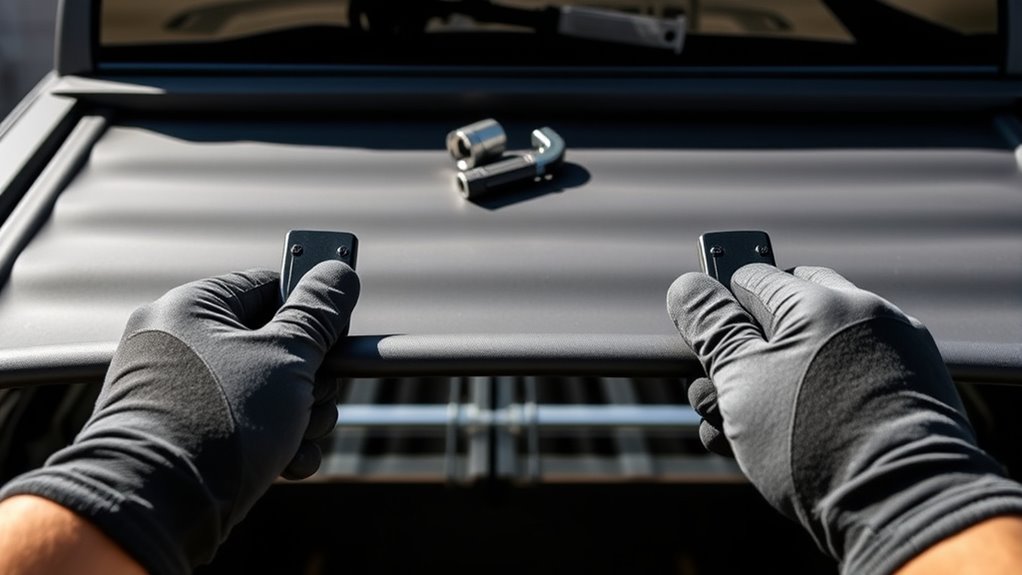
Before you start opening your roll-up tonneau cover, it’s important to gather the right tools. Begin with a clean cloth to wipe down the cover’s surface, which helps keep it looking good.
You’ll also need a screwdriver or a socket wrench if your cover has locks or mounting brackets. These tools make it easy to remove any fasteners or locking mechanisms securely.
Make sure to use durable tools that won’t damage the material or weaken the cover’s structure. If your cover has tension strips or latches, keep those handy so you can release them smoothly without scratching or tearing the material.
Locate and Unlock the Cover’s Release Mechanism
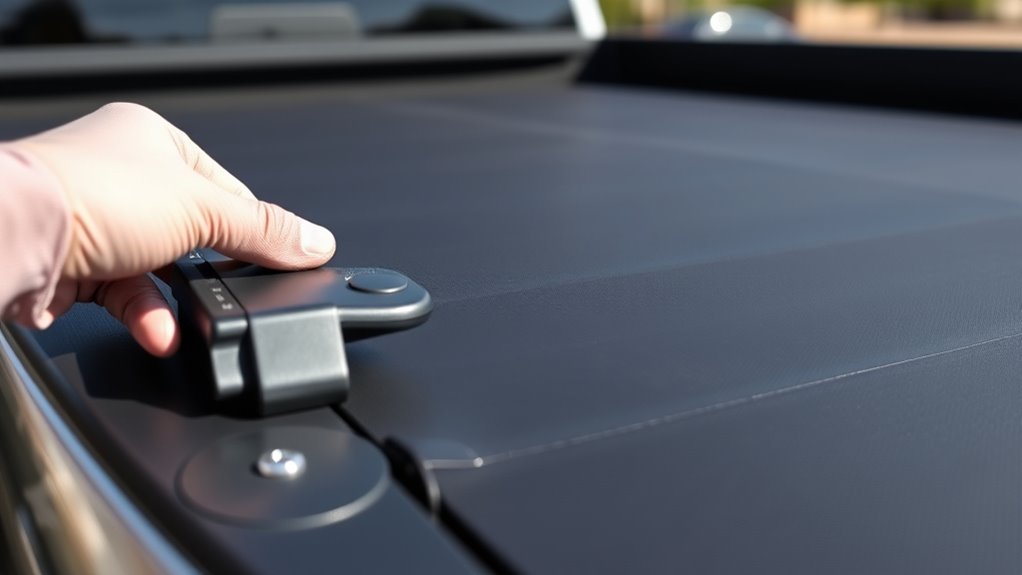
First, you want to locate the release latch on your cover. It’s usually found near the tailgate or on the sides. Once you spot it, grab your key or handle and use it to unlock the latch. Just make sure the mechanism is fully disengaged before moving on.
After that’s done, you’re all set to lift the cover. With the latch released, you can now easily access your truck bed.
Identify Release Latch
To open your roll-up tonneau cover, start by finding the release latch that disconnects the cover’s releasing mechanism. Begin by inspecting where the cover connects to your truck bed, focusing on the latch.
Look for the latch near one corner or in the center of the tailgate. Check if you can see a lever, button, or handle that secures the releasing mechanism.
Make sure the latch isn’t damaged or stuck. Confirm it’s disengaged so the cover can be rolled up easily.
Finding the right latch makes opening smoother and helps prevent any damage.
Use Key or Handle
If your roll-up tonneau cover has a dedicated key or handle, start by locating it along the sides or near the tailgate. Using the key ensures safety, preventing accidental openings, while the handle offers quick access.
Gently turn the key to open the cover’s release mechanism, or grip the handle firmly without using too much force to keep it in good shape. Be mindful of any locking features that might need specific directions to disengage properly.
Once released, you can easily lift or roll back the cover. Always handle the key or handle carefully to avoid damage. Keeping the key safe helps prevent loss or breakage, and using the handle properly keeps it functional over time.
This approach guarantees a smooth, hassle-free opening process.
Prepare Your Truck Bed for Easy Access
Before you open up your tonneau cover, it’s a good idea to clear out any cargo or debris from the truck bed. Just a quick tidy-up makes sure you can access everything smoothly.
Then, take a moment to check that all the locks on the cover are properly engaged or released, depending on what you need. These simple steps can really help you open the cover quickly and avoid any damage or obstructions.
Clear Cargo and Debris
Have you thought about how cluttered cargo and debris can make opening and closing your roll-up tonneau cover more difficult? For smooth operation, focus on three simple steps.
First, organize your cargo. Arranging your items neatly helps prevent shifting during transit. This keeps things from getting tangled or jamming the cover.
Next, clear out any debris like leaves, dirt, or loose materials from the truck bed and cover area. A clean space makes sure nothing interferes with the cover’s movement.
Then, check for obstructions. Make sure nothing is blocking the cover’s path or hinges that could hinder opening or closing.
Finally, secure loose items. Fasten or stow small objects that could snag or interfere with the cover. Keeping everything in place ensures smooth operation every time.
Check Tonneau Cover Locks
Wondering if your tonneau cover locks are working properly? Start by inspecting the lock mechanism to make sure it moves smoothly and engages securely.
Test the security features to see if they lock tightly in place, preventing accidental openings while you’re driving. Check for any damage or rust that could weaken the lock’s effectiveness.
If locking or unlocking feels difficult, try lubricating the lock mechanism with a suitable spray to improve its operation. Proper locks help keep your truck bed secure and protected from theft or weather.
Regularly checking these components is key to keeping everything easy to access and providing peace of mind. Keep your security features in top shape for reliable, hassle-free use every time.
Unlock the Latch and Release the Tension
To open the latch and release the tension, start by locating the latch mechanism, usually at the front or sides of the tonneau cover. This step is important because it’s what disengages the locking parts holding the cover in place.
Next, grip the latch handle firmly, making sure you hold the lock release part securely. Then, pull or lift the latch to unlock it, which should free the cover from its locked position.
Check if there’s any tension still in the tonneau. Releasing tension often involves loosening or removing supports or straps that are holding it tight.
Finally, gently apply pressure to release the tension. This makes it easier to roll back or fold the cover without any resistance.
Safely Roll Up and Secure the Cover
Once the tension is released, carefully start rolling the cover from the front or tail end, depending on your truck’s design. Use even, steady pressure to avoid damaging the cover material, especially if it’s vinyl or another flexible material.
Keep the cover taut as you roll to prevent sagging or misalignment. Many tonneau covers have built-in security features like tie-downs or straps to hold the cover securely in place.
When it’s fully rolled up, secure it with these straps or locking mechanisms. This prevents accidental unrolling while you’re driving.
Make sure the rolled cover is tight and doesn’t interfere with your truck’s movement or tailgate. Properly rolling and securing your cover helps maintain its integrity and increases security.
It also keeps your cargo safe from weather and theft. Regularly check that all security features work well and are engaged properly.
Troubleshoot Common Tonneau Cover Issues
Even when you carefully roll and secure your tonneau cover, issues can still pop up that affect how well it works. Common problems usually involve the cover’s function or the material’s durability. Here’s how to troubleshoot:
First, check for any loose or broken straps, latches, or hardware. Tighten or replace these parts as needed.
Inspect straps, latches, and hardware regularly; tighten or replace to ensure proper cover function.
Next, look over the material for tears, holes, or signs of wear. If the damage is serious, it might be time to consider replacing the cover to keep your truck protected.
Also, clean the tracks and roller mechanisms. Remove dirt or debris that could be preventing smooth operation.
Finally, assess the material’s durability. Exposure to the elements can wear it down over time. Regular cleaning and conditioning help extend its lifespan.
Fixing these issues early helps keep your cover working well. If problems keep happening, replacing the cover might be the best move for ongoing protection and easy use.
Maintain Your Roll-Up Tonneau Cover for Easy Operation
Regular maintenance is key to keeping your roll-up tonneau cover operating smoothly. To ensure it works easily, regularly clean the cover material with mild soap and water to remove dirt and prevent damage.
Lubricate the moving parts, like the rails and latches, using a silicone spray. This helps everything slide smoothly and stay in good shape.
Check your cover for tears or loose fittings. Tighten or replace any components as needed to keep things secure.
When installing or making adjustments, double-check that the cover material is correctly aligned and securely attached. This avoids problems later on.
Frequently Asked Questions
Can I Open a Roll-Up Tonneau Cover With the Truck Bed Full?
Yes, you can open a roll-up tonneau cover with a full truck bed. Just grab the cover’s front edge and lift it upward, rolling it as you go.
If you hit resistance, it might be caused by debris or misalignment. Check for any issues with the cover’s maintenance.
Some troubleshooting tips include making sure the tracks are clean and well-lubricated. With proper care, opening the cover should stay smooth no matter how full your bed is.
How Do I Unlock a Cover if the Latch Is Stuck?
Did you know that a stuck latch mechanism is one of the most common issues with tonneau covers?
If your lock release isn’t working, don’t force it, as you might damage it. Instead, try gently spraying a lubricant like WD-40 on the latch.
Then, wiggle the lock release carefully while working the latch to loosen it. This approach helps prevent damage and gets your cover open smoothly.
Is There a Way to Open the Cover Without Tools?
Yes, you can open your roll-up tonneau cover without tools by applying gentle pressure or pulling from the edges.
Check for any latch or lock mechanisms that might be stuck, as part of cover maintenance involves troubleshooting tips like lubricating moving parts or cleaning tracks.
If the cover still won’t budge, make sure no debris is blocking it, and try easing it open to avoid causing damage.
Regular maintenance helps keep the cover functioning smoothly and makes opening easier when you need it.
How Do I Prevent the Cover From Unrolling During High Winds?
To prevent your roll-up tonneau cover from unrolling during high winds, focus on boosting wind resistance and making sure your locks are secure.
Engage the locking system fully and double-check that all latches are tight.
You might also want to add wind straps or velcro strips at the edges for extra stability.
These steps help keep the cover firmly in place, reducing the risk of it unraveling or flapping in strong gusts, and keep your cargo safe and secure.
Can I Open the Cover From the Side Instead of the Tailgate?
Sure, you can open your roll-up tonneau cover from the side, thanks to its clever design and flexible cover material.
The side access feature lets you lift or unzip the cover easily without opening the tailgate each time. Its flexible cover design ensures smooth operation from any angle.
This makes side access not just possible but simple—just like those fancy doors that open from the side.
Conclusion
Now that you know how to open your roll-up tonneau cover in just seven steps, you’ll save time and keep your truck bed protected.
Did you know that properly maintaining your cover can extend its lifespan by up to 50%? Regular care and understanding how to release it ensures smooth operation when you need it.
So, keep your cover in top shape, and enjoy easier access and better durability for years to come. Mastering the roll-up tonneau cover release process makes your truck bed more reliable and convenient.