Tools You Need to Change Spark Plugs in 5 Essential Steps
Changing spark plugs can seem daunting, especially if you’re not sure what tools you need or where to start. Many car owners struggle with this simple job, feeling overwhelmed by all the steps involved. But don’t worry—you’re not alone, and with the right tools and guidance, replacing spark plugs can be straightforward and even satisfying.
To change spark plugs, you’ll need a spark plug socket, ratchet wrench, extension bar, and torque wrench to tighten correctly. Safety gear like gloves and eye protection is essential.
Choose the right socket size and use a gap gauge to set the proper electrode spacing.
Additional tools like a magnetic pickup and multimeter can make the process smoother. For detailed tips on each step, keep exploring to guarantee a safe, effective replacement.
Key Takeaways
- Gather your essential tools: spark plug socket, ratchet wrench, extension bar, torque wrench, and safety gear. Having everything ready makes the job smoother.
- Make sure you pick the right socket size and type that matches your engine’s spark plugs. It’s important to fit perfectly to avoid damage.
- Use a gap gauge to check and adjust the spark plug gap before installing. Correct gaps ensure proper engine performance.
- Keep a magnetic pickup tool handy and organize your workspace. This helps keep things safe and makes the process more efficient.
- Follow safety procedures by disconnecting wires properly. Tighten the plugs to your vehicle manufacturer’s torque specs to avoid over or under-tightening.
How to Change Spark Plugs Yourself: A Step-by-Step Guide
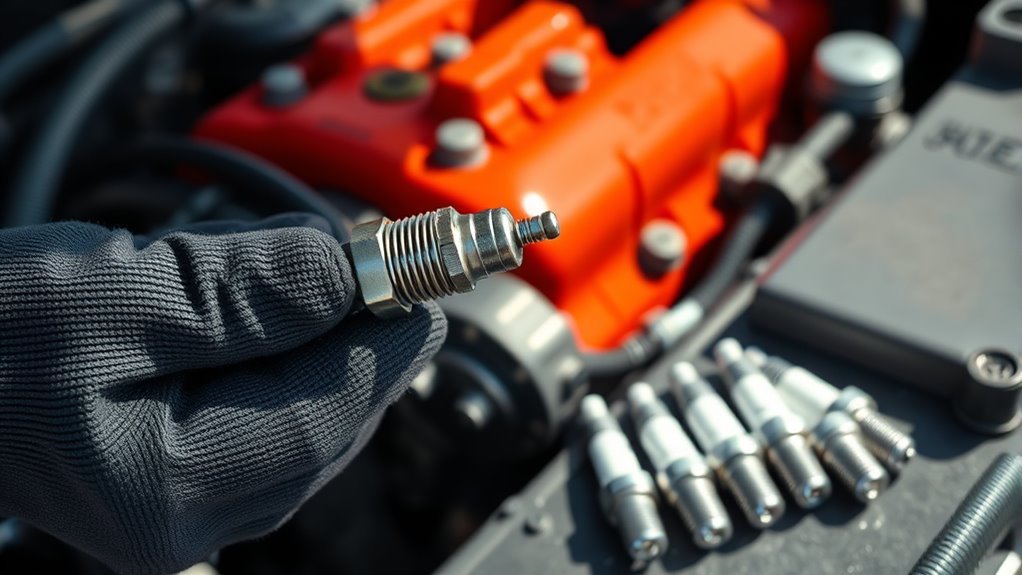
Changing spark plugs yourself can save you time and money, but it’s important to be careful and have the right tools. First, locate your spark plugs and understand how they connect to the ignition system, which controls engine timing and performance.
Changing spark plugs yourself saves time and money—just be careful and use the right tools.
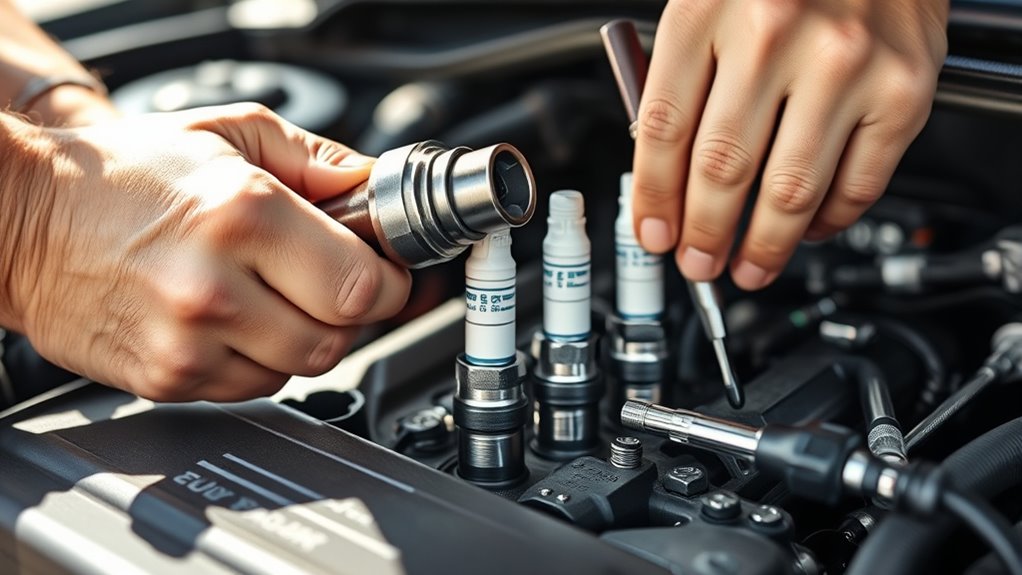
Start by making sure your engine is cool to avoid burns. Disconnect the ignition coil or wire, then use the proper socket to remove the old spark plug. Be gentle so you don’t damage the porcelain insulator.
Before installing the new spark plug, check the gap to ensure it matches the manufacturer’s specifications. This is key for optimal engine performance. Screw in the new plug by hand to prevent cross-threading, then tighten it securely with the socket.
Properly installed spark plugs help your ignition system fire correctly, which means smoother engine performance and better fuel efficiency. Following these steps carefully makes sure your engine runs efficiently and reliably after the change.
Tools You Need for Changing Spark Plugs
To successfully replace your spark plugs, you’ll need a specific set of tools that make the process easier and help prevent damage. These tools are essential for proper engine maintenance and for making sure your ignition system functions smoothly.
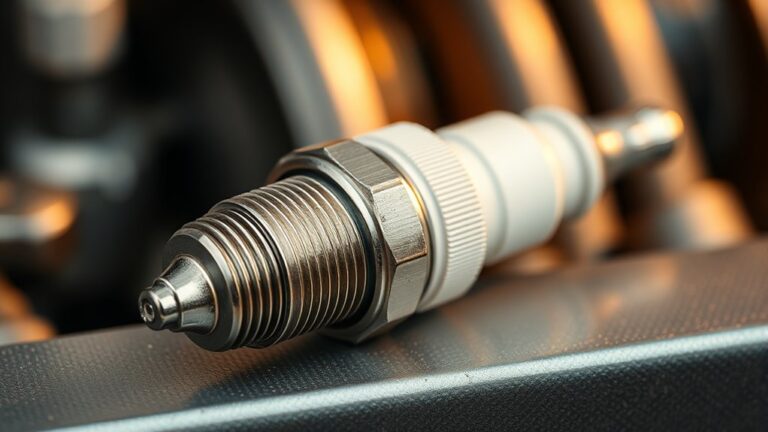
First, you’ll want a spark plug socket, which is specially designed to grip the spark plug without damaging it. Second, a ratchet wrench will give you the leverage you need to remove and tighten the plugs securely. Third, an extension bar can help reach spark plugs that are deep within the engine bay.
Having a torque wrench is also important. It ensures you don’t overtighten, protecting the ignition system. Adequate tools prevent damage and allow for precise installation, which is key to maintaining efficient engine performance.
Gathering these tools beforehand makes the process smoother and reduces the chances of mistakes during spark plug replacement.
How to Choose the Right Socket and Wrench for Your Engine
Selecting the right socket and wrench guarantees you can remove and install spark plugs without causing damage. First, consider engine compatibility—different engines may require specific socket sizes or shapes. Most engines use a 5/8-inch or 13/16-inch socket, but double-check your vehicle’s manual to be sure.
A socket set variety is essential; having both deep and regular sockets helps reach spark plugs in tight spaces and prevents damage to the ceramic insulator. Choose a wrench that fits comfortably in your hand and provides enough leverage. Ratchets are preferable for better control, especially in restricted areas.
Always pick tools made from durable materials to avoid stripping or rounding off bolt heads. Matching the socket and wrench to your engine’s specifications will make the job smoother and safer. Using the right tools helps prevent costly mistakes and makes replacing your spark plugs easier and safer.
How to Use a Spark Plug Gap Gauge
A spark plug gap gauge is an essential tool to make sure your spark plugs are set to the right distance. This is really important for your engine to run its best. Using the gauge properly helps keep your spark plugs in good shape and your engine performing smoothly.
To use it correctly, follow these simple steps:
- Insert the probe of the gauge between the electrode and the ground strap.
- Gently squeeze or slide the gauge to see if it fits snugly without needing force.
- If needed, carefully bend the ground electrode to adjust the gap, then re-check for accuracy.
Always confirm the gap matches your vehicle’s specifications, which you can find in your owner’s manual. Keeping the right gap ensures reliable ignition, better fuel economy, and smoother engine operation.
Using a spark plug gap gauge correctly helps you get these benefits. It also helps extend the life of your spark plugs and keeps your engine running consistently.
Additional Tools to Make Changing Spark Plugs Easier and Safer
Using the right additional tools can make changing your spark plugs much easier and safer. A magnetic pickup tool is great for retrieving dropped debris or tools in tight engine bay spaces, helping prevent damage or injury.
An extension bar for your ratchet lets you reach stubborn spark plugs without forcing or contorting yourself. This keeps your engine bay organized and reduces the chance of accidental slips.
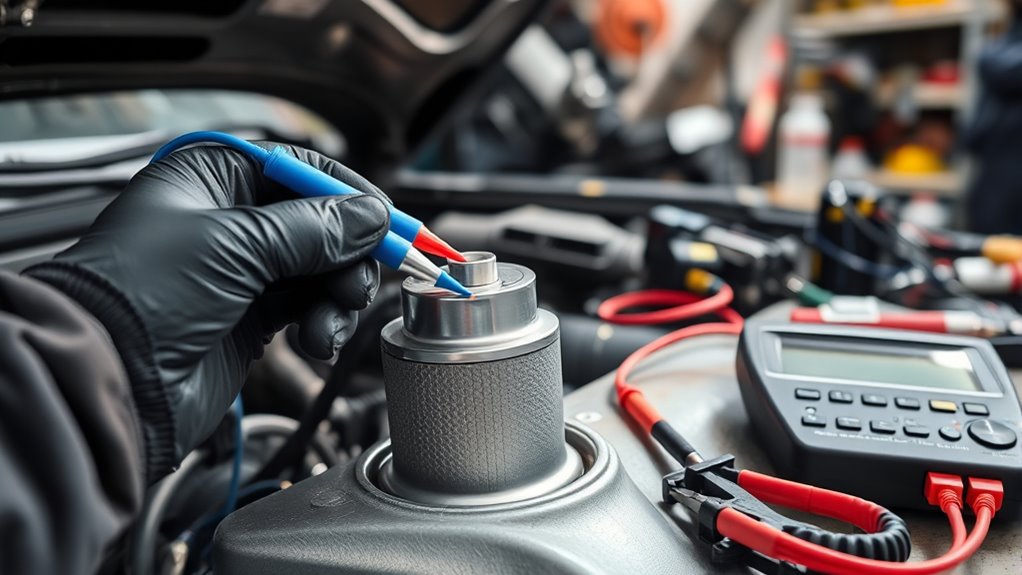
A multimeter can check your ignition system to ensure it’s working correctly. It adds an extra layer of safety before you start working on the spark plugs.
Don’t forget safety gear like gloves and eye protection. They shield you from sharp edges, hot engine parts, or debris.
Keeping tools and parts organized also reduces the risk of losing components and keeps your workflow smooth.
All together, these extra tools and safety tips make the job safer, easier, and less stressful. They give you confidence with each step of replacing your spark plugs.
Frequently Asked Questions
How Often Should I Replace My Spark Plugs?
You should replace your spark plugs roughly every 30,000 miles, but it’s best to check your vehicle’s maintenance schedule for exact recommendations.
Spark plug lifespan varies depending on the type and driving conditions, so keep an eye out for signs like misfires or decreased fuel efficiency.
Regularly maintaining and replacing spark plugs keeps your engine running smoothly, saves you money, and helps extend your engine’s life.
Making spark plug maintenance a regular part of your vehicle routine is always a smart move.
Can I Change Spark Plugs Without Removing Other Engine Parts?
You can change spark plugs without removing other engine parts, which saves you time and effort.
Interesting fact: most engines let you access the spark plugs through the wheel well or by using a specialized socket.
Just remember, proper spark plug torque is essential to avoid damage. While you usually don’t need to remove the engine, making sure you have clear access and the right tools makes the job easier and safer.
Do All Engines Require the Same Type of Spark Plug?
No, all engines don’t require the same spark plug type.
You need to consider your engine’s specs, like size, type, and manufacturer, to pick the right spark plugs.
Using the correct spark plugs ensures your engine runs smoothly and uses fuel efficiently.
Always check your vehicle’s manual to find the recommended spark plug type for your engine.
This helps prevent potential damage and keeps your engine working at its best.
What Are Signs of Bad or Worn Spark Plugs?
Worn spark plugs are like worn-out shoes, giving you trouble every step. You might notice engine misfires, rough idling, or difficulty starting your car.
If you see black soot, corrosion, or worn electrodes during spark plug cleaning, it’s a sign they need to be replaced.
These issues point to ignition system maintenance that’s overdue.
Addressing these signs keeps your engine running smoothly and efficiently, helping prevent further damage over time.
Should I Apply Anti-Seize Compound to New Spark Plugs?
Yes, you should apply anti-seize compound to new spark plugs. It helps prevent spark plug corrosion and makes future removal easier.
The anti-seize benefits include reducing the risk of damage from seizing or cross-threading when you remove or replace the plugs. Just use a small amount on the threads, avoiding the electrode end.
This simple step protects your spark plugs and guarantees smoother installation and removal over time.
Conclusion
Changing your spark plugs is like tuning a finely crafted instrument. You’ll enjoy smoother runs and better fuel efficiency.
With the right tools, you’re the conductor of your car’s performance. Think of each step as tightening a note to bring harmony to your engine’s symphony.
Once you’re done, you’ll feel proud of completing the basics. Your vehicle will run confidently down every road, singing its own victorious tune with fresh spark plugs.